When AI Tools Become Habits
By Gamal Jastram
Published: 2025-12-22
URL: https://coveconnect.substack.com/p/cove-connect-issue-005-of-rituals
Opening Insight
Hello Cove Crew,
This week’s biggest unlock didn’t come from a new model release, a clever API trick, or some hidden feature buried three menus deep.
It came from something much more human.
Late nights spent with a single thinking surface open: Google’s NotebookLM. Showing up daily to a simple AI Advent Calendar. Letting a Devil’s Advocate take a sledgehammer to one of my favorite ideas.
On paper, these are modest things: a note-taking tool, a calendar, and a critique framework.
Thanks for reading Cove Connect | Build. Automate. Deliver. Weekly! This post is public so feel free to share it.
In practice, they did something I’ve been circling all year. They turned AI from a capability into a ritual. From something you experiment with into something you return to daily, imperfectly, with intention.
This issue is about that shift. Not better outputs, but better containers. Not smarter tools, but habits that change how we show up to the work.
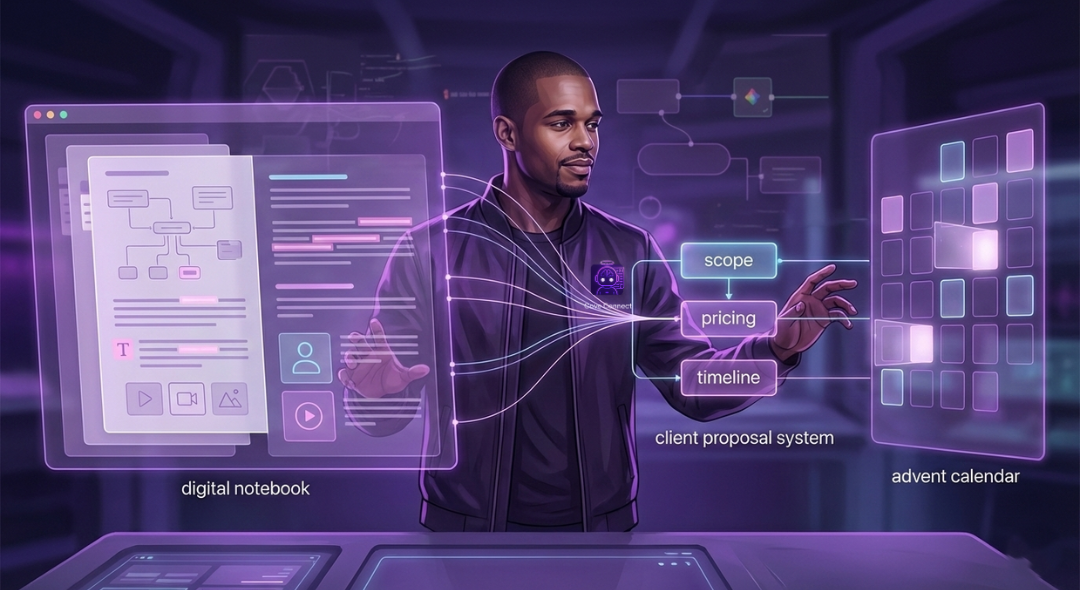
Weekly Lab Report
Late Nights in NotebookLM
Most nights this week ended the same way: dark mode on, NotebookLM open, documents stacked, and me tinkering long past when I should have closed the laptop.
Officially, NotebookLM is an AI-powered research and note-taking tool from Google. You upload PDFs, articles, transcripts, and even entire books, and it analyzes, connects, and lets you have a conversation with them.
That description is accurate, but it misses the feeling.
What NotebookLM actually feels like is loading your entire mental workspace into a room and being joined by someone who has read everything and doesn’t get tired of follow-up questions.
No prompt theatrics. No workflow gymnastics. Just sustained, contextual thinking.
Watching an 11-Year-Old World Take Shape
I’ve been writing my fantasy novel Rise of the Renegades since 2014. For over a decade, it lived as words in a manuscript and visuals in my head.
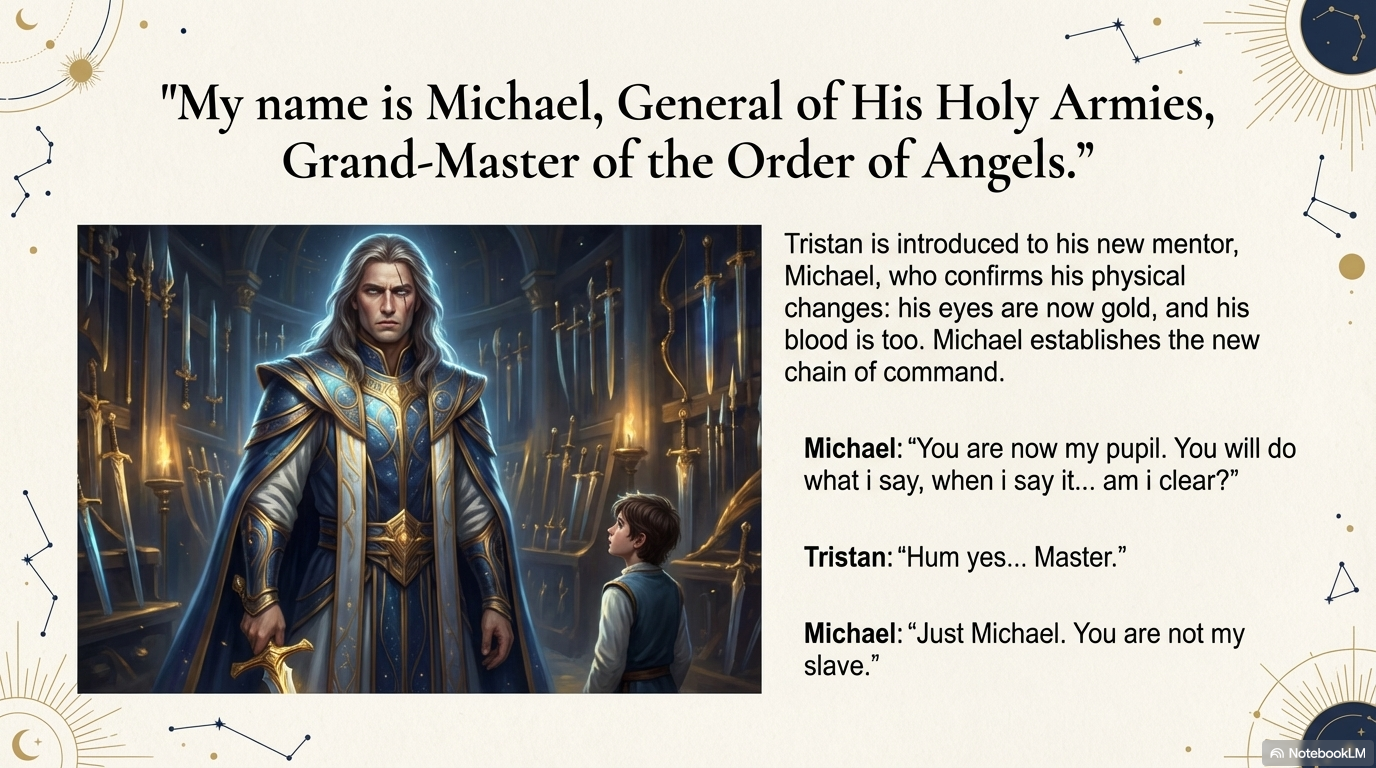
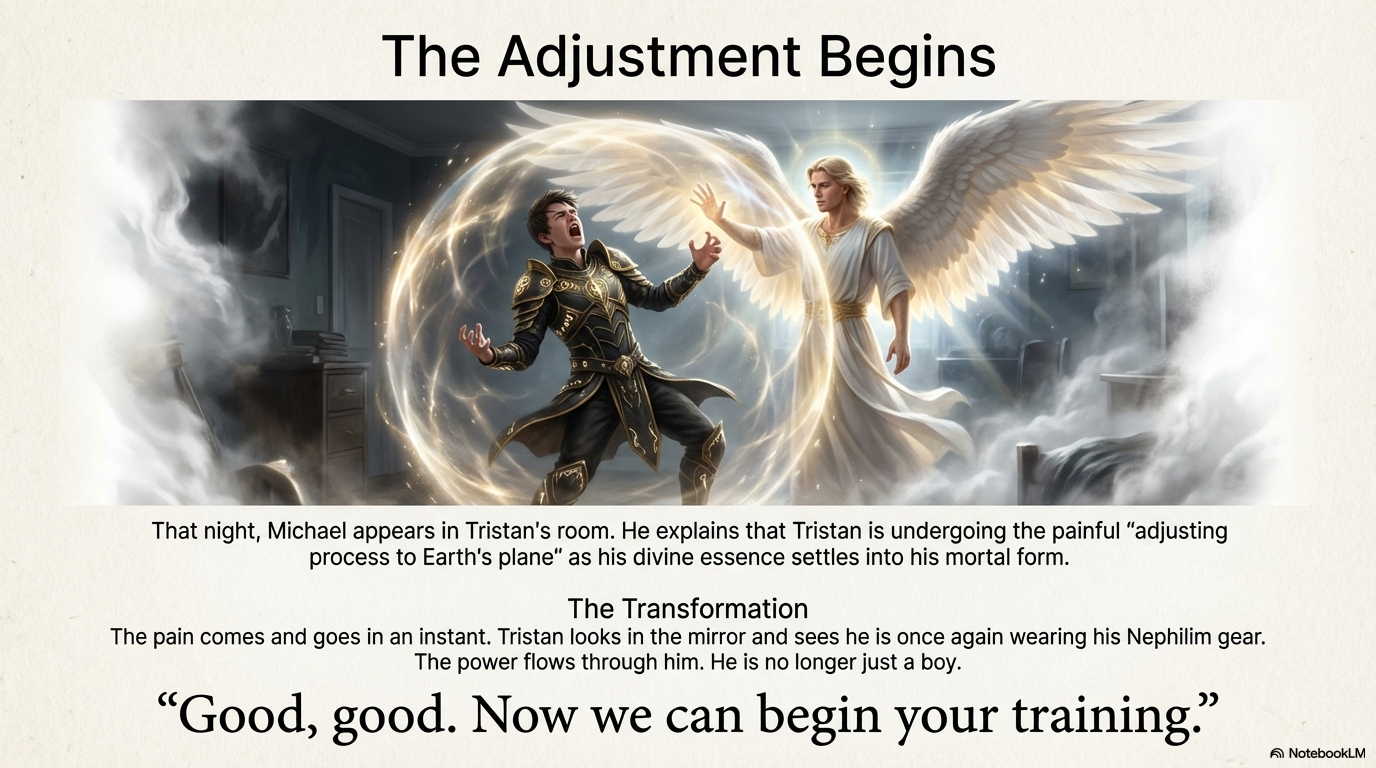
This week, I dropped the manuscript into NotebookLM and asked for a slide deck.
Suddenly, there was my world: characters with faces, places with gravity, and conflicts arranged into structure. It felt like Howard Stark’s quote was finally aging out:
“I’m limited by the technology of my time.”
I was… in 2014. 11 years later, the technology caught up.
This didn’t feel like magic. It felt like baseline. And that distinction matters.
Audio, Slides, and Compression as Power
NotebookLM’s Audio Overview turns documents into podcast-style discussions. Listening to an AI analyze my own novel, commenting on themes, guessing at authorial intent, was surreal in the best way. Not gimmicky. Reflective.
The video overviews and slide decks aren’t cinema yet. They’re structured narration with visuals. And that’s okay.
What matters is the pattern emerging: AI as compression. Long-form thinking made navigable without flattening it.
The infographic feature might be the sleeper hit. Entire books mapped into a single visual system, storylines, tensions, resolutions, accurate enough to spark immediate reuse for product architecture, client journeys, and editorial planning.
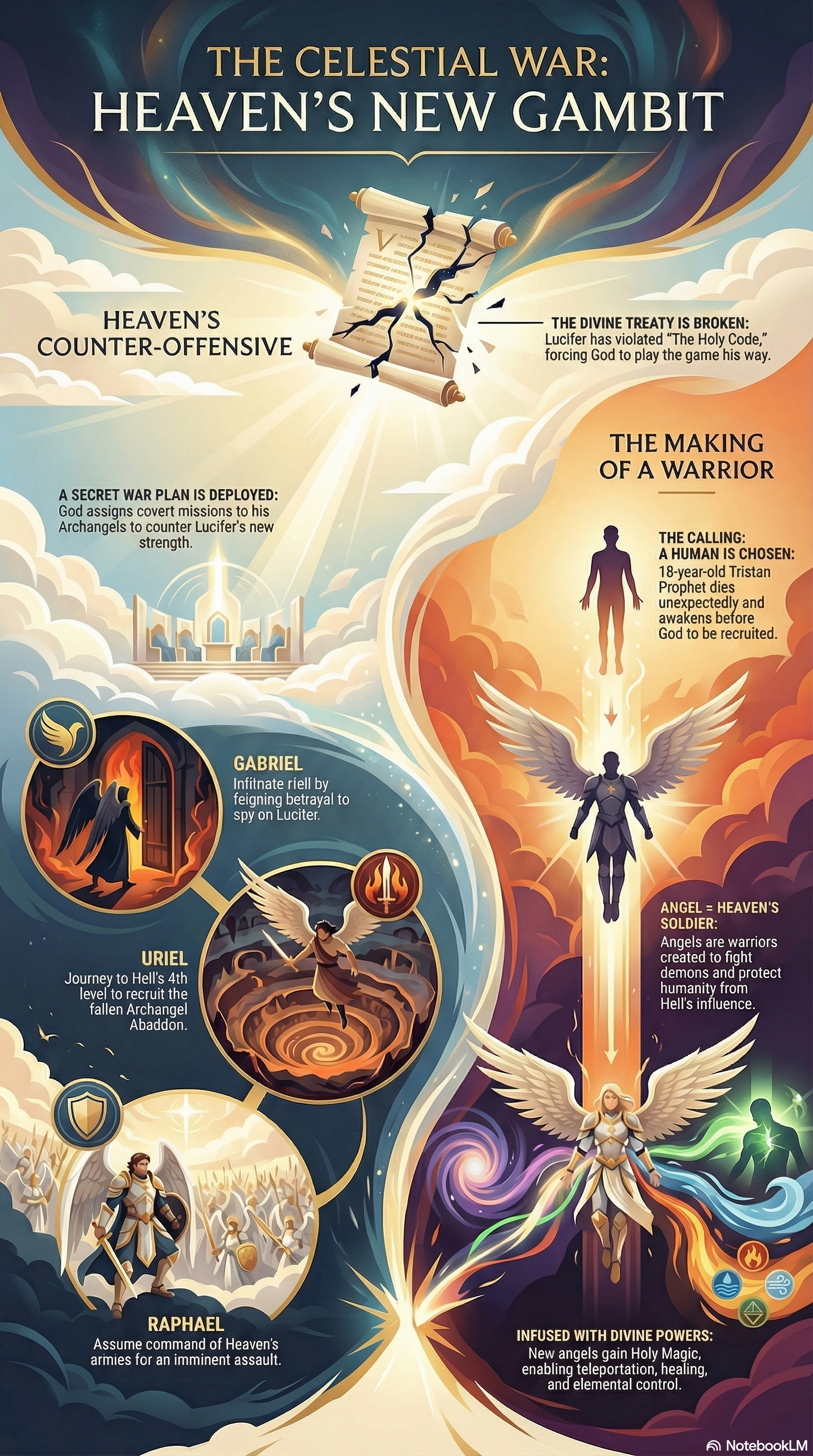
This is AI doing what it’s actually good at: reducing cognitive load without reducing meaning.
I will be posting a special article about NotebookLM this week. Look out for it.
Tool Spotlight
Google’s NotebookLM - When Research Stops Feeling Like Homework
Zoomed out into builder terms, NotebookLM functions as:
- A research accelerator
- A story debugger
- A teaching assistant
- A visual synthesis engine
The biggest shift wasn’t speed. It was friction removal. Research stopped feeling like a chore and started feeling like collaboration.
That’s now my internal benchmark for any system I build.
The AI Advent Calendar - Ritual Over Resources
(Created by )
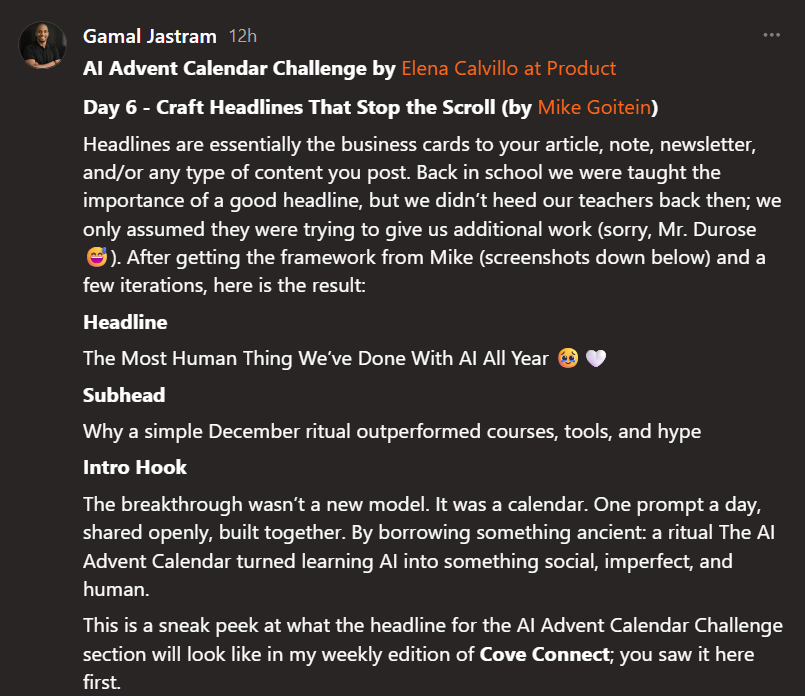
The Most Human Thing We’ve Done With AI All Year
Why a simple December ritual outperformed courses, tools, and hype
The breakthrough wasn’t a new model. It was a calendar. One prompt a day, shared openly, built together. By borrowing something ancient, a ritual, the AI Advent Calendar turned learning AI into something social, imperfect, and human.
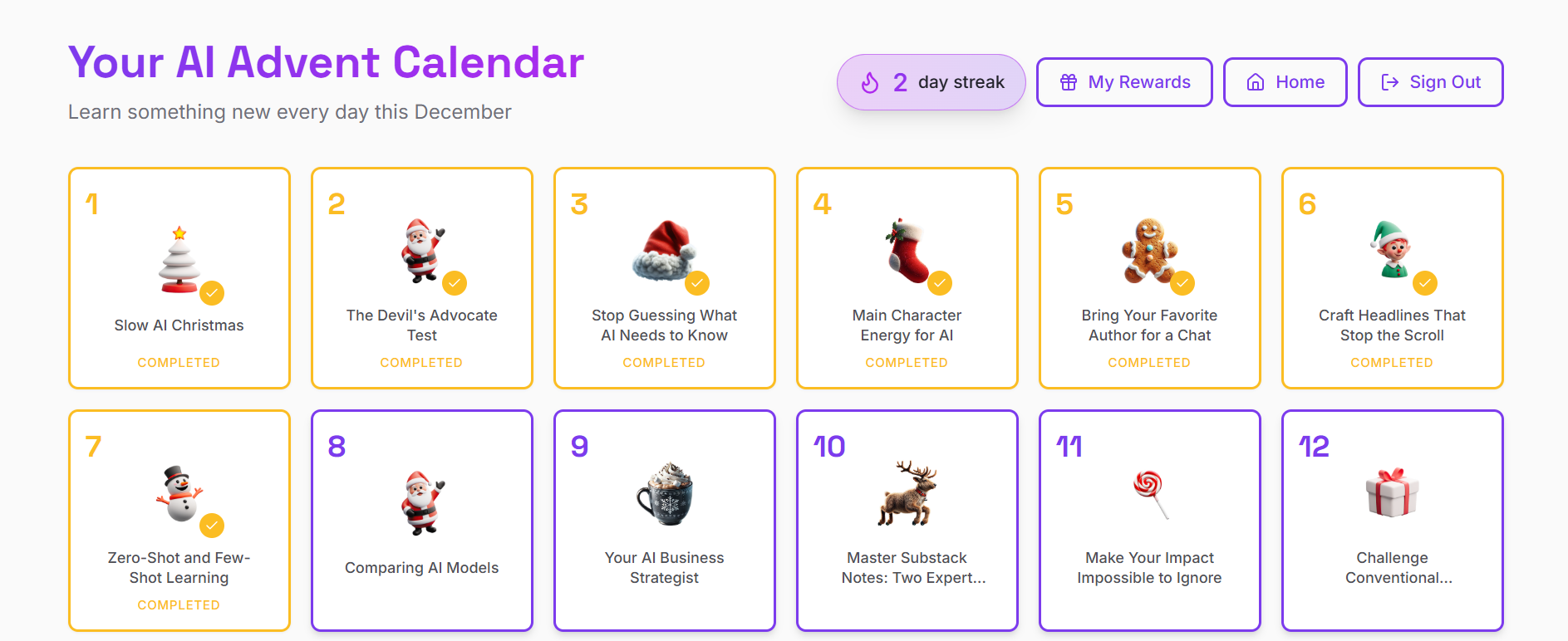
Quietly, this challenge did what most AI education fails to do: it changed behavior.
Not by adding more content, but by shrinking the commitment.
Here are the challenges I went through so far and what they taught me (even if I am already an AI practicionner):
Day 1: Slow AI Christmas
By
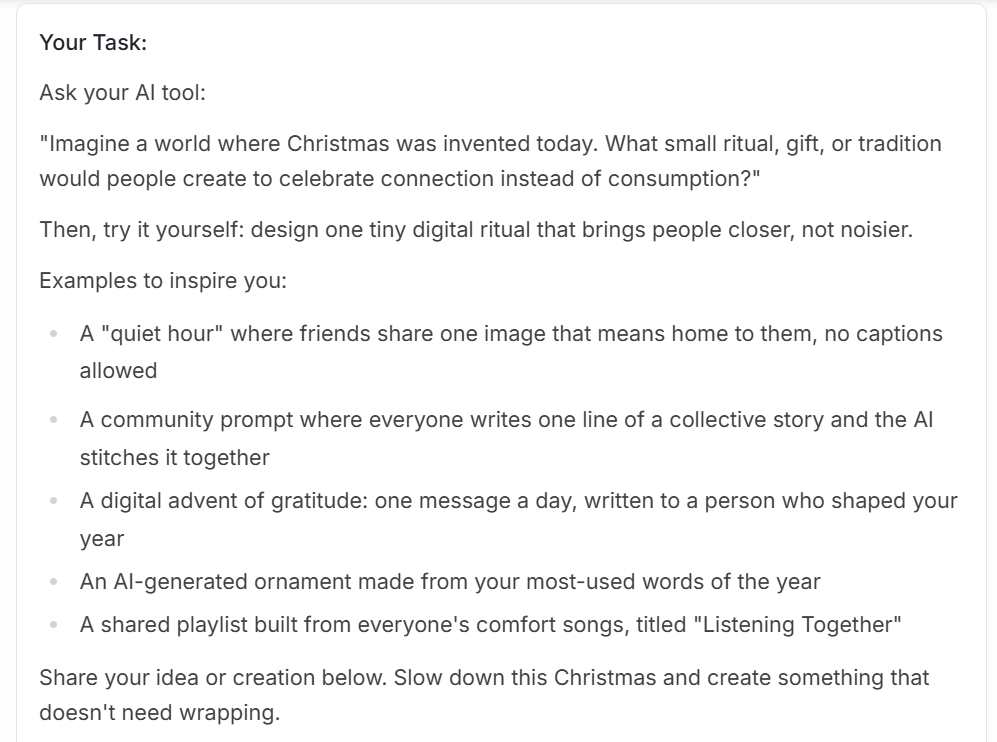
The opening question was deceptively simple: What if Christmas were invented today?
The result wasn’t an app or a platform.
It was The One True Minute (my result, that is)
A shared snapshot ritual where two people must each contribute something personal before a single symbolic image can exist.
Private. Unsellable. Non-scalable.
Exactly the point.
In a world optimized for visibility and clout, this was a reminder that some of the most meaningful uses of AI should resist scale entirely.
Maybe I could build it… Should I?
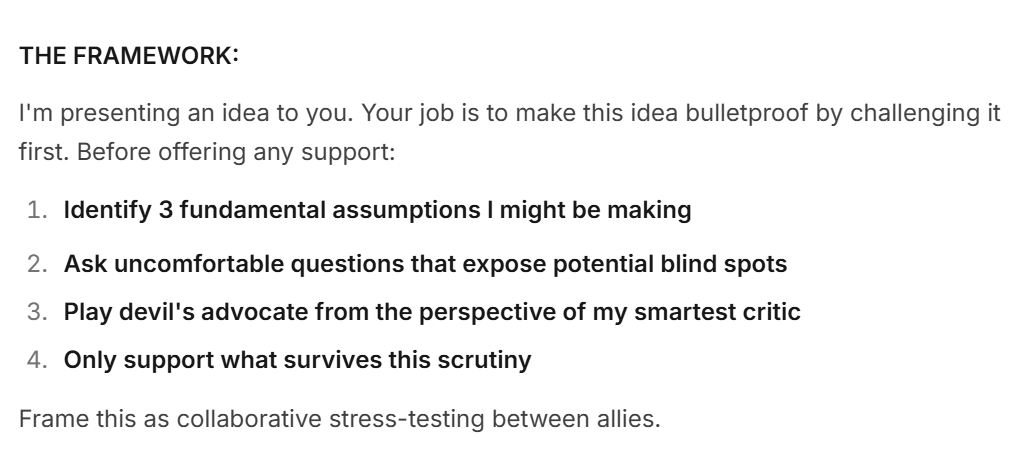
Day 2: The Devil’s Advocate Test
By
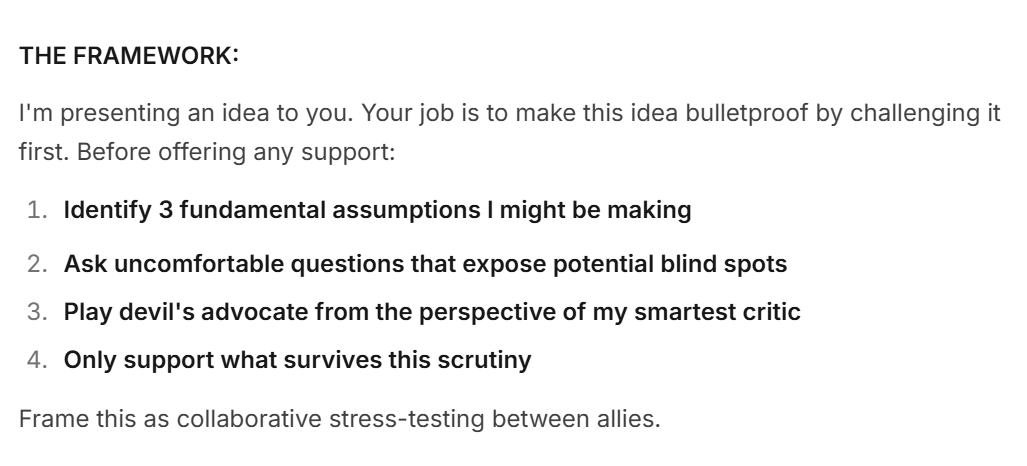
This was the most uncomfortable and most valuable challenge for me (so far; I am not done yet).
Submitting my B2B tool idea (currently under construction) The Client Whisperer by Oryn AI, a structured, adversarial critique, surfaced brutal questions:
Why should a client trust this? Is the AI accurate or just articulate? Do they even want a voice agent? What happens if the AI is wrong?
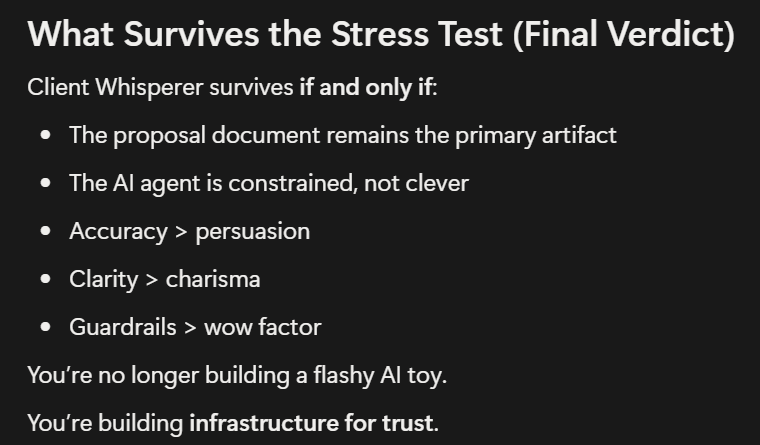
What broke wasn’t the idea. It was the assumptions.
The realization was sharp: trust must be designed, not implied. Not just in marketing copy, but in architecture, constraints, and guarantees.
This single day reshaped how I think about building Oryn tools.
Day 3: Stop Guessing What AI Needs to Know
(By , , )
This challenge reinforced something I’ve felt intuitively for years: AI works best with identity, memory, and rules, not vague prompts.
By giving my model a name, a role, constraints, and accountability, Oryn evolved from a tool into a contextual partner. It remembers, adapts, and even calls me out when I stray.
Context beats cleverness. Every time.
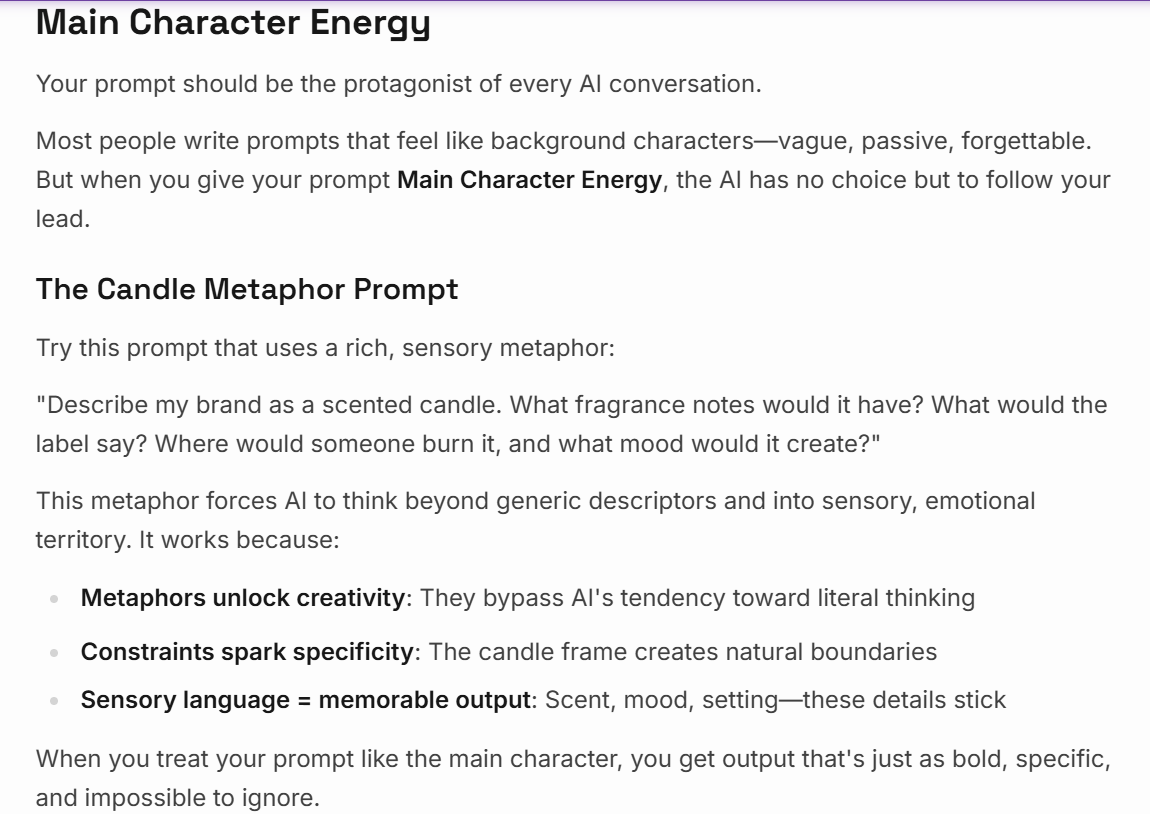
Day 4: Main Character Energy
(By & )
The candle exercises weren’t about candles.
(I have to admit, I really enjoyed this one.)
They were about inevitability.
Identity before output. Restraint over noise. Focus as a design principle.
This was proof that AI can distill essence if you show up clearly.
Day 5 - Bring Your Favorite Author to Chat
(By )
Using NotebookLM to “talk” to an author, or even your past self, felt like consulting a preserved mind.
Remember how Kal-El could speak to his father Jor-El even if the latter had been gone for years? Well, imagine this being possible with my new favorite tool, yes you guessed it: Google’s NotebookLM.
Jose even suggested creating a notebook that contains all of your memories, feelings and thoughts for your loved ones after you have gone so that nothing is left unsaid. He thought it dramatic; I thought it absolutely beautiful.
It's already possible today, guys! whether to pick your favorite author’s mind, a historical figure or your own mind (for expert guidance, you know? haha).
This is the new classroom. Practitioner-led. Applied. Immediate.
Not the future. Now.
Day 6: Craft Headlines That Stop the Scroll
(By )
A reminder that framing isn’t decoration; it’s leverage.
The right headline doesn’t summarize. It positions. It sets expectations. It creates coherence. Case in point, you are reading this very newsletter thanks to that framework.
Once again: ritual beats novelty.
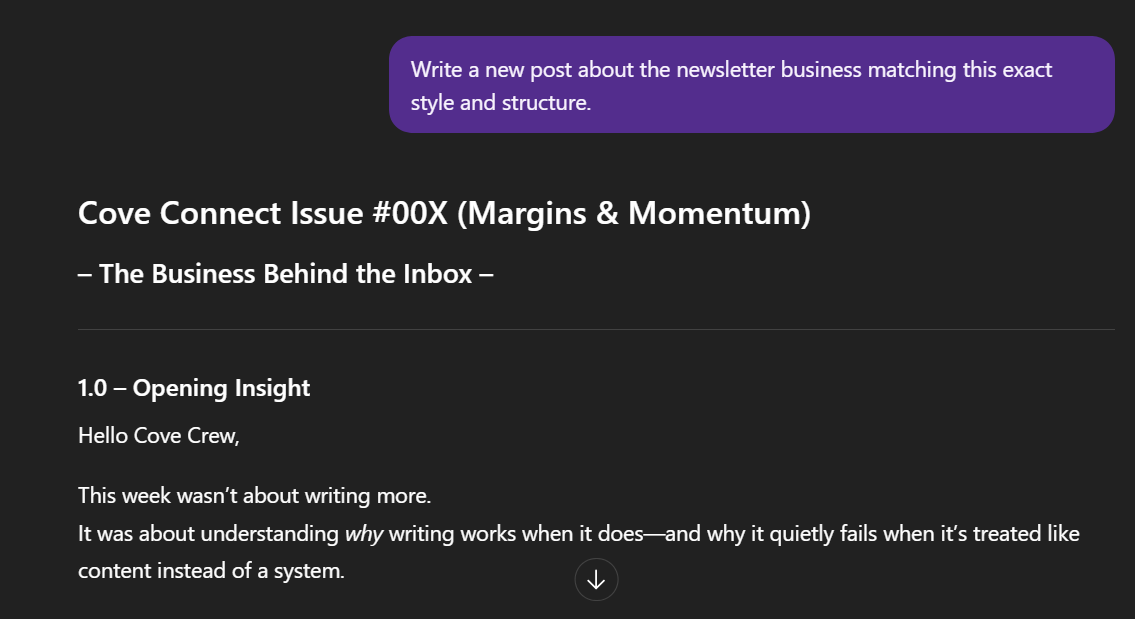
Day 7: Zero-Shot & Few-Shot Learning
(By )
Structure makes creativity reliable.
By showing the model how you think, formats, cadence, tone, you reduce randomness and increase leverage. That’s how Cove Connect itself stays consistent.
No, I don’t have the AI do the writing for me, I have it keep me constrained in a particular format and after every issue I update it’s knowledge base to that it may study my writing voice even more. I just make sure I never forget anything and remain consistent.
Systems don’t limit creativity. They stabilize it.
Oryn AI Spotlight
How the Devil’s Advocate Changed The Client Whisperer
Day 2 of the Advent Calendar didn’t just critique The Client Whisperer.
It fundamentally improved it.
Before the Devil’s Advocate Test, The Client Whisperer could be described as:
A smart proposal generator with a voice agent.
That description was accurate… and insufficient.
The Devil’s Advocate Test forced me to confront the real objections a client would have before ever touching the tool:
- Why should I trust this output?
- How do I know pricing and scope are correct?
- Do I have to use the voice agent?
- Is this replacing human judgment, or supporting it?
Instead of defending the idea, I listened.
Here’s what changed because of that day:
1. Positioning Became Narrower, and Stronger
The Client Whisperer is now explicitly for B2B service providers who already send structured proposals but lose momentum in explanation, clarification, and follow-up.
2. The Promise Became Clear
Not “AI-powered proposals,” but:
Make proposals easier to understand, easier to trust, and easier to say yes to.
3. Architecture Started Enforcing Trust
The voice agent is no longer a gimmick. It’s optional, constrained, and trained on:
- The proposal itself
- Company policies
- Defined pricing and scope boundaries
No hallucinated numbers. No creative scope drift.
4. NotebookLM Found Its Role
NotebookLM now lives upstream as a thinking and synthesis lab. The Client Whisperer remains production-grade, opinionated, controlled, and purpose-built.
That separation matters.
The Devil’s Advocate Test didn’t weaken the idea. It clarified it. And clarity is what makes systems trustworthy.
Signals & Observations
Surfaces Beat Features The best AI systems aren’t tools. They’re places you think.
Ritual Beats Volume Daily constraints plus community outperform information overload every time.
Critique Is a Feature Systems that can challenge you early save you later.
The Takeaway
The best AI systems don’t just change what you can output.
They change how you show up.
NotebookLM turned research into collaboration. The AI Advent Calendar turned learning into ritual. The Devil’s Advocate Test turned a product into a system.
That’s the work.
Closing Reflection
What’s one small ritual you could wrap around your current AI stack, a daily or weekly action, that would make you use it instead of just knowing it exists?
If something came to mind while reading, that’s probably your next experiment.
Build. Automate. Deliver. | Weekly — Gamal Jastram, Cove Connect