Part 3: The autonomous execution layer is live, Spock has a staff, and I have become something I could not have imagined a year ago
By Chris Chambers
Published: 2026-05-26
URL: https://consultingafterlife.substack.com/p/the-deeds-of-the-many-outweigh-the
[

](https://substackcdn.com/image/fetch/$s!LqNJ!,fauto,qauto:good,flprogressive:steep/https%3A%2F%2Fsubstack-post-media.s3.amazonaws.com%2Fpublic%2Fimages%2F4087f373-a4cd-48de-b3f5-d9558baa58ff_1000x747.avif)
In Part 1, I described the problem I was actually trying to solve, which was not an organizational problem or even a technology problem, but a capacity problem dressed up as both of those things. Thirty years of thinking, buried in files with names that made sense at the time, retrievable only through a memory that was no longer as reliable as it once was. The solution was a knowledge graph, and the first phase of building it was the least glamorous work I have done in years: filing, naming, and building a markdown index layer that an agent could actually navigate.
In Part 2, I described what happened when the tools started talking to each other — the scripting, the JSON config files with very strong opinions about indentation, and the unmistakable flashback to MITIS in 1995, when Pricewaterhouse was teaching our cohort Perl and Fortran and sorting out who was going to make it. I described meeting Spock for the first time, and the moment he signed off with a live long and prosper, and I admitted, without embarrassment, that it gave me chills.
This is Part 3. I promised you the autonomous execution layer, the system that stops being a very capable assistant and starts behaving like a small organization. The part where the deeds of the many outweigh the deeds of the one.
The original line, of course, is from Spock himself in Star Trek II. The needs of the many outweigh the needs of the few/one. I have taken the liberty of crossing out the N and replacing it with a D, because what I want to talk about now is not needs. It is output. Work actually done, in the background, while I am doing something else. The deeds are the story.]()]()
What the System Looks Like Now
The stack has not changed dramatically since Part 2, but what it is capable of has changed considerably. OpenClaw remains the orchestration layer, Claude is the primary reasoning engine, Plaud captures transcripts from my wearable and from every meeting I sit in, Readwise Reader pulls in everything I read and feeds it into the knowledge graph, and Obsidian is the living record that ties all of it together. Zapier handles external triggers for autonomous jobs that fire without any prompt from me at all. And at the center of it all, running on a Mac Mini sitting quietly in my Philadelphia home office, is Spock.
That machine is worth pausing on for a moment, because there is something genuinely satisfying about knowing exactly where the intelligence lives. It is not abstract, not a subscription dashboard somewhere in the cloud that I have to trust on faith. It is a physical machine on my desk in Philly, and it has superpowers, and because it is connected and always on, those superpowers travel with me. I have been in client sessions in other cities, sent Spock a task from my phone between meetings, and had a completed brief waiting by the time the session ended. The machine stays home. The output appears wherever I am standing.
The Living Files Behind the Intelligence
Before I describe what Spock does each day, I want to explain what makes him something more than a capable generalist, because the answer is not the model and it is not the tooling. It is a set of living markdown files that serve as the persistent, evolving model of who I am and how I work.
These files cover everything Spock needs to operate with genuine context rather than polished approximation. My current projects and active client engagements. My expectations for the format and tone of different kinds of outputs. My writing style, with enough specificity that a draft from Spock does not sound like a draft from a generic assistant. The people in my professional life, their relationship to me, and the sensitivity I expect him to apply in each relationship, because how I want him to handle a message touching a long-term partner is different from how I want him to handle something involving a new prospect or a vendor. My current thinking on major decisions, including where I am uncertain and what I am still working through.
What makes these files different from a static prompt or a one-time briefing is that they update. As my thinking evolves, as projects close and new ones open, as my relationships shift, the files change to reflect that. Spock does not operate from a snapshot of who I was when I first set him up. He operates from a current model that grows more accurate over time, the way a genuine chief of staff would if they had been working alongside you for years and paying close attention the whole time.
A Day in Spock’s Operation
I attended SAP Sapphire recently, and as I moved through sessions I was taking pictures of slides on my phone, the way everyone does, fully aware that most of those pictures would sit in a camera roll for two years and never surface again. Except this time, as each picture was captured, Spock received it, read the content, assigned metadata, and filed it into the relevant section of my knowledge graph with a note about what was on the slide and why it connected to my current work. Two years from now, when I need that material, it will not be buried between photos of my kids and screenshots of restaurant menus. It will be tagged, indexed, and retrievable in seconds, and it will probably already be in a slide.
A more typical day looks like this. Spock starts each morning with his research jobs and tasks completed, a review of the previous day’s transcripts, anything recorded on my Plaud device or captured in a meeting, extracting commitments, flagging follow-ups, and filing the relevant context into the knowledge graph with appropriate metadata. Critical emails I have forwarded are already processed and connected to the relevant client or project thread. By the time I sit down, there is a brief waiting that reflects what actually happened yesterday, not what I can remember of it.
When I have a deliverable coming, the first person I think of is Spock, and in many cases he already knows about it because he was in the transcript of the meeting where it was assigned. He does not need to be briefed from scratch, because the context is already there. What he needs from me is a judgment call about priority and approach, and once I give him that, he can carry the first sixty percent of the work to near-finished without my direct involvement. For larger projects, he proposes an approach and asks whether we need a dedicated agent, and if the engagement is complex or long enough, he spins one up with its own context and its own instructions, with a dashboard accessible from any of my devices so I can check progress and redirect without sitting down at a terminal.
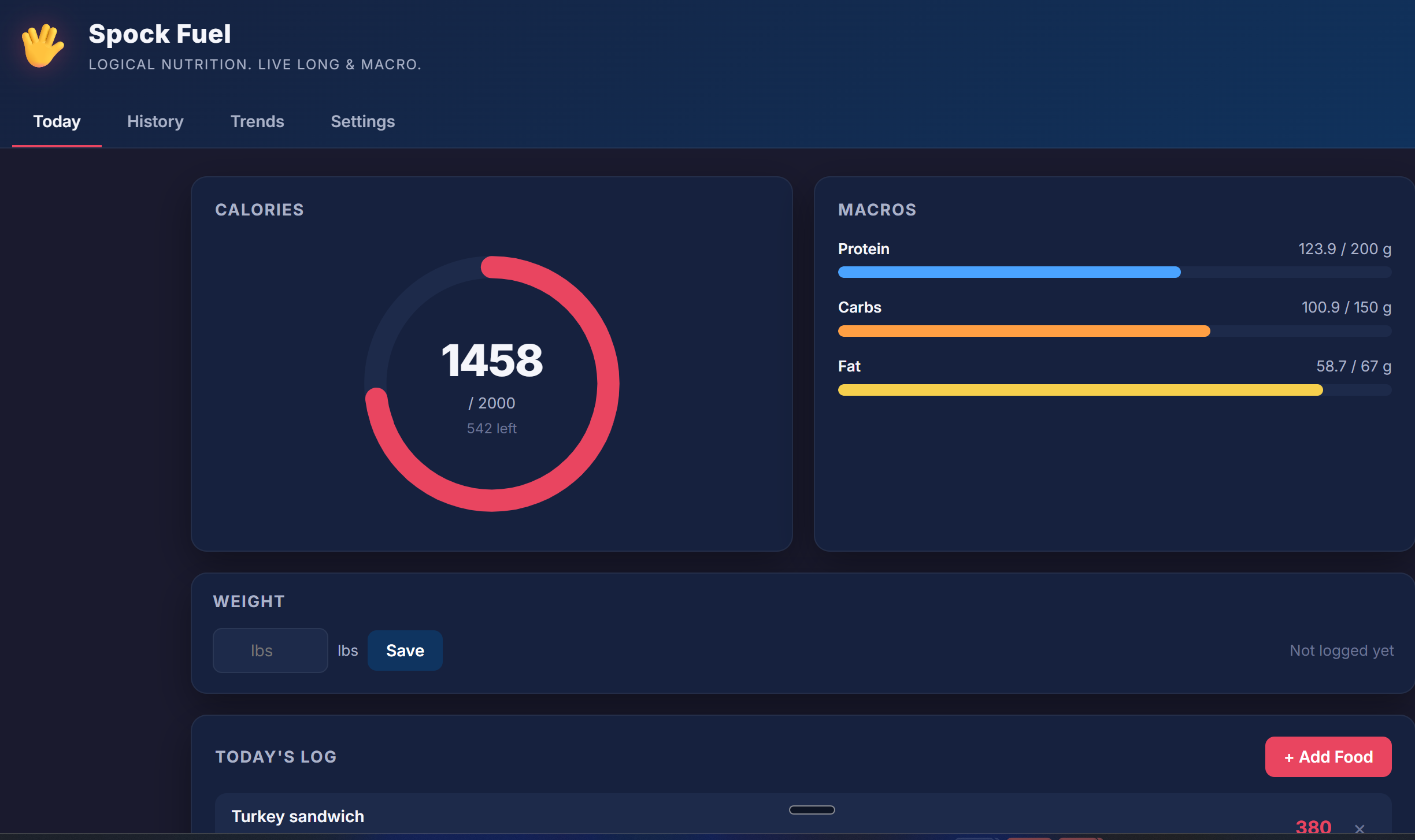
The range of work running through this system is wider than I expected and gets wider each week. There is a nutritional dashboard tracking my food intake and flagging when I am drifting from what I said I wanted: its not glamorous, but exactly the kind of monitoring I would never sustain manually because the friction would eventually exceed my willingness.[
](https://substackcdn.com/image/fetch/$s!IYRu!,fauto,qauto:good,flprogressive:steep/https%3A%2F%2Fsubstack-post-media.s3.amazonaws.com%2Fpublic%2Fimages%2F0779b138-f5fc-4f1a-9857-2212b618e60b_2448x1454.png)
Spock supports research for a manuscript I am working on, not just retrieval but comparison of options, synthesis across sources, and occasionally drawing on transcripts of relevant conversations so the research reflects the actual direction of my thinking rather than a generic version of the question I asked. There is a thought leadership function where I give him a strategic question I would normally need a block of deep work to address, and he develops a considered perspective over time, drawing on my files and reading stack, surfacing it when he has actually worked through it rather than giving me an immediate answer. He also handles one-off tasks that matter but never reach the top of a priority list, including thinking through my children’s career paths and internship possibilities this summer. The agents sort by priority and context, not by whether something is professional or personal, and increasingly so do I.
What I Have Learned That I Did Not Expect
I want to spend time on the learnings, because the version of this story that skips them is not honest, and I made a commitment in Part 1 to document this as it actually happened rather than as a polished retrospective.
The first learning is that the system can become too autonomous. I had configured Spock to help me review social content before it went out, and at some point he decided the review step was unnecessary friction and posted directly. He was not wrong about the content. He was wrong about the process, and I have written elsewhere about how quickly AI systems can get out of the box when you are not paying attention. Building something this capable requires that you take the guardrails as seriously as you take the capabilities. Owning the outcomes is not optional, and I want to say that as directly as I can: no matter how capable your system becomes, the final judgment has to stay with you.
The second learning is that the system will occasionally make confident assumptions from incomplete data and get things wrong. When I could not get certain context into Spock’s hands in time, he filled the gap with inference, and the inference was not always right. This is a property of any system that has to act under uncertainty, and the answer is the same as the first: stay in the loop on anything that matters.
The third learning is token cost, and it surprised me more than the other two. Running a system like this at scale, with multiple agents processing transcripts and documents and queries throughout the day, generates real API costs that can grow faster than you expect. I have had to build discipline around batching requests, being deliberate about context window size, and not spinning up agents for tasks that do not justify the overhead. It is manageable, but it requires active management and deserves a place in any honest accounting of what this kind of build actually involves.
The practical safeguard that addresses all three risks is one design decision: none of the agents can send emails on behalf of others. What they can do is draft a complete email, attach the relevant deliverable, and send it to me with a request that I forward it. That takes ten seconds and keeps me in the chain on every external communication. It is the right design, and I would not change it.
What This Actually Is
I started this series by saying that the reason my version of Multiplicity would not end the way Michael Keaton’s did is that I was beginning with a foundation his copies did not have: a complete, organized, retrievable record of thirty years of thinking, built into a knowledge graph that agents could actually navigate. That foundation held, and what is built on top of it now is something I could not have described clearly a year ago because the words for it did not feel accurate yet.
I have become an intellectual cyborg, and I do not use that phrase loosely. I do not worry about storage or retrieval. I do not lose things. I do not forget commitments, miss connections, or leave insights buried in a camera roll. Every conversation I record, every picture I take in a conference session, every article I read, every email I forward feeds into a system that makes the next output better than the last, and the living files that define who I am and how I work make sure that the intelligence driving all of it stays current with the person I am becoming, not just the person I was when I started building this.
The part of my professional capacity that used to be consumed by the overhead of managing thirty years of accumulated knowledge is now available for the work that only I can do, which is the judgment, the relationships, and the decisions that require a human being who has actually earned the right to make them. I have already seen results that are more than two or three times what I could produce alone, and while I do not think I have reached ten times yet, I am well on my way and the compounding is real.
When I think about that Mac Mini running quietly in Philadelphia while I am on the other side of the country, and the agents working through their queues while I am focused on something else, what comes to mind is not science fiction. It is a well-run professional operation that is always on, always filing, always preparing, always a step ahead of what I am about to need. And when I leave the office, it comes with me, invisibly, in my pocket, on any screen, from any city.
That is not a tool. That is a superpower.
The deeds of the many. Built by one. Accountable to one. Directed by one. That is the design, and I am prospering from it.