The cost of solving a problem that's invisible to the investors in the room.
By Katrina C. Foster
Published: 2026-05-20
URL: https://codelikeagirl.substack.com/p/too-early-overlooked-women-founders-funded-hoseanna
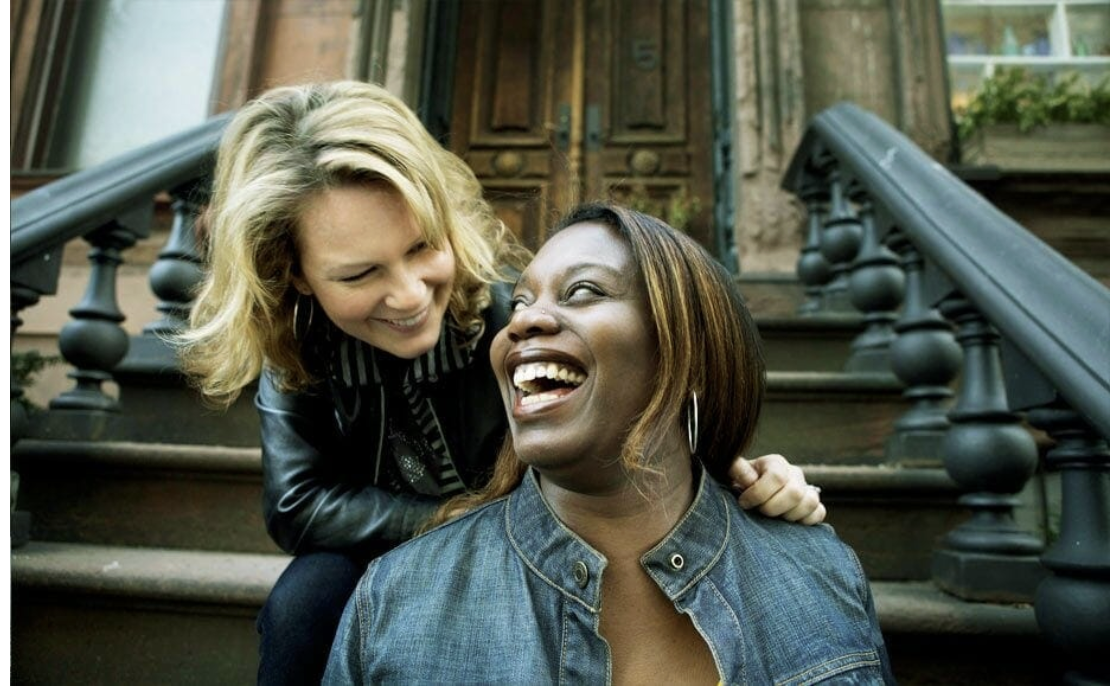 \Photo courtesy of the author.\
TL;DR: The composition of the investor room, not the quality of the idea, determines what gets funded. Hoseanna pitched the same subscription convenience model as Dollar Shave Club in 2011 and was passed over; Dollar Shave Club sold to Unilever for $1 billion four years later. All-female founding teams still receive approximately 2% of total venture dollars, a number that has barely moved in a decade.
Most startup founders have heard some version of “great idea, just too early.”
It is the polite euphemism people use for companies that didn’t make it—the corporate equivalent of “she’s in a better place.”
I heard it about our own startup years ago and eventually filed it away under “lessons learned.”
Hosiery Meets Hallelujah
On a rampage down memory lane, I re-discovered an old interview on IdeaMensch — one of those early founder-profile sites that popped up when the startup ecosystem was still figuring itself out. The photo accompanying it radiates the excitement my partner and best friend, Tracey Solomon, and I felt about the launch of Hoseanna, our new startup.
It was 2011. Hoseanna was a subscription e-commerce platform for the “everyday stuff” like hosiery, razors, and feminine care items women need but that no one, at the time, was making convenient to buy. We were three months in. Tracey was in New York. I was in Vancouver.
We ran the company on Skype calls and strong coffee, and built our own subscription e-commerce platform because Shopify was barely a thing. Facebook ads were just starting. We raised a small round, and landed our banner ad on the New York Times homepage … I wish I’d saved the screenshot!
 \Early ad for their product.\
I might have closed the tab and moved on. But a few days later, I was watching a rerun of Dragon’s Den with my daughter when four young women from Montreal walked in and pitched a hosiery subscription company. The Dragons loved it. One of them called the model “brilliant.”
I sat there on the couch, bristled, and shot Tracey a text … ‘listen to this’. Fifteen years after we were told our idea was too early, here it was — same concept, different room.
Why was the room different? Because they were pitching to a panel where three of the five Dragons (including Arlene Dickinson ) are women. The composition of the room changed. So did what counted as “obvious.”
I went back to that old article.
Reading it now, I remember exactly who we were at that moment. Two women in our mid-thirties, both with serious careers behind us, both busy, both tired of walking to the corner store for pantyhose and feminine care products. We’d watched Dollar Shave Club and Harry’s start-up — subscription convenience, built for men — and thought: why shouldn’t women have this too?
The name was Tracey’s idea. She’s a branding person. Hoseanna — hosiery meets hallelujah!
Same Concept, Different Room
When we pitched Hoseanna to VCs after our angel round, the responses ranged from dismissive to bizarre. “Why would women ever want this?” one asked. “Why would they need the convenience when they could walk to the corner store?” Another recommended we abandon our value proposition entirely to sell lingerie to plus-size middle America …a suggestion that could not have been further from the utility we were building.
These were experienced investors. They were also people who had never, in their lives, needed to buy a pair of pantyhose or period care.
Dollar Shave Club launched the same year we did. Their thesis was identical: subscription convenience for a commodity product. Within four years, Unilever bought them for a billion dollars. Harry’s followed a similar path. Both were premised on the idea that men shouldn’t have to run to the store for razors.
Investors understood that immediately. A room full of men who shaved every morning could feel the problem in their own hands. Of course, you’d want razors delivered. Of course, that’s a business.
But two women standing in that same room, saying “women want the same convenience for the things they buy every month,” was treated as a novelty. A curiosity. Something that required an exhausting amount of translation.
The model wasn’t the real problem. The room was.
The Part Nobody Talks About
We eventually ran out of money. The velocity wasn’t there.
We hung up our shingle, hung our heads, and went back to our respective worlds.
The feeling that stayed with us? Shame. Not just disappointment, but ashamed of failure. We felt we’d failed our angel investors and customers. There was no culture of “failing forward” to catch us, no founder communities celebrating the “pivot” or treating the experience as a signal rather than a stigma. We didn’t talk about it. We just moved on.
Tracey has since founded three more ventures (plug for Flatbush Granola here), all drawing on what Hoseanna taught her about brand and consumer behavior. I discovered that I loved the “space” of the build - the strategy, the venture dynamics, the mechanics of scale. That led me into a fourteen-year practice working with both founders and investors.
The failure wasn’t an ending; it was a door. But I do think about timing constantly.
What's Changed and What Hasn't.
When Tracey and I were pitching, women made up roughly 17% of angel investors in Canada. There were almost no women-led venture funds. The51 didn’t exist. Women’s Equity Lab didn’t exist. The ecosystem that now connects women founders with women investors was a decade away from being built.
The numbers have shifted since then … meaningfully in some places, stubbornly in others.
Women now make up about 35% of Canadian angel network membership. Organizations like The51, Women’s Equity Lab, The Forum, and WeBC are doing the structural work of building networks and raising capital.
In the US, PitchBook reported that female-founded companies raised a record $73.6 billion in 2025. But that record comes with an asterisk the size of the CN Tower. More than $30 billion of that total went to just two companies: Anthropic and Scale AI. Remove them, and the record vanishes.
All-female founding teams still receive roughly 2% of total venture dollars … a number that has barely moved in a decade. In fact, the share of women receiving a first VC cheque has dropped since 2021.
$73.6 billion and 2%. Both are true at the same time.
When you pitch an idea that’s built from lived experience, and the people evaluating it have never lived that experience, you’re not just fighting for funding. You’re fighting to make the problem understandable.
That’s not a taste problem or a judgment problem. It’s a composition problem. Who is in the room determines what gets seen as ‘obvious’.
The growth of the women’s investing ecosystem isn’t just a nice story about inclusion; it’s an infrastructure correction.
Every woman who joins an angel network or writes a cheque is changing the default settings of the room. At a macro level, it’s a boost to GDP. Research consistently shows that women-led companies generate more revenue per dollar invested and run leaner.
I recently wrote on LinkedIn about the Fosbury Flop - the idea that when the landing surface changes, the winning technique changes too. AI is our new “foam mat”; it has collapsed the cost of experimentation.
The landing surface is changing. More women investors. More women-led funds. More organizations are building the connective tissue. This creates rooms where the problem is already understood and where a founder can stop translating and just start building.
We were early. But being early is different from being wrong. I wish someone had told us that in 2011.
I wonder how many other Hoseannas are out there—sitting in the archives of hard drives and notebooks because the room wasn’t ready. Ideas that were sound, founders who were capable, and timing that was just early enough to be fatal.
Tracey and I are still best friends. That is the thing I am proudest of - more than any business we’ve built since. We went through something turbulent and transformative and came out with our friendship intact. In any partnership, that is never a given.
The ideas and the founders have always been there. The work now is making sure the room is finally ready when the next Hoseanna walks in.

If This Resonated With You
We’re so grateful to for allowing us to share her story here on Code Like a Girl. If this resonated, don’t just read it. Follow her work. Writers like this deserve readers who show up.
[ The Red Thread
A strategist who reads too much, connects things other people keep separate, and has opinions about all of it.
By Katrina C. Foster](https://katrinacfoster.substack.com?utmsource=substack&utmcampaign=publicationembed&utmmedium=web)
Most of what gets written about women in tech stays at the surface. We don’t.
Code Like a Girl publishes three times a week with stories, tutorials, and hard-won lessons from women who are building, leading, and refusing to stay quiet.
If you’re not subscribed yet, start there. It’s free.
If you’re already here and ready to go deeper, Her Edge is a paid monthly column from our founder, . She spent twenty years in tech, hit that ceiling herself, and came out the other side as a VP who retired at 43.
Each month, she shares the specific frameworks that broke through it.