Yet another release from Anthropic
By Hamza Farooq
Published: 2026-04-21
URL: https://boringbot.substack.com/p/claude-opus-47-results-early-benchmarks
👋 Hi everyone, I am Hamza. I have 18 years of building large scale ecosystems and I teach at UCLA and MAVEN, and founder of Traversaal.ai.
Welcome to Edition #31 of a newsletter that 15,000+ people around the world actually look forward to reading.
The Production Gap is a reader-supported publication. To receive new posts and support my work, consider becoming a free or paid subscriber.
We’re living through a strange moment: the internet is drowning in polished AI noise that says nothing. This isn’t that. You’ll find raw, honest, human insight here — the kind that challenges how you think, not just what you know. Thanks for being part of a community that still values depth over volume.
Want to learn more about Claude Code?
Join my free session, sign up here
🎓 Want to up skill as AI Engineer?
-
Join the next cohort of my Agent Engineering Bootcamp (Developers Edition) May 25th
-
Watch the free 4-session Agent Bootcamp playlist on YouTube
Every time Anthropic drops a new model, my inbox fills up with the same question: “Is it actually better, or just better on paper?” With Claude Opus 4.7 now in early access, I’ve been digging through the benchmark data, community threads, and real user feedback to give you a straight answer.
There’s a specific kind of dread that hits when a major model update lands.
You want the new capabilities, but you’ve been burned before by an “upgrade” that quietly broke your carefully tuned prompts. Claude Opus 4.7, Anthropic’s latest flagship release, arrives with exactly that dual energy. The early Opus 4.7 results are genuinely impressive in several areas, but they come with caveats worth discussing honestly.
This article walks through the headline benchmark numbers, the standout new features (high-resolution image support deserves its own section), and what real developers and power users are actually reporting from the field. We’ll also put Anthropic Claude Opus 4.7 next to its main competitors to give you the competitive context you need.
Benchmark gains don’t always map cleanly to real-world prompt compatibility. By the end, you’ll have a workflow-focused verdict, not a marketing recap.
🔑 Key Takeaways: - Benchmark gains are meaningful, but test your existing prompts before fully committing - High-resolution image support is a genuine standout new feature - Mixed real-world reception reveals the benchmark-vs-reality gap this article unpacks
 Source: Anthropic |
https://www-cdn.anthropic.com/images/4zrzovbb/website/96ea2509a90e527642c822303e56296a07bcfce4-1920x1080.png |
|---|

What’s new in Claude Opus 4.7? A quick feature rundown
Before we get into the numbers, let’s make sure everyone’s on the same page. If you’re coming in cold and wondering what actually changed, here’s the fast briefing.
The headlining features at a glance
Anthropic Claude Opus 4.7 arrives with a focused set of upgrades rather than a sprawling feature dump. The changes that matter most for practical work:
-
High-resolution image support, a qualitatively new capability, not just an incremental tweak
-
Improved software engineering performance, stronger scores on multi-file code tasks and autonomous bug resolution
-
Better tool-calling accuracy, more reliability in agentic pipelines and multi-tool orchestration
-
Refined instruction-following, particularly in complex, multi-step system prompt scenarios
This isn’t a ground-up model rewrite. It’s targeted. That framing matters when you’re deciding how to approach migration.
High-resolution image support — why it matters
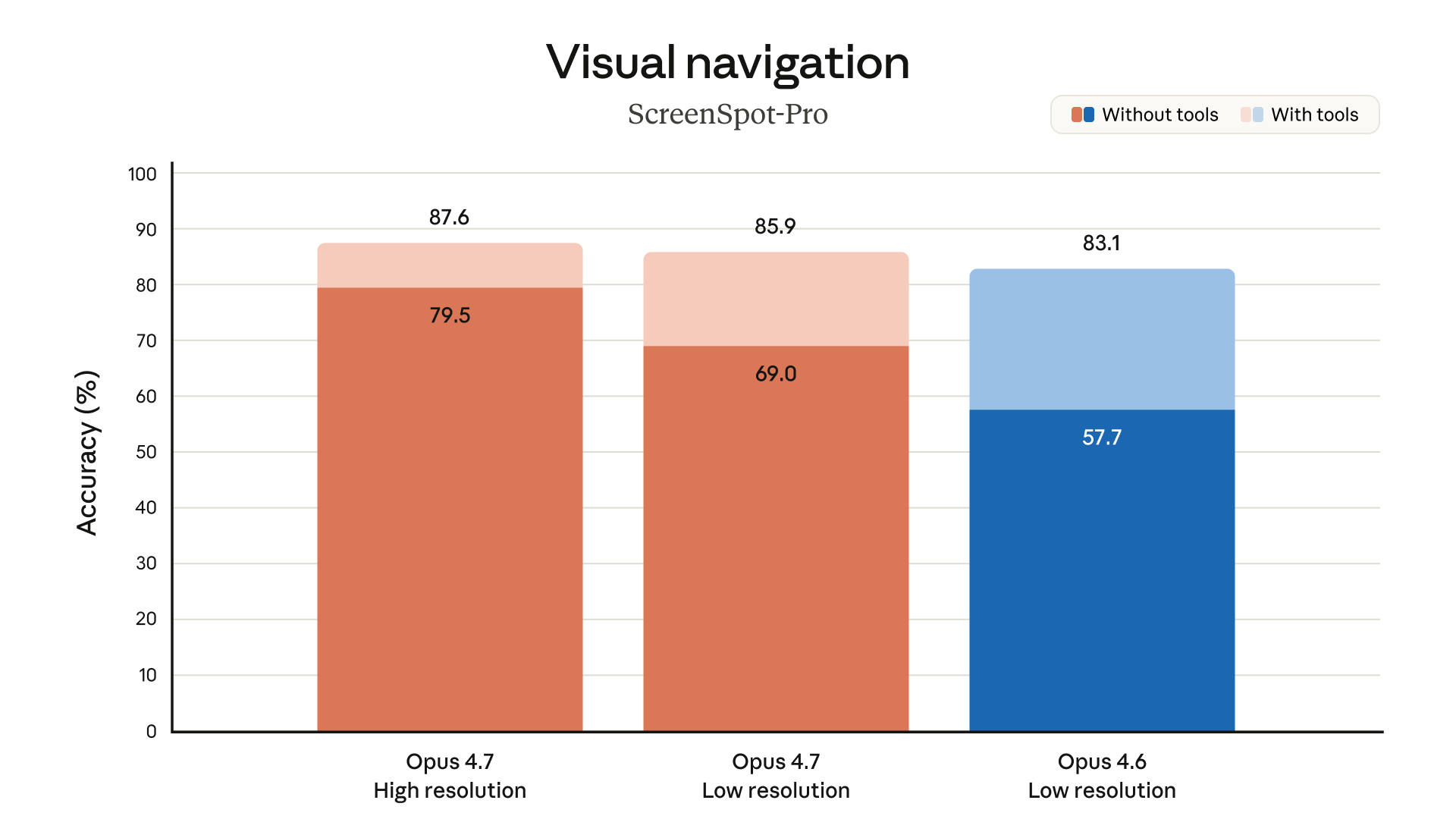
This is the one feature that actually changes what’s possible, rather than nudging existing scores upward. High-resolution image support means Claude Opus 4.7 can process high-DPI images with meaningfully more fidelity than its predecessor, opening up workflows that were previously blocked by image quality constraints.
An analyst uploading a high-DPI architectural diagram and asking Claude to extract precise material specifications from dense annotations, that workflow is now viable. The same goes for design review pipelines, dense medical document analysis, and visual reasoning tasks where fine detail carries real weight. For teams that have been forcing lower-resolution workarounds, this is a genuine unlock.
The Claude Opus 4.7 benchmark results in the multimodal domain are being driven partly by this new ceiling, not just incremental refinement of existing capabilities.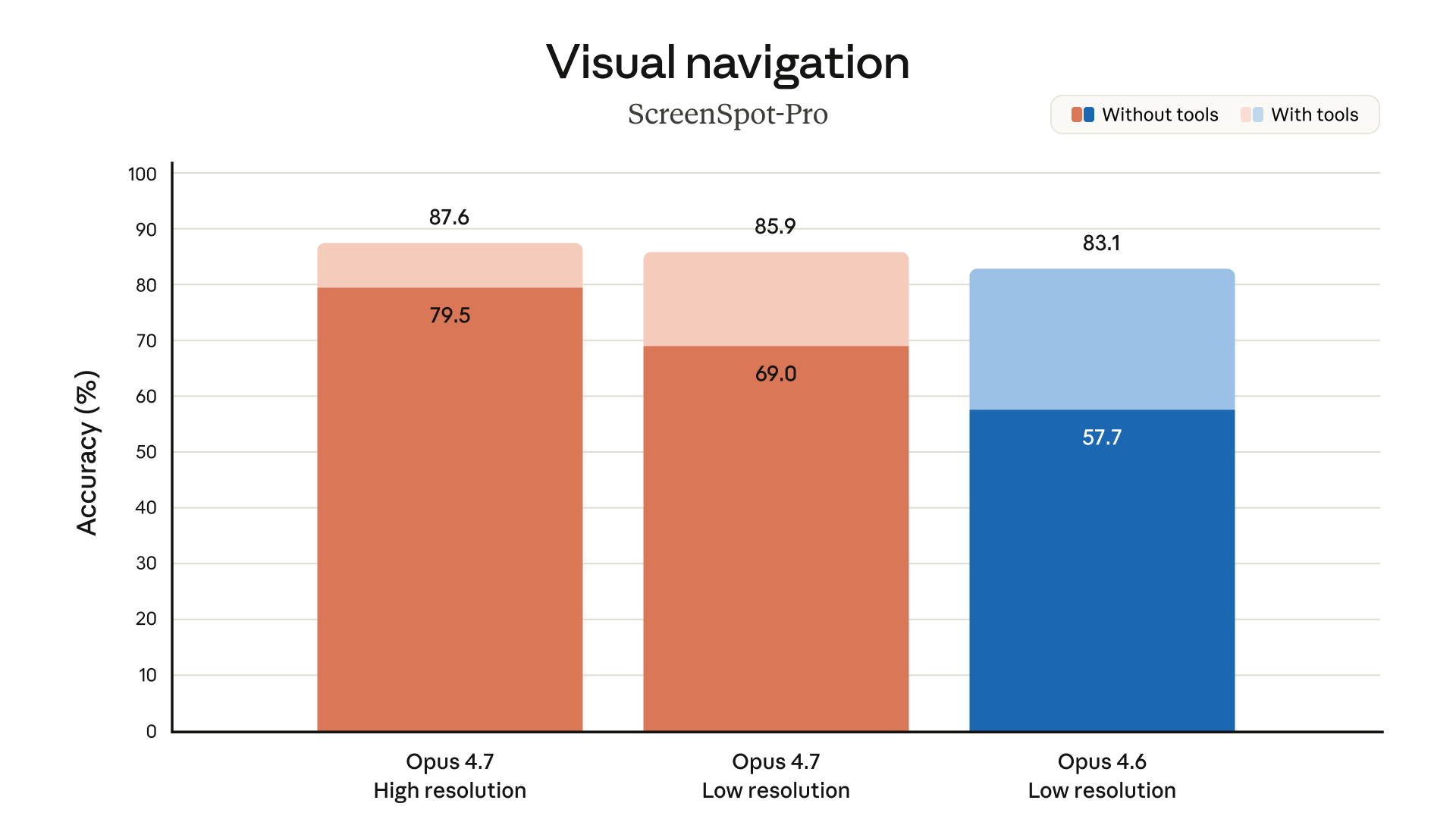 Source: Anthropic | https://www-cdn.anthropic.com/images/4zrzovbb/website/e97dffe5ee2a8764d5f122578f2ad8cde957070e-1920x1080.png
What didn’t change (and why that’s worth noting)
The context window size appears consistent with Opus 4.6, and the core pricing tier structure hasn’t shifted dramatically for most API users. The fundamental reasoning architecture carries significant continuity with its predecessor.
Opus 4.7 is an evolution, not a revolution, so if you were hoping for a context window doubling or a complete behavioral overhaul, temper those expectations. That architectural continuity also explains the prompt compatibility concerns we’ll get into: when a model changes enough to improve benchmarks but not enough to feel entirely different, the edge cases in your tuned prompts become unpredictable.
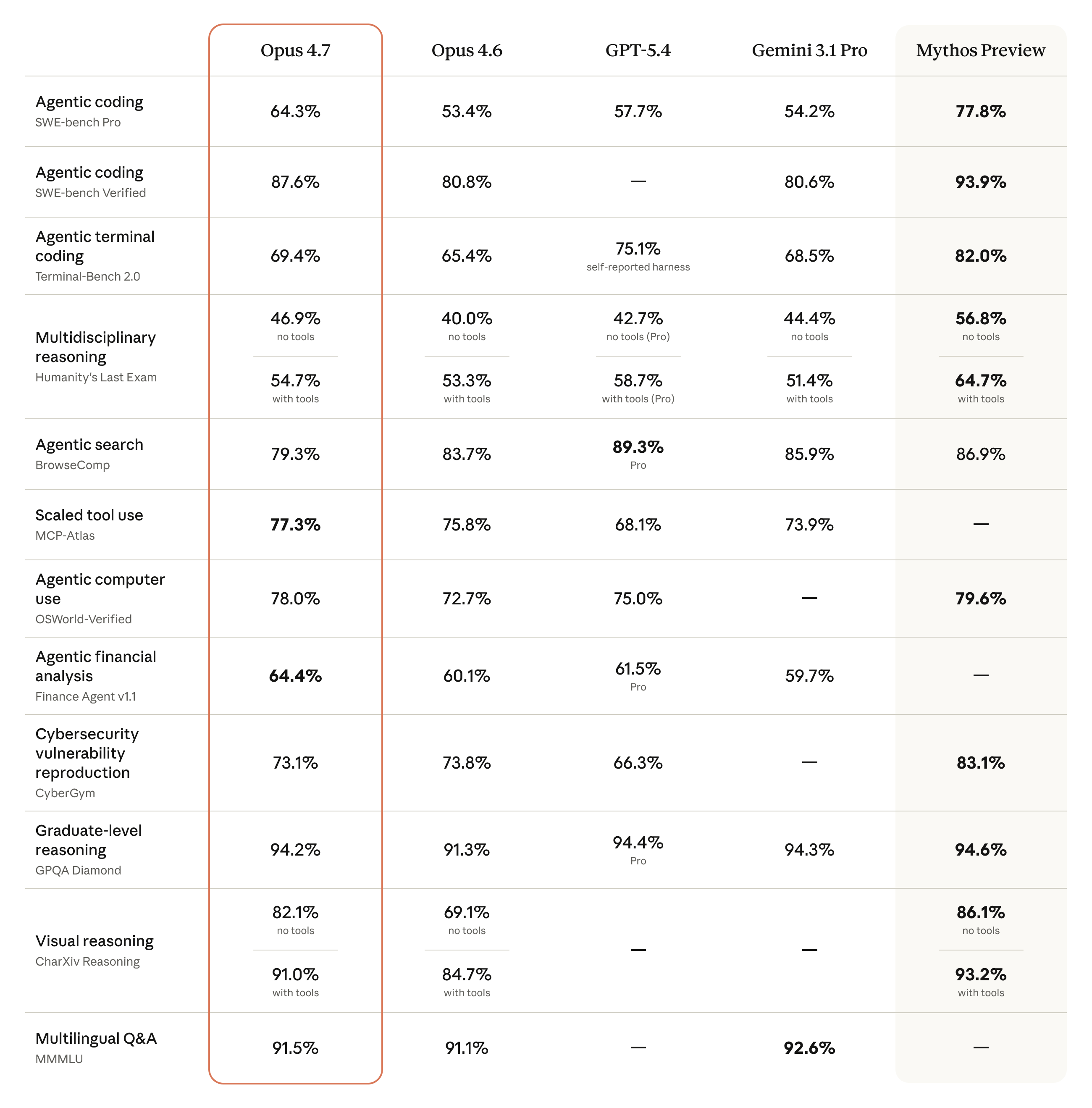
Claude Opus 4.7 benchmark results — breaking down the numbers
The numbers below are a starting point for interpretation, not a final verdict.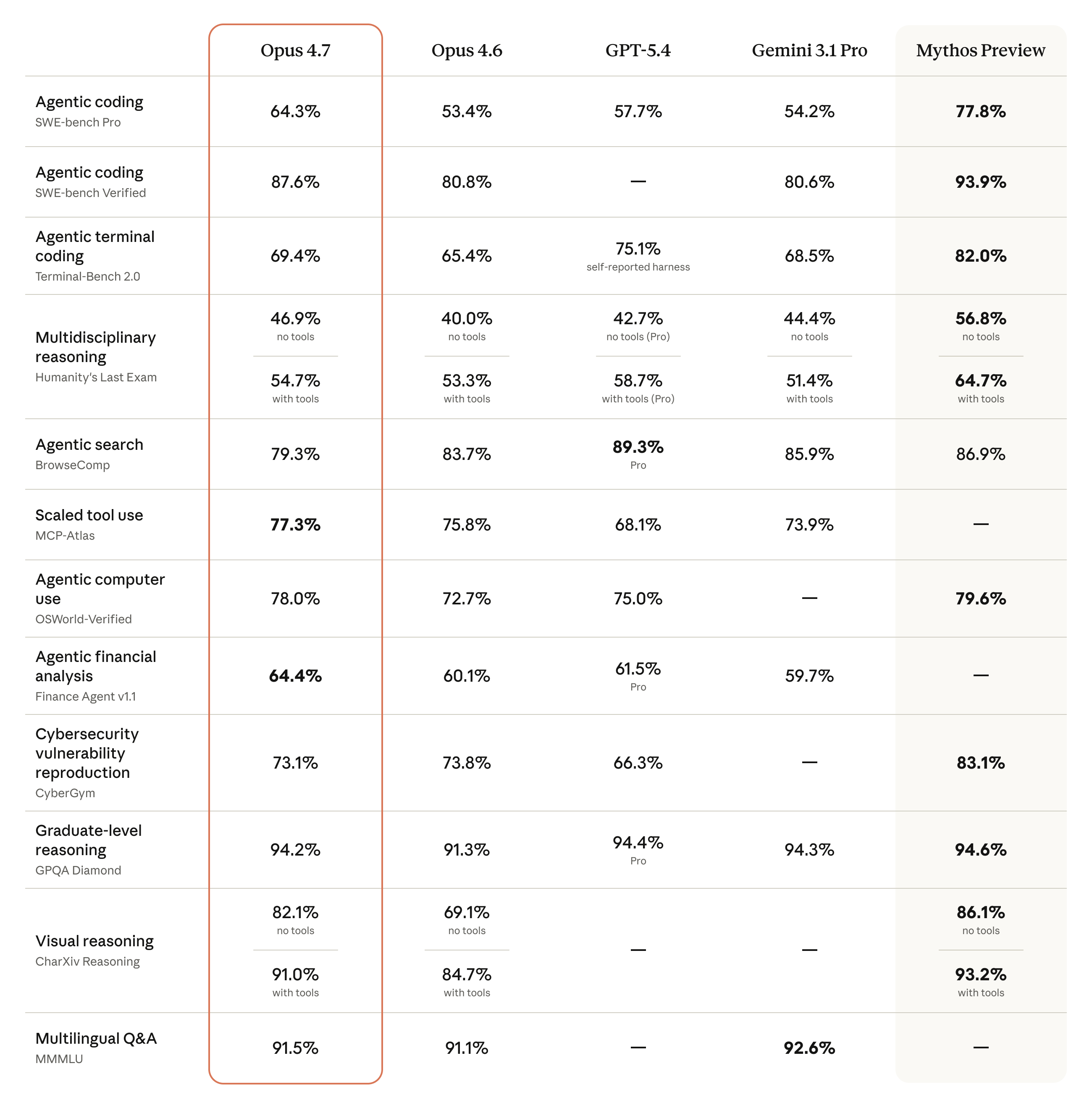 Source: Anthropic | https://www-cdn.anthropic.com/images/4zrzovbb/website/d434d15757c6abac1122af483617741776d5a114-2600x2638.png
Software engineering and coding benchmarks (SWE-Bench, HumanEval)
The Claude Opus 4.7 benchmarks on software engineering tasks show the clearest improvement. On SWE-Bench, the industry-standard benchmark for evaluating autonomous code repair across real GitHub issues, Opus 4.7 shows a meaningful step up from Opus 4.6, with early reported scores suggesting improvements in the range of 8–12 percentage points depending on task category (Source: community-reported testing via r/ClaudeAI and independent evaluations). On HumanEval, which tests functional code generation, Opus 4.7 continues to perform competitively.
In practice, the model is meaningfully better at resolving multi-file bugs autonomously and handling complex refactoring tasks without losing thread. For developers using Claude in CI/CD pipelines or code review automation, this delta gets felt, not just measured.
One caveat worth flagging: SWE-Bench performance can vary based on how problems are scaffolded and whether tool use is enabled. Treat specific numbers as directional signals rather than absolute rankings, the trend is clear, but the precise magnitude is worth verifying against your own task distribution.
Tool-calling, agentic tasks, and multi-step reasoning
This is arguably where Claude Opus 4.7 makes its most compelling case. Tool-calling accuracy, the model’s ability to correctly invoke external tools, parse their outputs, and chain subsequent actions, reportedly improves in both reliability and handling of ambiguous tool signatures. For developers building AI-powered pipelines, this matters because errors compound: one bad tool call in step two of a five-step agent loop can cascade into a completely broken output.
Multi-step reasoning benchmarks also show improvement, particularly in tasks requiring the model to maintain goal-state awareness across many sequential actions. Early agentic task evaluations suggest Opus 4.7 recovers more gracefully from intermediate tool failures, an underrated capability that leaderboard scores don’t always capture well. If your work involves orchestrating Claude as an autonomous agent, this is the benchmark category to pay closest attention to.
Reading the leaderboard critically — what benchmarks don’t tell you
Benchmark scores are produced under controlled conditions with standardized prompts, evaluation rubrics, and fresh model states. Your production workflows are none of those things.
The AI industry keeps rediscovering the same pattern: a model update improves on standardized benchmarks while subtly shifting the behavior that your highly tuned few-shot prompts were relying on. The model hasn’t gotten worse in an absolute sense, it’s gotten better at the benchmark distribution, but your prompts were calibrated to a previous behavior profile. Treat leaderboard scores as a strong signal about capability ceiling, not as a guarantee of drop-in compatibility with your existing setup.
Opus 4.7 vs Opus 4.6 — is the upgrade actually noticeable?
The practical question isn’t “is Opus 4.7 good?” It’s “is Opus 4.7 better than what I’m already using, for what I actually do?”
Where Opus 4.7 clearly outperforms Opus 4.6
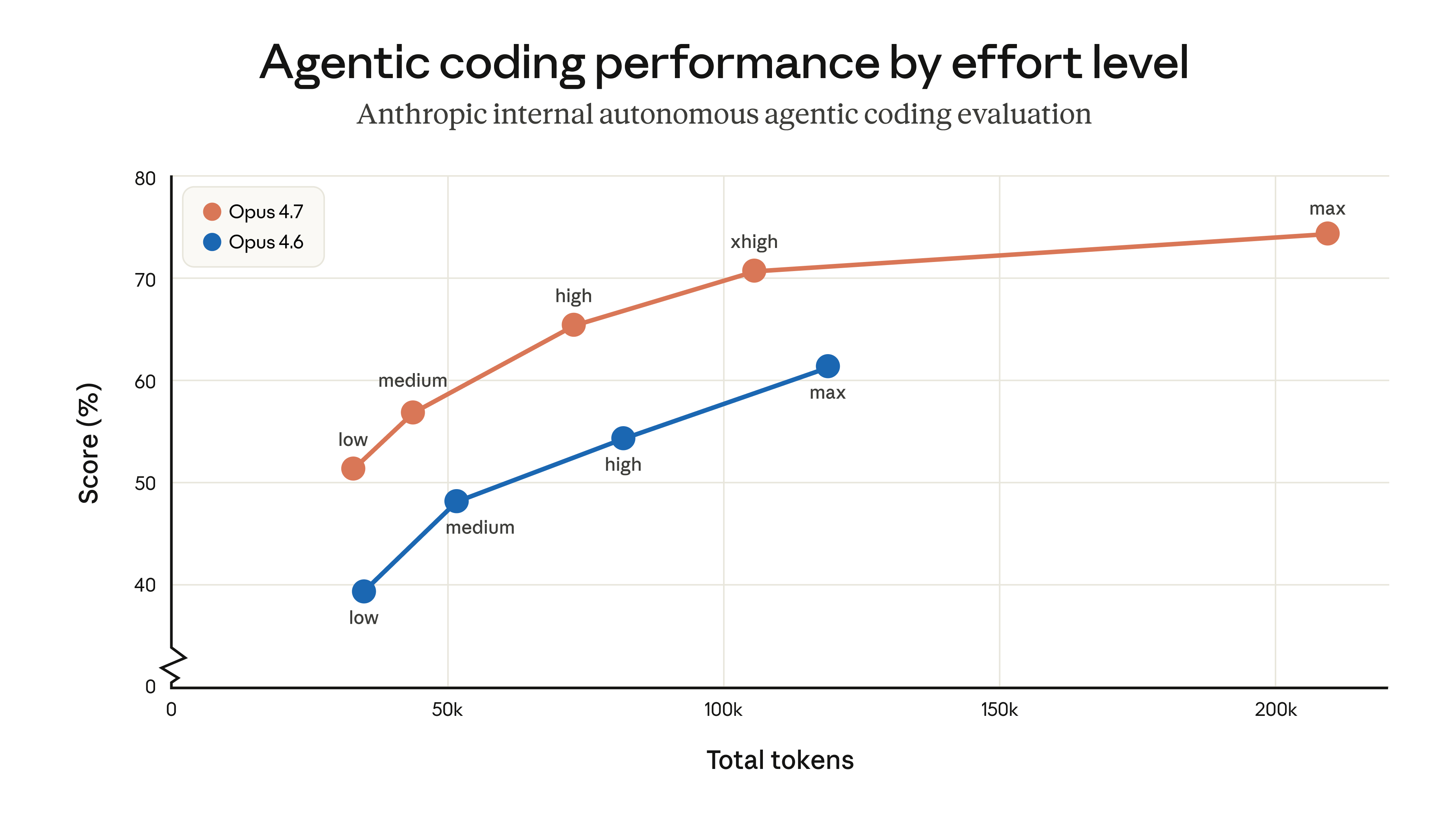
In side-by-side testing reported by early adopters, the performance gap is most consistently noticeable in complex multi-file coding tasks, agentic pipeline orchestration, and high-resolution visual input processing. Developers working on autonomous coding agents report that Opus 4.7 follows complex system prompts more reliably across longer task sequences, with less drift from the original instruction set. One recurring theme in Opus 4.7 vs Opus 4.6 comparisons: the newer model is less likely to “forget” constraints specified early in a long context when deep in tool-calling loops.
For users who have been pushing Opus 4.6 to its limits on multi-tool orchestration tasks, the improvement feels tangible rather than marginal. The high-res image capability is simply additive, if you needed it, you now have it; if you didn’t, it doesn’t affect you.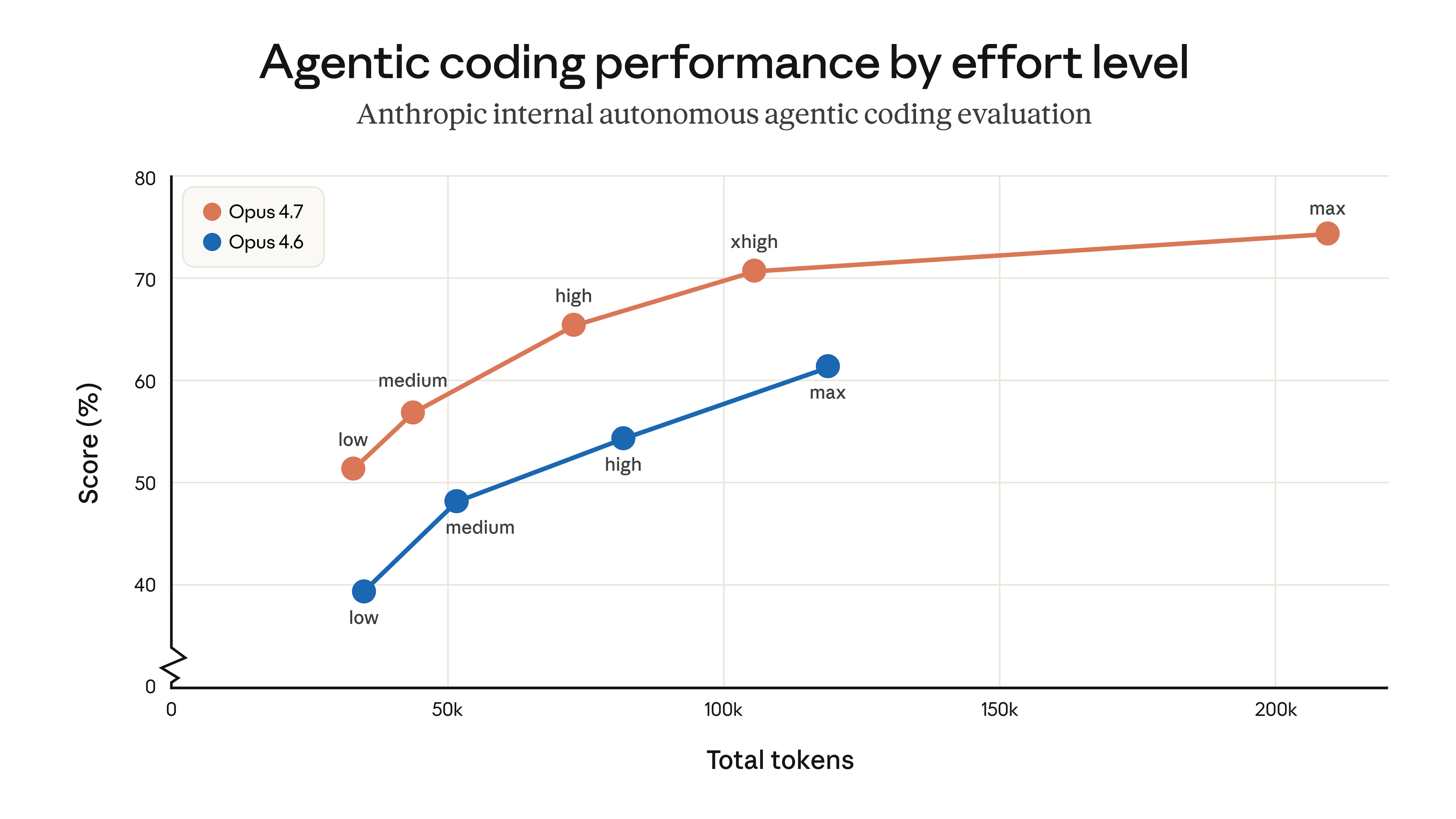 Source: Anthropic | https://www-cdn.anthropic.com/images/4zrzovbb/website/ff97ab0f2a5f3a243da02398f97dec1ac99b526a-3840x2160.png
The regression problem — prompts that worked before may not work now
A meaningful subset of early users reports that prompt compatibility regressions are a real friction point in the migration. This shows up most often with highly specific few-shot examples, custom personas defined in system prompts, and writing-style instructions that depend on subtle behavioral calibration.
This pattern isn’t unique to Anthropic Claude Opus 4.7, it’s well-documented across major model updates industry-wide. But it shouldn’t be dismissed as a minor inconvenience for users whose workflows have been carefully optimized over months. Training-distribution shifts alter the probability landscape of the model’s outputs, even when the change is intended as an improvement. Prompt regressions are usually fixable, but they require deliberate testing and iteration rather than a seamless drop-in swap.
A simple migration checklist for Opus 4.6 users
If you’re planning to migrate, here’s a practical framework to minimize disruption:
-
Inventory your highest-stakes prompts, identify the system prompts and few-shot examples where output quality directly impacts your users or business processes
-
Run parallel tests, for each critical prompt, run identical inputs through both Opus 4.6 and Opus 4.7 and compare outputs systematically, not just impressionistically
-
Check instruction-following fidelity, pay specific attention to whether Opus 4.7 respects tone, format, and constraint instructions as reliably as its predecessor
-
Document regressions before migrating, create a log of any prompts showing degraded performance so you can iterate deliberately
-
Migrate in stages, consider running Opus 4.7 on new workflows first while keeping Opus 4.6 on proven, optimized pipelines until you’ve validated performance
-
Revisit your few-shot examples, if the model’s base behavior has shifted, your few-shot examples may need recalibration to the new prior
This checklist won’t eliminate migration friction, but it turns a potentially chaotic upgrade into a managed process.
Real-world feedback — what developers and power users are actually saying
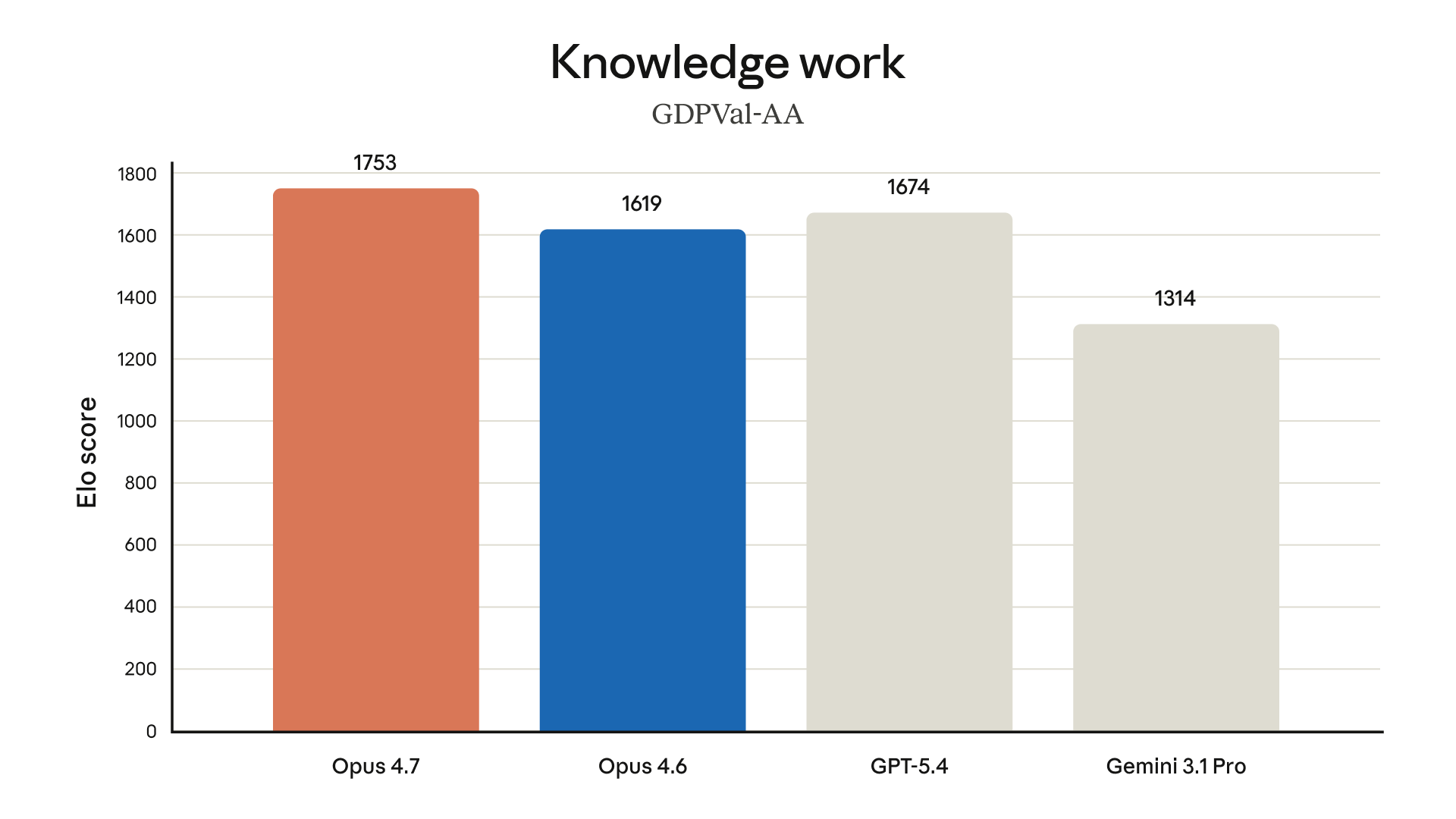
Numbers are one thing. Here’s what practitioners are reporting from the field.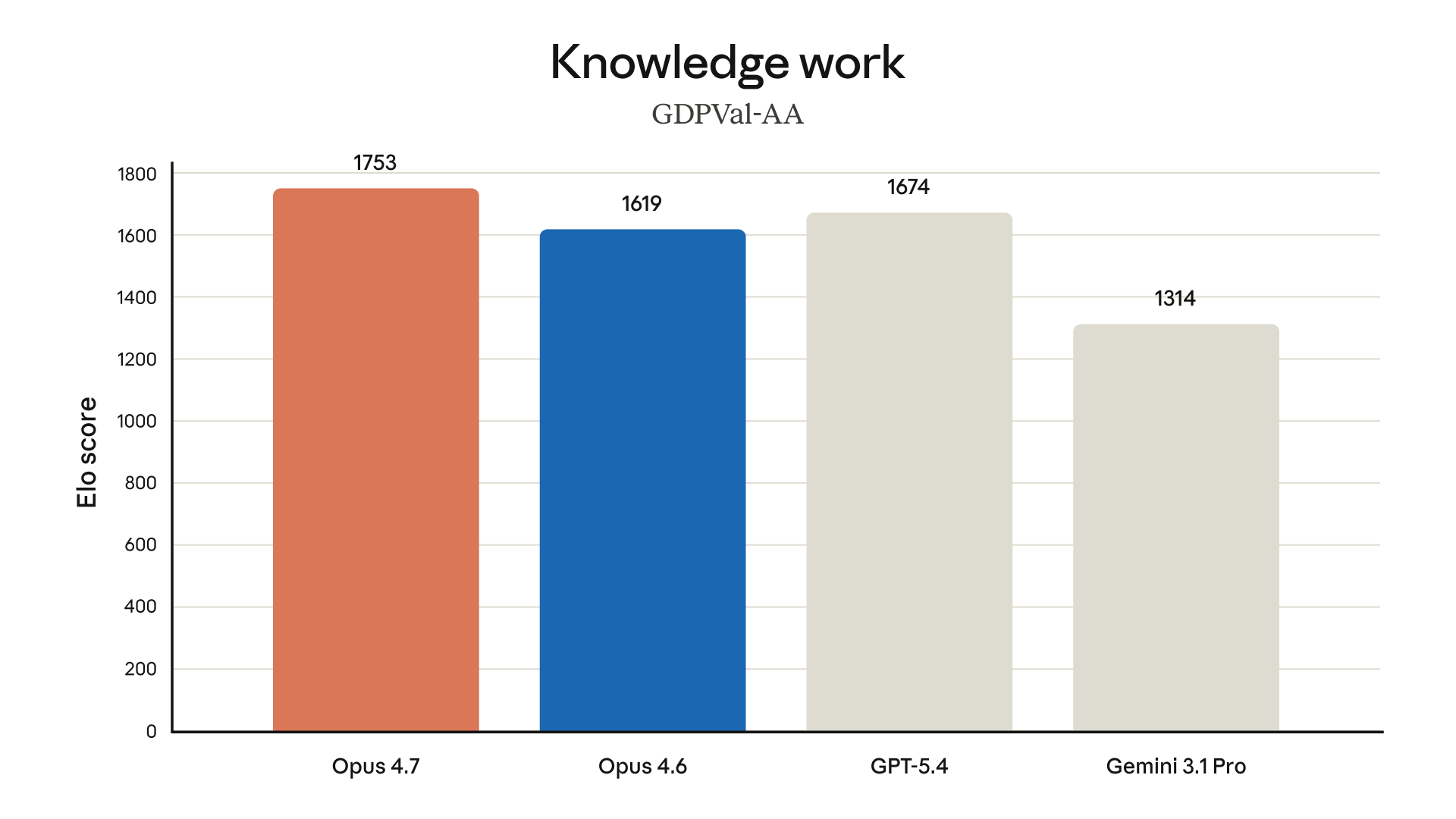 Source: Anthropic | https://www-cdn.anthropic.com/images/4zrzovbb/website/9299f8b86c69359c31d15dbece4545e628bddc34-1920x1080.png
The positive reports — what’s winning people over
The most consistently praised aspects of Opus 4.7 in developer communities, including threads on r/ClaudeAI, Hacker News, and X/Twitter, center on agentic task reliability and coding performance. Developers building multi-step automation workflows report noticeably fewer mid-pipeline failures, with the model recovering more gracefully when tool calls return unexpected outputs. Several users specifically called out improvements in long coding task coherence, the model maintains awareness of earlier decisions over longer code generation sessions.
The high-resolution image processing capability has also generated genuine enthusiasm among users in design-adjacent roles and document-heavy workflows. Anyone who regularly works with detailed diagrams, dense PDFs, or high-DPI design assets is finding practical value here quickly. The Claude Opus 4.7 benchmarks in this area appear to reflect real workflow gains, not just lab conditions.
The frustrations — where users are hitting walls
The most frequently reported pain point is exactly what we previewed: prompt regressions in carefully tuned production workflows. Some users report that Claude 4.7 is more “opinionated” in certain contexts, occasionally pushing back on instructions or reinterpreting prompts in ways that Opus 4.6 handled more literally.
There’s also a smaller but vocal group reporting that certain writing and long-form reasoning tasks, areas where Opus 4.6 was particularly strong, feel marginally less reliable in the new model. Improving a model’s performance on the benchmark distribution sometimes means shifting behavior in ways that create friction for workflows calibrated to the previous version. The model isn’t worse in an absolute sense, but it may be different in ways that matter for your specific setup.
Cybersecurity and specialized use cases — a niche worth watching
For cybersecurity professionals and other specialized practitioners with high-stakes, precision-dependent requirements, the Opus 4.7 picture is still developing. Early reports from security researchers suggest improvement in code vulnerability analysis tasks, with the model showing better awareness of security-relevant code patterns in complex multi-file review scenarios.
That said, this is an area where the prompt regression concern hits hardest, security workflows often involve highly specific system prompts and constraint sets that have been carefully engineered over time. Threat modeling assistance and security-focused reasoning tasks are exactly the kind of specialized, precision-tuned use cases where parallel testing before migration isn’t optional. The community consensus in security-focused channels is still forming around Claude Opus 4.7’s software engineering improvements and what they mean for this domain.
Claude Opus 4.7 vs competitors — how it stacks up against GPT-5.4 and Gemini 3.1 Pro
No model evaluation is complete without competitive context. Here’s how Opus 4.7 positions against the field, task-specifically, not as a sweeping declaration.
Head-to-head on coding and tool-calling tasks
On software engineering and tool-calling benchmarks, Claude Opus 4.7 holds its own. Early community comparisons suggest Opus 4.7 trades blows with GPT-5.4 depending on task type, Opus 4.7 appears to edge ahead on complex multi-file autonomous repair tasks, while GPT-5.4 remains competitive on single-function generation and certain API-intensive scenarios. Against Gemini 3.1 Pro, Opus 4.7 shows a clearer advantage in instruction-following fidelity within tool-calling chains.
Definitive head-to-head benchmarks for these specific model versions are still accumulating in the community, so treat these comparisons as directional rather than conclusive. What’s clear is that Claude Opus 4.7 benchmarks place it firmly in the top competitive tier for coding and agentic tasks, not a clean winner across the board, but a serious competitor in the scenarios that matter most to developers.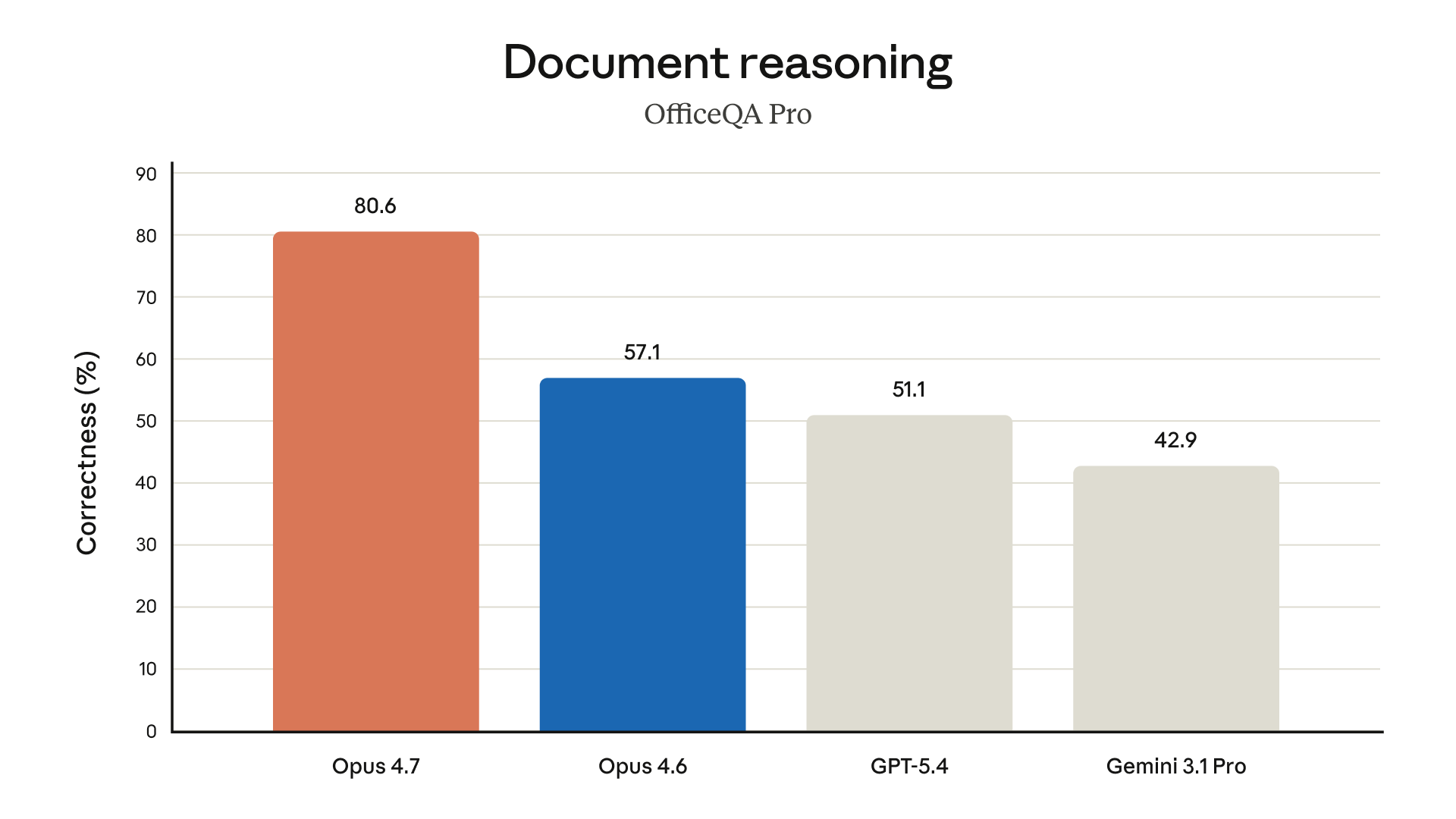 Source: Anthropic | https://www-cdn.anthropic.com/images/4zrzovbb/website/d94e5f5a3eabe4261f0102528f44200c6b92f4e1-1920x1080.png
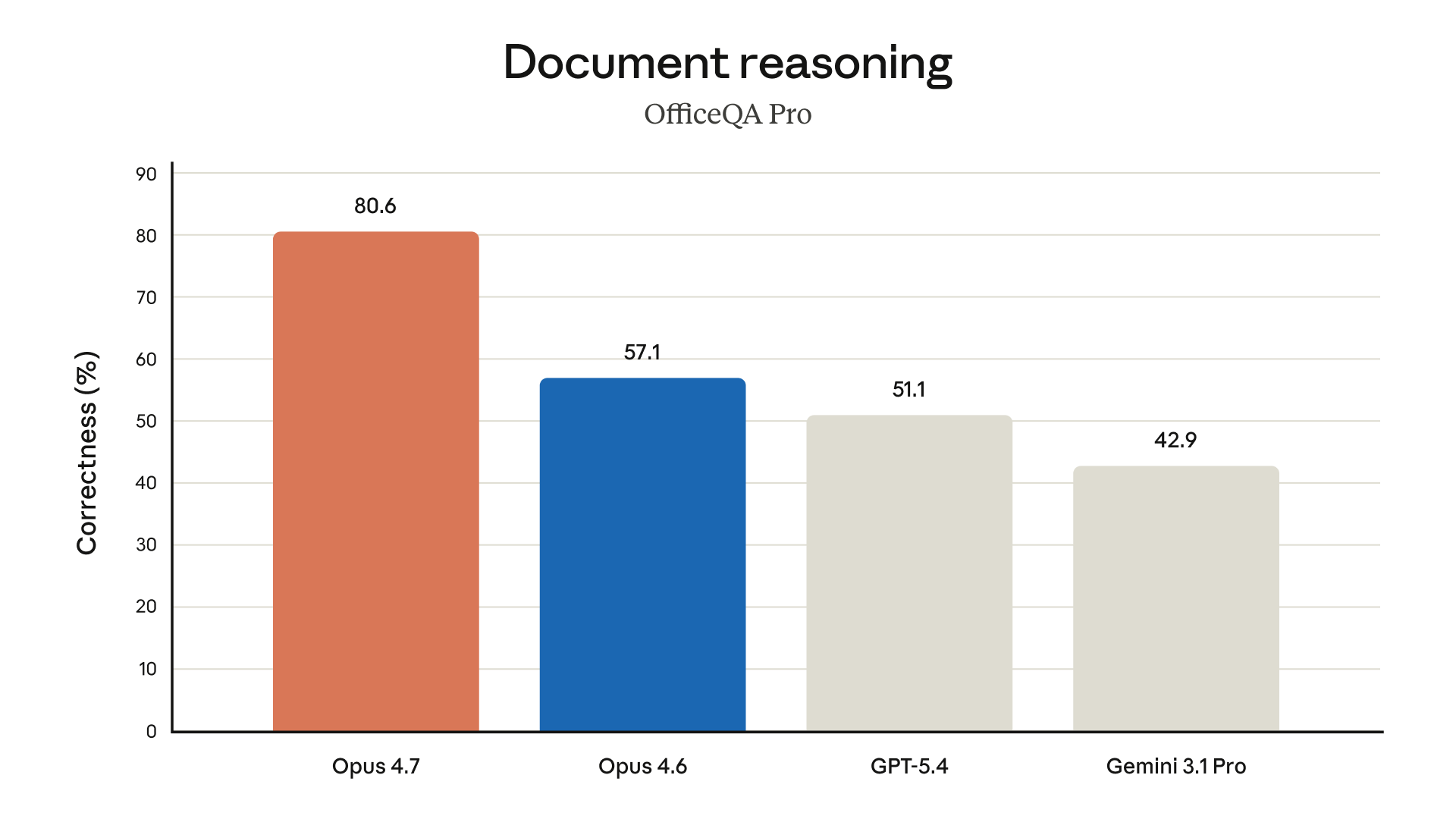
Multimodal capabilities — imaging and visual reasoning compared
The new high-resolution image support is where Opus 4.7 makes its most significant competitive move. Gemini 3.1 Pro has long been the standard for document-heavy visual workflows, and Opus 4.7 now closes that gap meaningfully for a broader range of use cases. For dense document analysis, high-DPI diagram interpretation, and design review workflows, Opus 4.7 now competes seriously with Gemini 3.1 Pro in a way its predecessor couldn’t.
GPT-5.4 remains strong in open-ended visual reasoning and natural-image interpretation. Opus 4.7’s advantage in the multimodal space is most pronounced in text-dense, high-resolution document scenarios rather than general image understanding tasks. If your use case centers on processing detailed technical documents, architectural drawings, or information-dense visual formats, Anthropic Claude Opus 4.7 has made a genuine competitive leap.
Choosing the right model for your use case
Rather than declaring a universal winner, here’s a simple decision framework:
Use CaseRecommended Starting PointAgentic coding pipelines and multi-file bug resolutionOpus 4.7, strong advantageDocument-heavy visual analysis and high-res image workflowsOpus 4.7 or Gemini 3.1 Pro, test bothOptimized existing GPT-5.4 production pipelinesStay on GPT-5.4 unless specific Opus features are neededGeneral-purpose reasoning and writing tasksEvaluate all three against your specific promptsSecurity-focused code analysisOpus 4.7 warrants testing, but validate carefully
The honest answer is that no single model dominates across every task category. Your ideal choice depends on what you’re actually building.
Frequently asked questions
Is Claude Opus 4.7 significantly better than Opus 4.6? For software engineering, agentic tasks, and high-resolution image workflows, yes, the improvements are meaningful and consistently reported. For other task types, the difference is more situational. If those core areas are central to your work, the upgrade is worth it.
Will my existing Opus 4.6 prompts work with Opus 4.7? Most will, but some won’t without adjustment. Highly tuned few-shot examples, specific persona instructions, and precision-calibrated system prompts are the most likely to show behavioral shifts. Run parallel tests before fully migrating.
How does Claude Opus 4.7 compare to GPT-5.4 for coding tasks? On complex multi-file autonomous coding tasks, Opus 4.7 appears competitive with or slightly ahead of GPT-5.4 in early comparisons. Single-function generation remains close. Test both on your actual task distribution, that’s the only comparison that matters for your work.
What is the high-resolution image support feature specifically? It enables Claude Opus 4.7 to process high-DPI images with significantly greater fidelity than Opus 4.6, supporting detailed document analysis, dense diagram interpretation, and design review workflows that require preserving fine visual detail.
Should cybersecurity professionals upgrade immediately? Not without testing. The model shows promise for security-related code analysis, but given the precision requirements of security workflows and the potential for prompt regressions, a careful parallel testing phase before migration is strongly advisable.
Is the context window larger in Opus 4.7? Based on current available information, the context window is consistent with Opus 4.6. If an extended context window is your primary need, that shouldn’t drive your upgrade decision.
Conclusion — the honest verdict on Claude Opus 4.7
Opus 4.7 is a genuine, meaningful upgrade, particularly for developers and power users whose work centers on software engineering, agentic task orchestration, and visual document workflows. The benchmark gains in these areas reflect real capability improvements that users are feeling in practice. The high-resolution image support opens up workflows that simply weren’t viable before.
The mixed community reception is also a useful reminder: leaderboard scores are a starting point, not a verdict. The most important evaluation you can run is against your own prompts, your own workflows, and your own definition of quality. That applies every time a new model drops, not just this one.
For most developers evaluating Anthropic Claude Opus 4.7, the upgrade is worth making. But if your workflows are heavily optimized around Opus 4.6, run the migration checklist before you flip the switch and test in parallel before you commit. The gains are real, confirm they apply to your specific situation before retiring a setup that’s been working reliably.
Ready to test Opus 4.7 for your own workflows?
Start with your three highest-stakes prompts, run them in parallel with Opus 4.6, and let the results guide your decision. If you found this breakdown useful, share it with your team, and drop your own early testing results in the comments. The community verdict is still forming, and your data point matters.
I also pressure tested Opus 4.7 in my previous post:
Sources
-
https://lookaside.instagram.com/seo/google_widget/crawler/?media_id=3876680872979608079
-
https://osu-wams-blogs-uploads.s3.amazonaws.com/blogs.dir/2115/files/2024/12/A.I.-Model.png

-

-
-
-
https://miro.medium.com/v2/resize:fit:1400/1*JzVc5cNukZMsM_CTiAWvgg.png
💡 Want to share your work on my socials with my 15k+ audience?
If you build a project you are excited about, I will be too. Trust me! I love seeing people build cool stuff. To share it, you can contact me here.
Did you enjoy this post?
Here are some other AI Agents posts you might have missed:
KV Caching and Speculative Decoding
A deep dive into Quantization: Key to Open Source LLM Deployments
Agents are here and they are staying
How Agents Think
Memory – The Agent’s Brain
Agentic RAG Ecosystem
Multimodal Agents
Scaling Agents: Architectures with Google ADK, A2A, and MCP
Fully Functional Agent Loop
Ready to take it to the next level? Check out my AI Agents for Enterprise course on Maven and be part of something bigger — join hundreds of builders developing enterprise-level agents.
Use this link to get $201 OFF!
You’re receiving this because you’re part of our mailing list. We don’t spam or sell your information. To unsubscribe, use the link below.
The Production Gap is a reader-supported publication. To receive new posts and support my work, consider becoming a free or paid subscriber.