My Live Screenshots for each Level
By Mike Thomson
Published: 2026-07-11
URL: https://aisolopreneurhub.substack.com/p/the-6-levels-of-claude-cowork-i-was
I started using Cowork the first week it launched. It felt like magic. Drop in a messy file, get a clean one back, no uploading required.
Then week two arrived. Week three. I kept opening the same tab, typing nothing new, closing it again.
I was using maybe 10% of what the tool can do. I only know that because I got curious enough to ask Cowork itself what else it could be doing for someone in my exact seat, with my exact newsletter, at my exact subscriber count.
What came back embarrassed me a little.
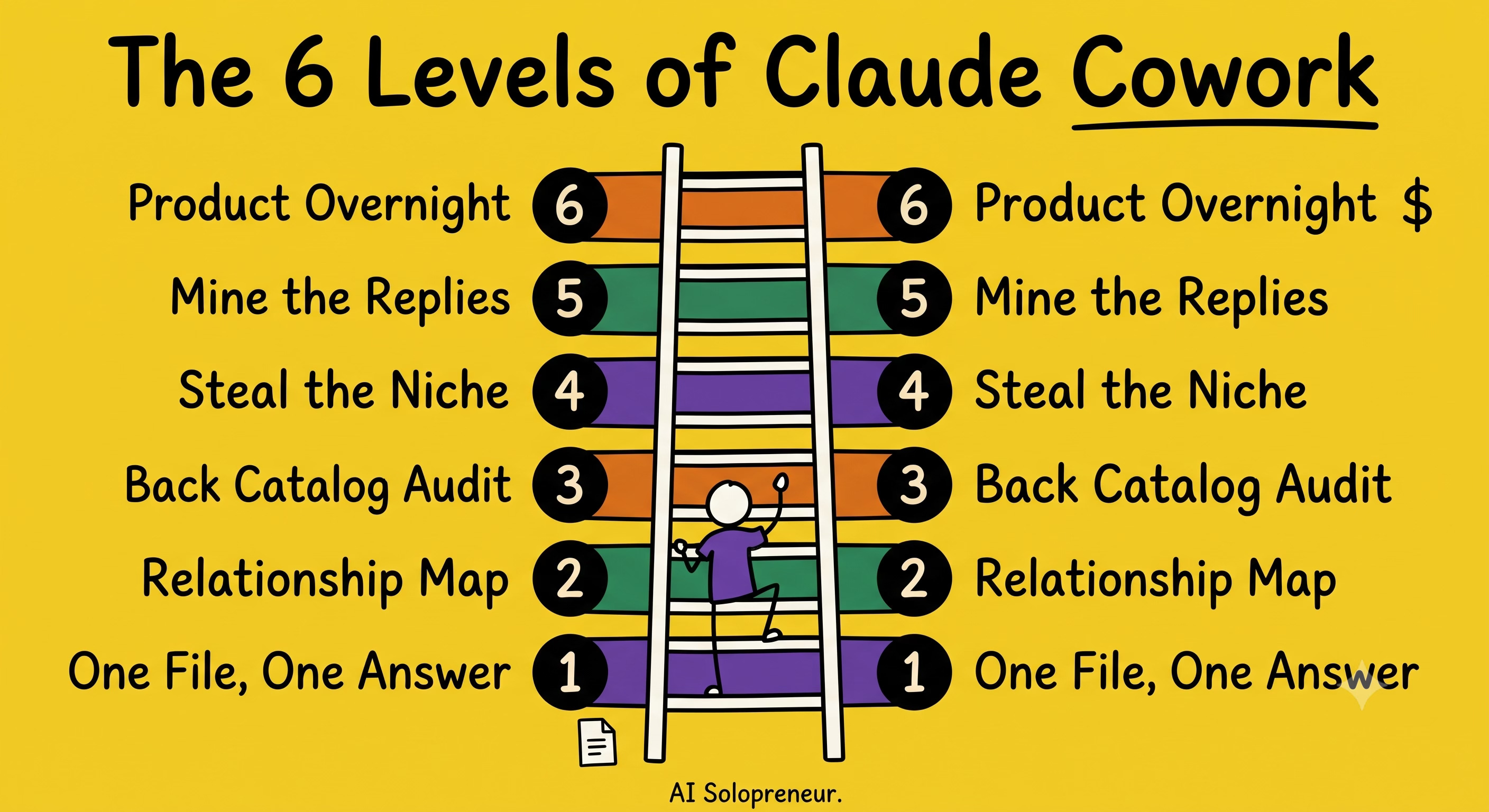
Turns out there isn’t just “using Cowork” and “not using Cowork.” There’s a ladder. Most solopreneurs I talk to are standing on the first rung, certain they’ve reached the top.
Here’s the whole ladder, rung by rung.
Agenda
🪜 Why the daily brief is level one, not the finish line
📬 Level 2: turning a messy inbox into a real subscriber relationship map
🔍 Level 3: auditing your own back catalog for the pattern you keep missing
🕵️ Level 4: stealing what’s already working in your niche right now
💬 Level 5: mining reader replies for the sales page you haven’t written yet
📦 Level 6: turning six months of old newsletters into a paid product overnight
🎯 The one prompt that hands you your own personalized ladder
1. The Level Everyone Gets Stuck On
Level one is treating Cowork like a smarter version of regular chat. Point it at one file. Ask it to fix the formatting, summarize the doc, rewrite a paragraph. Get the file back. Close the tab.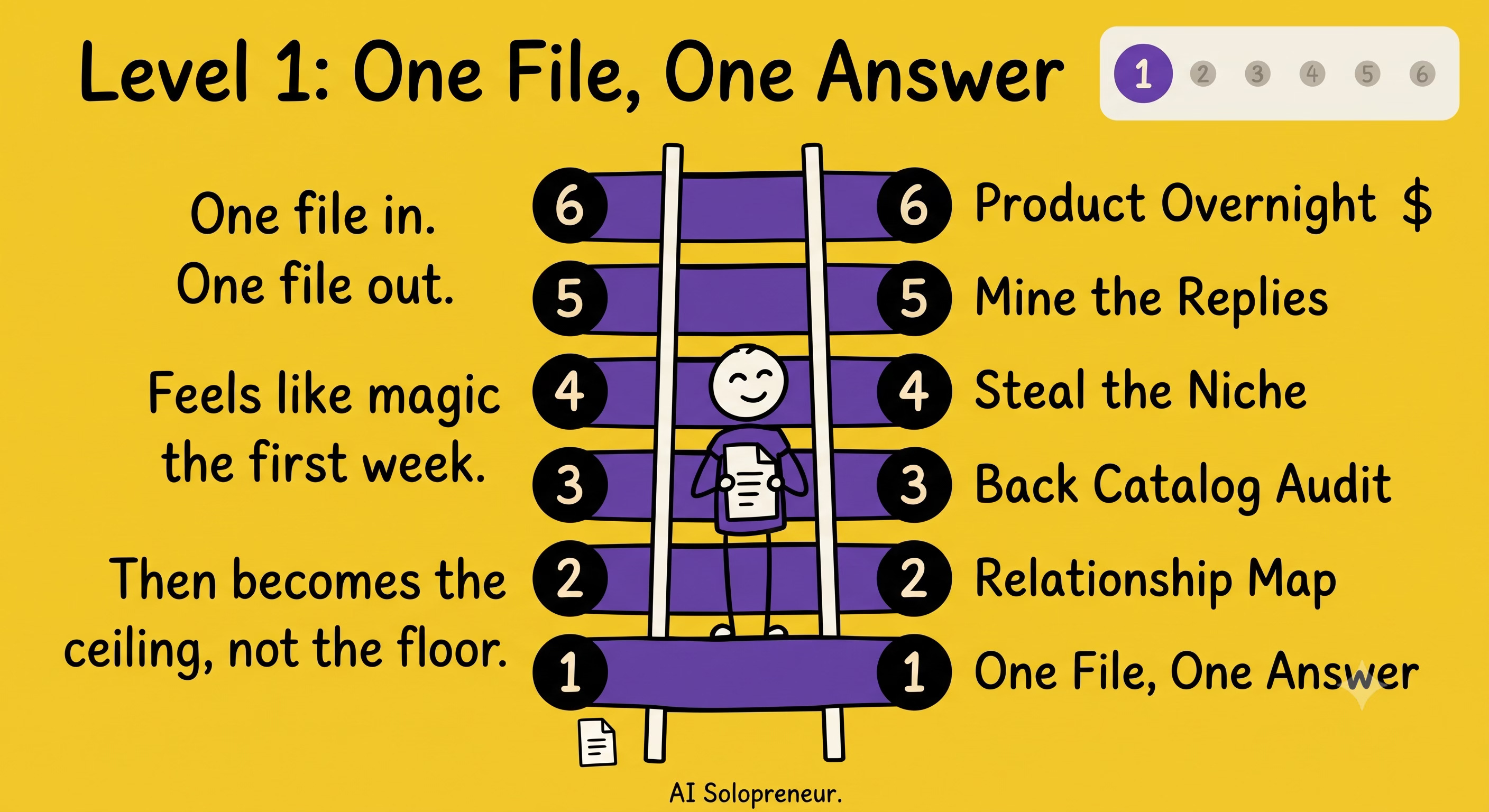
I’m not knocking it. It’s still faster than doing that by hand, and it’s probably the reason you opened Cowork in the first place.
The problem is that it’s the easy 10%. It never touches the thing Cowork was actually built for: working across many files at once, connecting to your inbox and your tools, running a real job in the background while you do something else.
Ask five solopreneurs what they use Cowork for and four of them will describe some version of the same one-file, one-answer session. Not because the tool can’t do more. Because nobody handed them the next rung.
So I built one. Five levels, each one using something you already have sitting on your hard drive right now.
2. The Five Levels Above One File, One Answer
2.1 Level 2: Build the Relationship Map Your Inbox Is Hiding
Somewhere in your Gmail is a reader who replied to issue 14 with three paragraphs about their own business, and you never wrote back.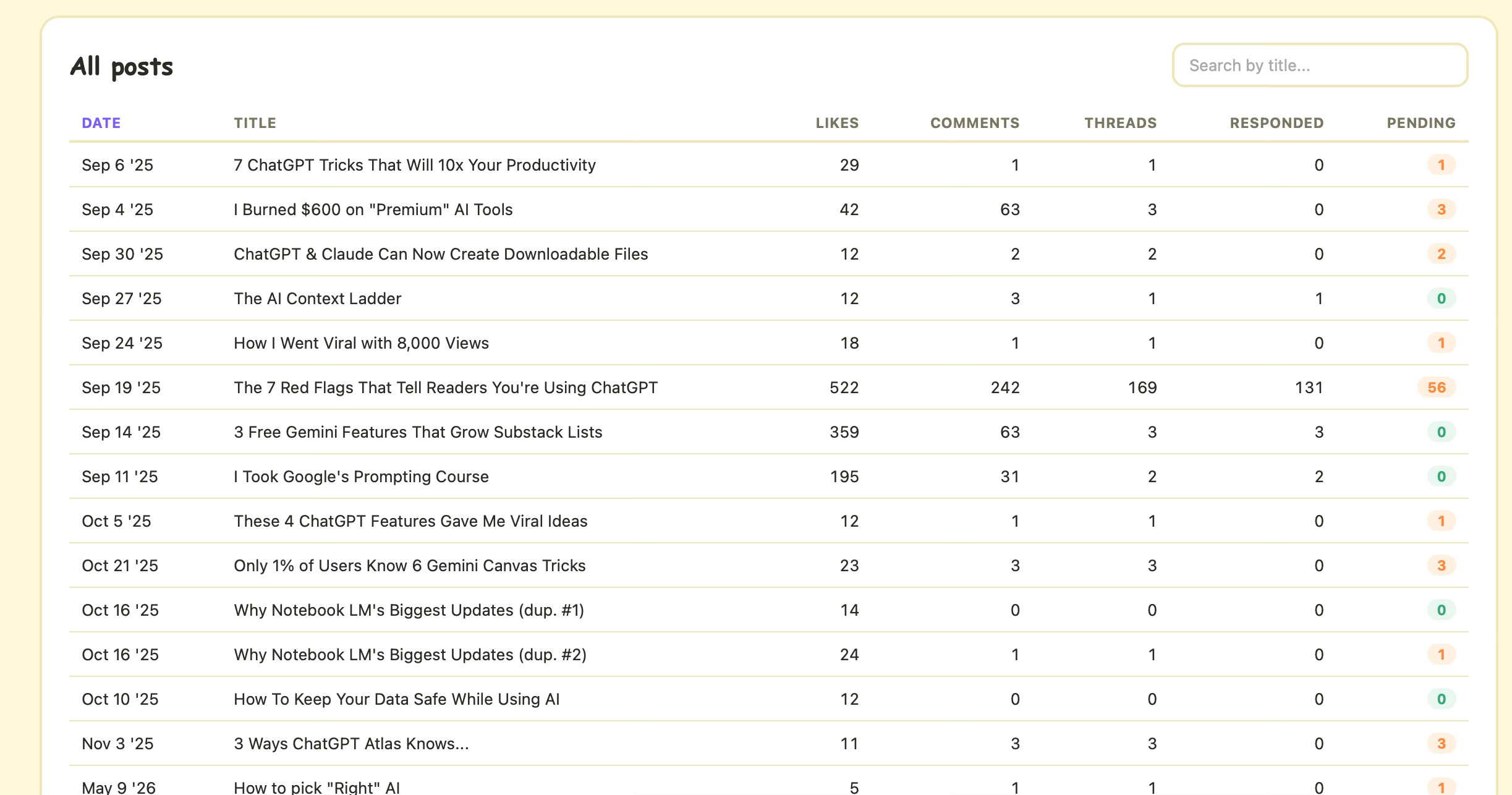
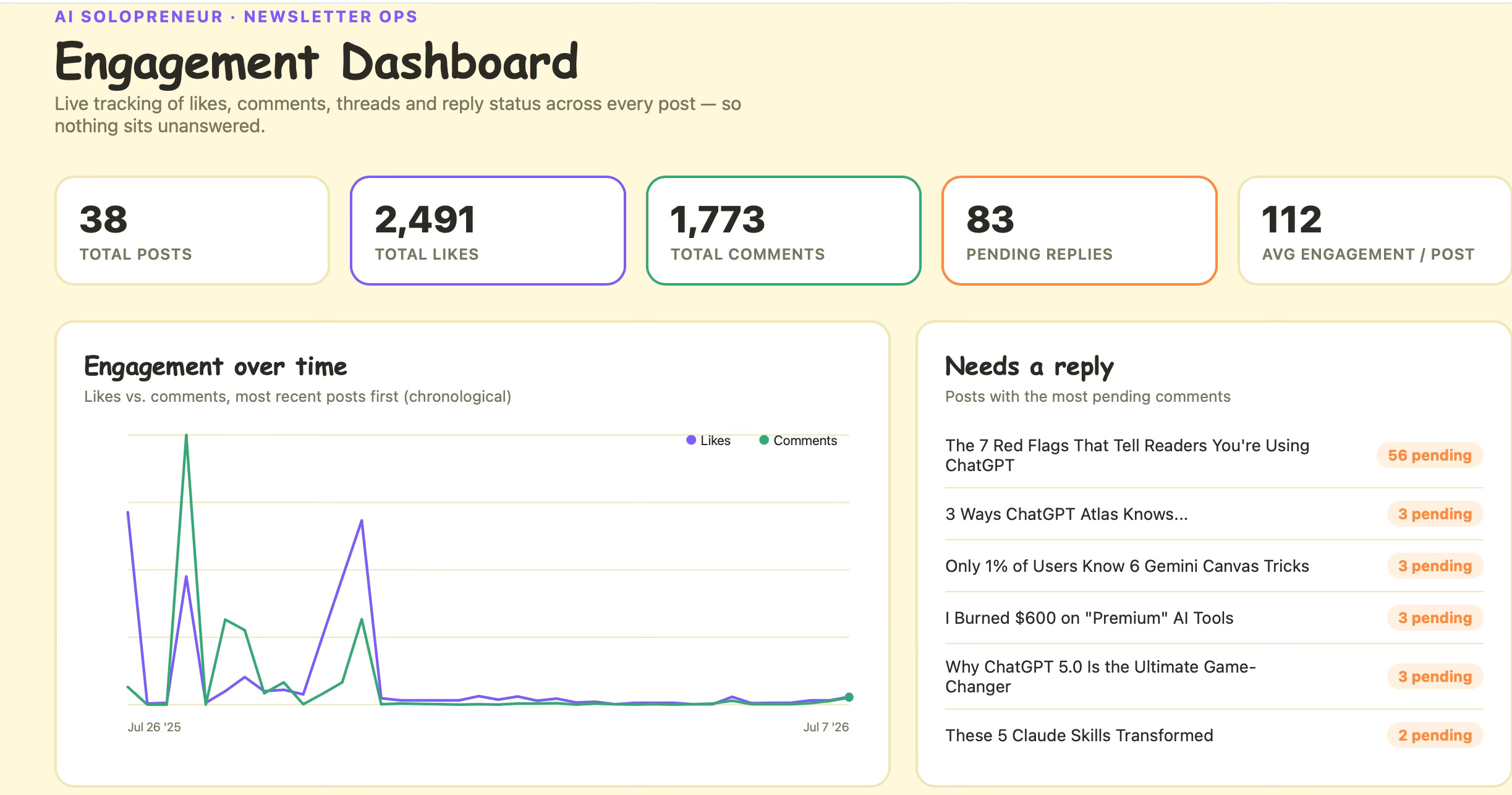 Image of My Live Dashboard Created by Cowork
You know this because it happens to all of us. Not from laziness. From volume. A real reply gets buried under forty newsletters you subscribed to and forgot about.
Connect Cowork to your inbox and your Substack subscriber export. Ask it to build you a simple tracker: every reader who’s ever replied, what they said, whether you responded, and how long it’s been.
To brief it: give it access to Gmail and a spreadsheet or Notion database, tell it what counts as a “reply worth tracking,” and let it run in the background.
What comes back is not a CRM in the corporate sense. It’s a list of the exact people who were already raising their hand. Some of them would be your first customer if you ever asked.
2.2 Level 3: Audit Your Own Back Catalog Before You Guess Again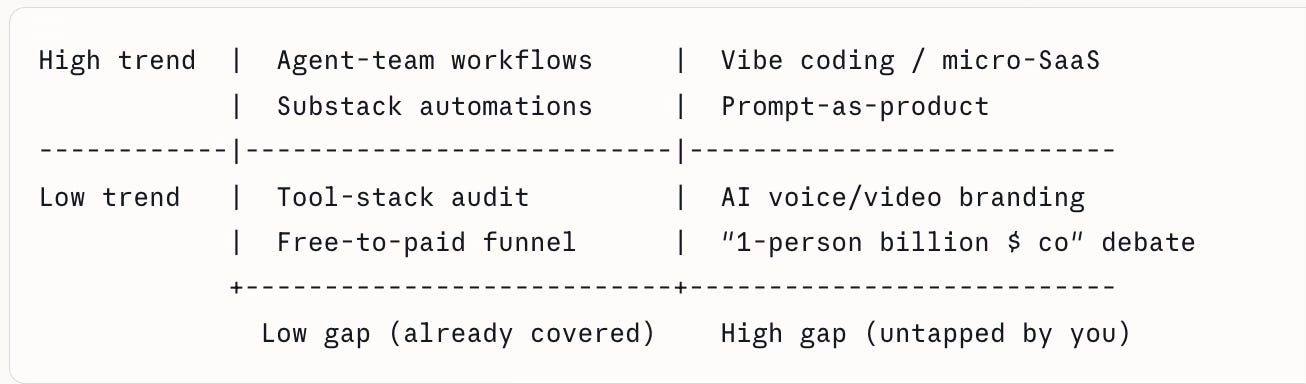
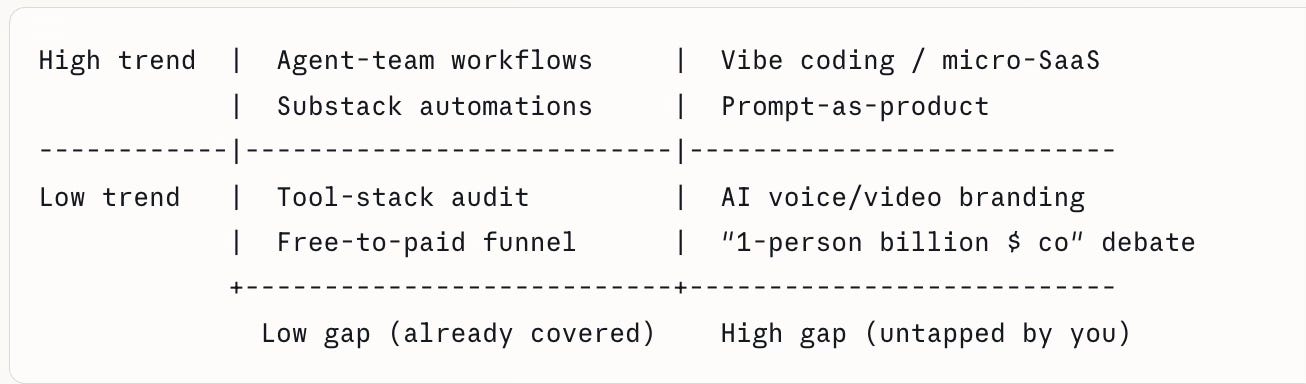
I used to pick topics by gut feeling. Whatever felt interesting on a Tuesday became Thursday’s newsletter.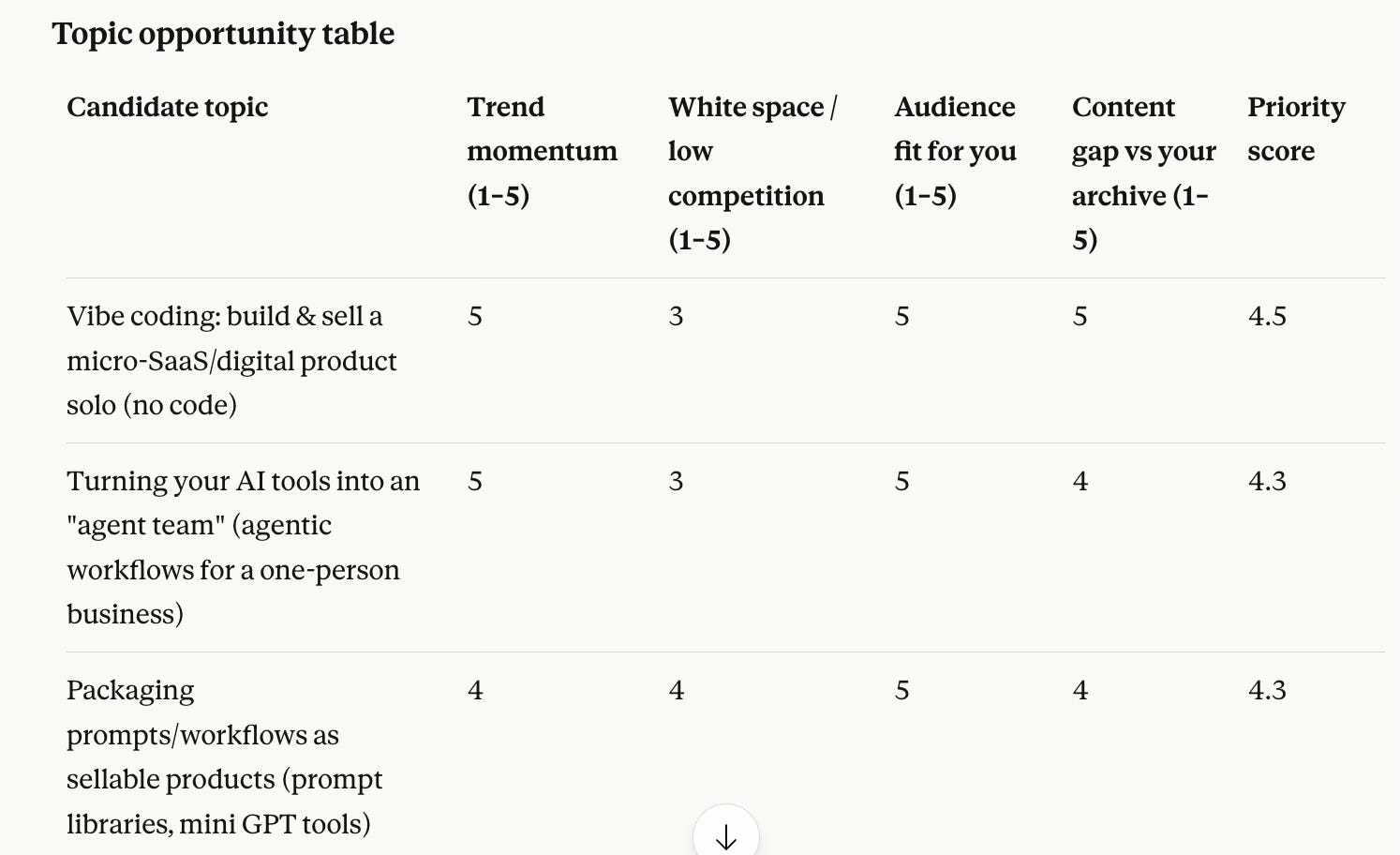
Then I fed Cowork every post I’d ever published alongside the actual performance numbers. Likes, comments, open rates, all of it.
It found patterns I’d missed for months. Certain openings worked every time. Certain topics that felt exciting to write landed with nobody.
To brief it: hand over your published posts and whatever analytics export your platform gives you, and ask for the patterns behind your best five posts versus your worst five.
You stop guessing what to write next. The data was sitting there the whole time. You just never asked it a question.
2.3 Level 4: Steal What’s Already Working, Legally and Openly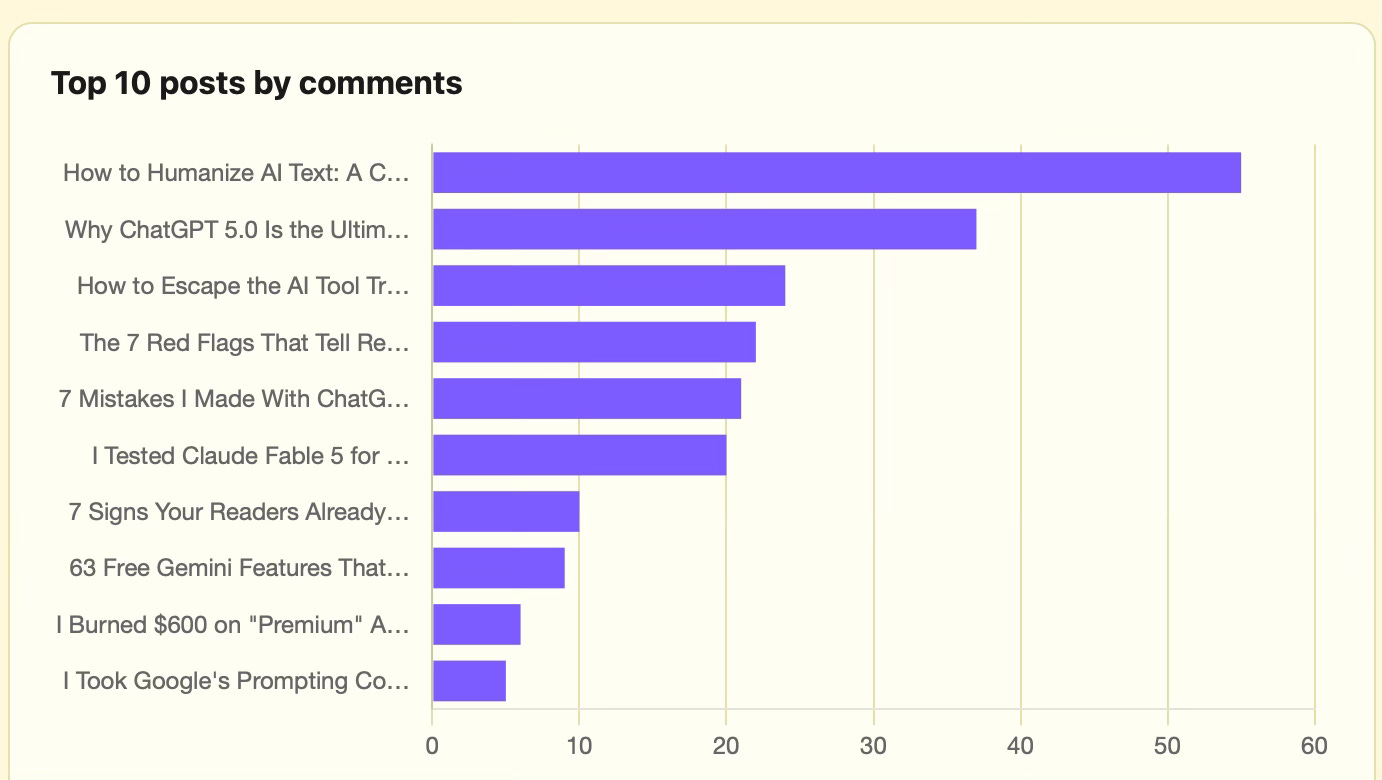
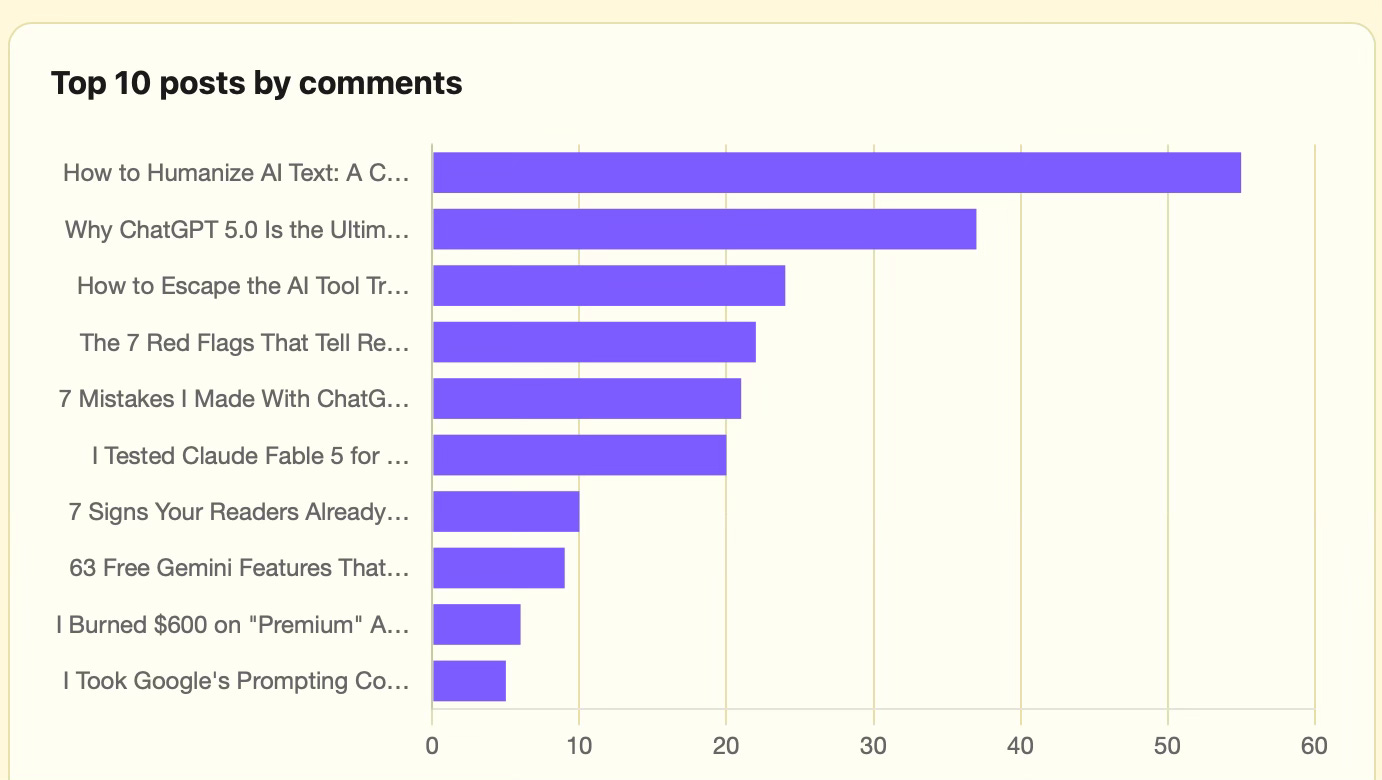
Cowork can browse. Most people never point that browser anywhere near a competitor. You can use Chrome extension to do this.
Ask it to go look at the top performing posts in your niche this month. Not to copy them. To find the hook structures, the title patterns, the openings that keep reappearing across different accounts.
To brief it: give it three to five accounts in your space, and ask for a teardown of what’s repeating across their best posts, plus a list of angles you haven’t tried yet.
Combine this with your own back catalog audit from level three and you get something close to a strategy document. What’s working for you, what’s working for everyone else, and the gap between them.
2.4 Level 5: Mine Reader Replies for the Product You Haven’t Built Yet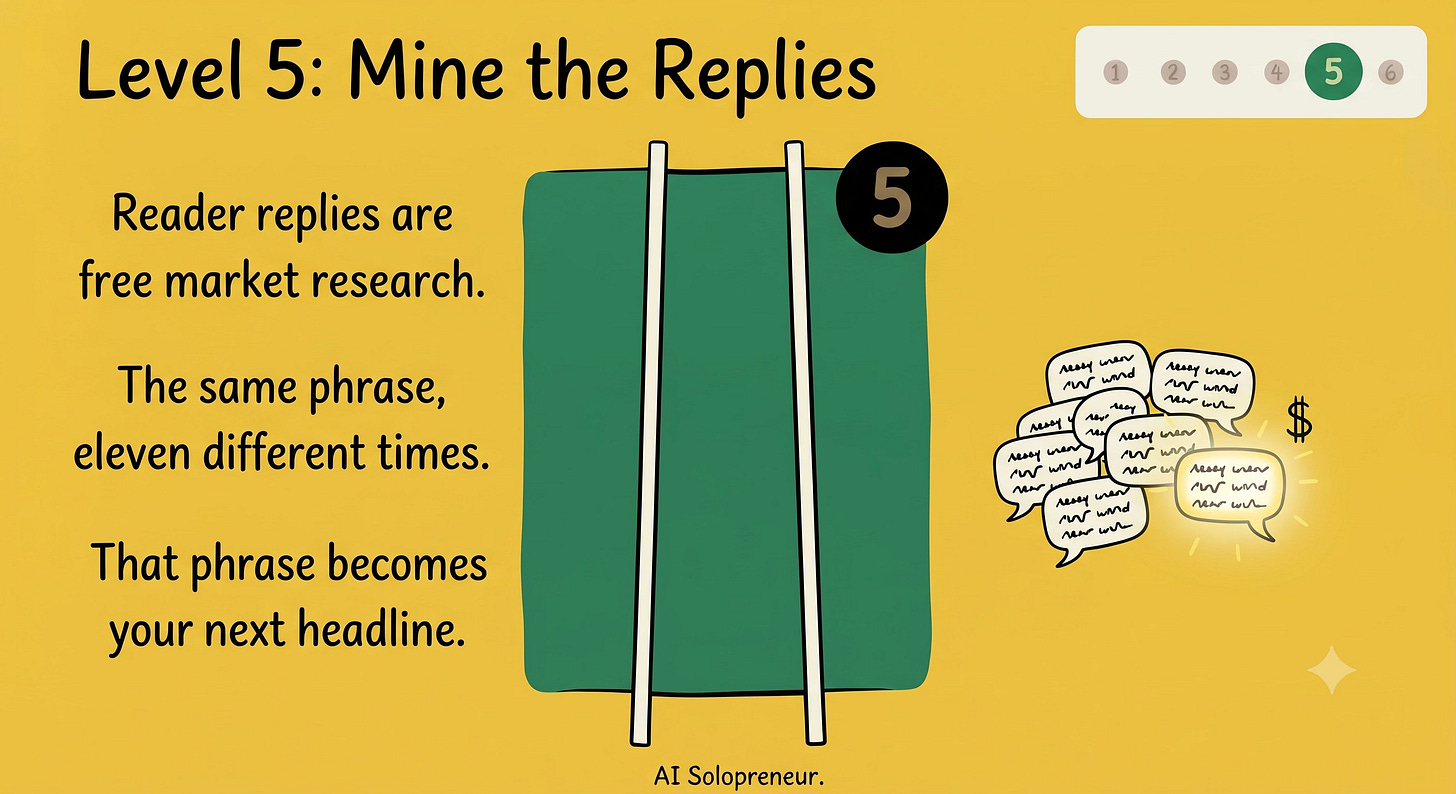
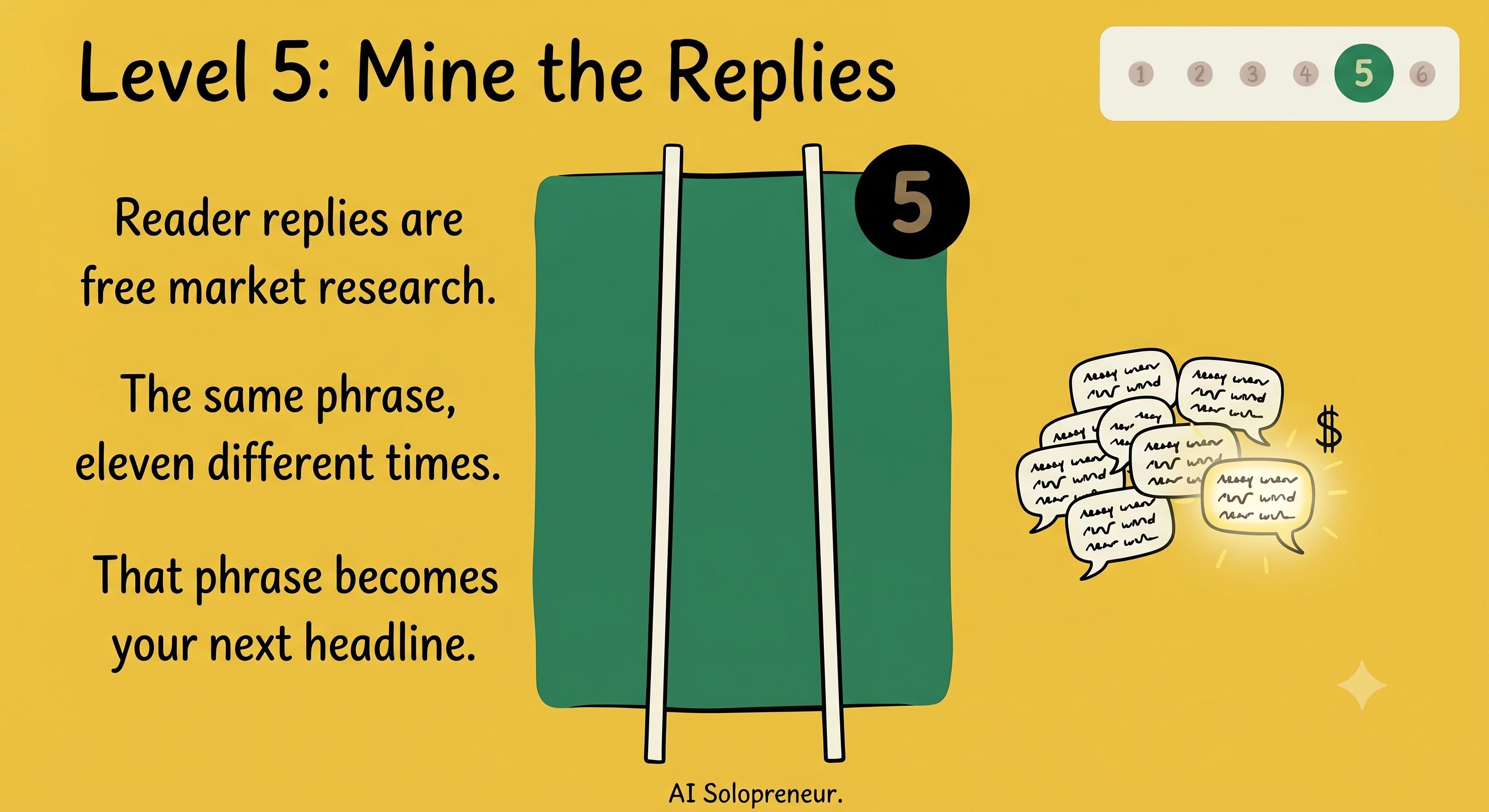
Every solopreneur I know is sitting on a pile of reader replies, comments, and DMs they’ve never gone back through.
That pile is free market research. The exact words readers use to describe their problem are the exact words that sell your future digital product.
Feed Cowork a batch of your replies and comments and ask it to pull the recurring frustrations, the phrases readers repeat, and the language they use when something clicks.
To brief it: paste in or connect the replies, tell it you’re looking for recurring pain points and phrases, and ask for a short list of headline and sales page ideas built from the reader’s own words, not yours.
I did this last month and found the same four-word phrase in eleven different replies. That phrase is now the working title of something I’m building.
2.5 Level 6: Turn Six Months of Newsletters Into a Product Overnight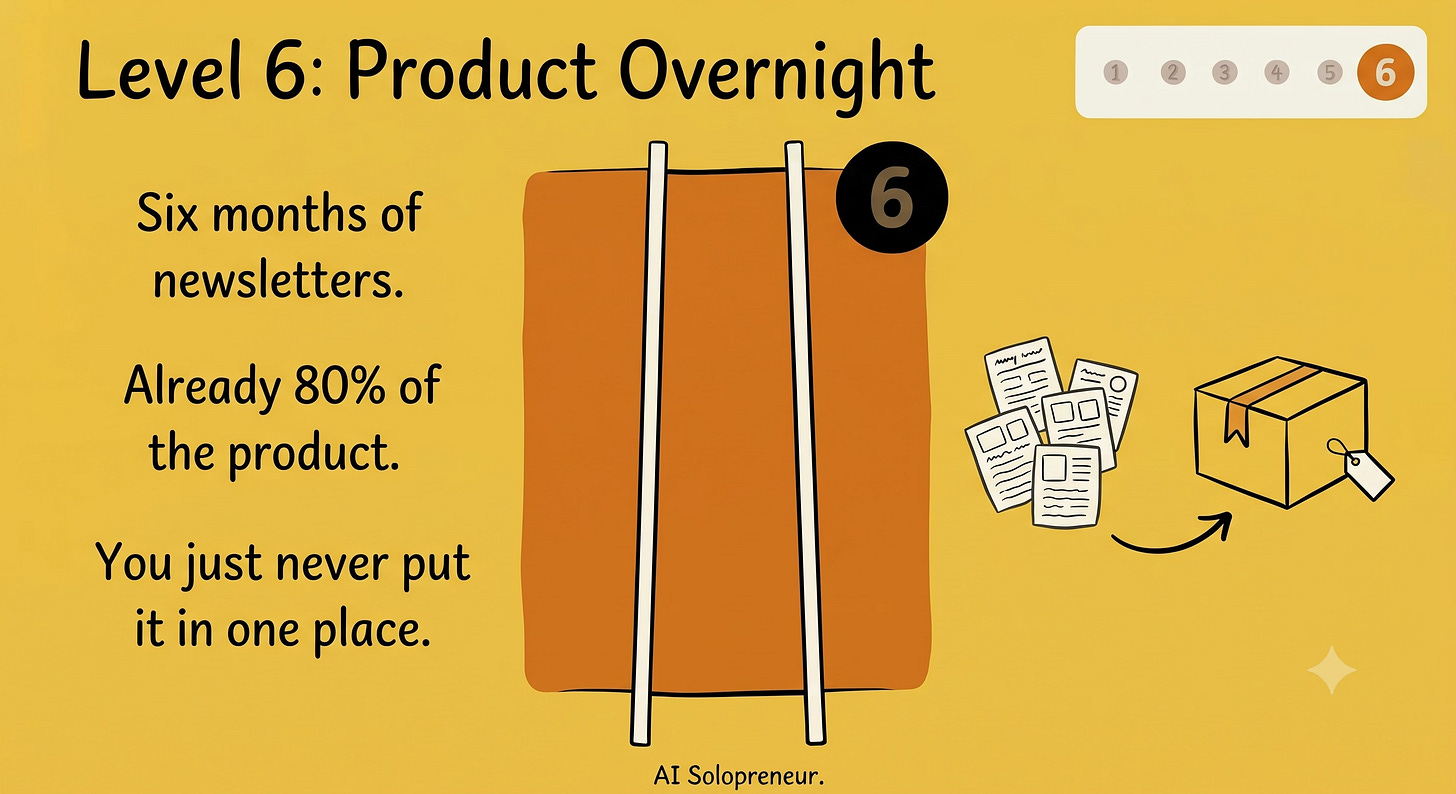
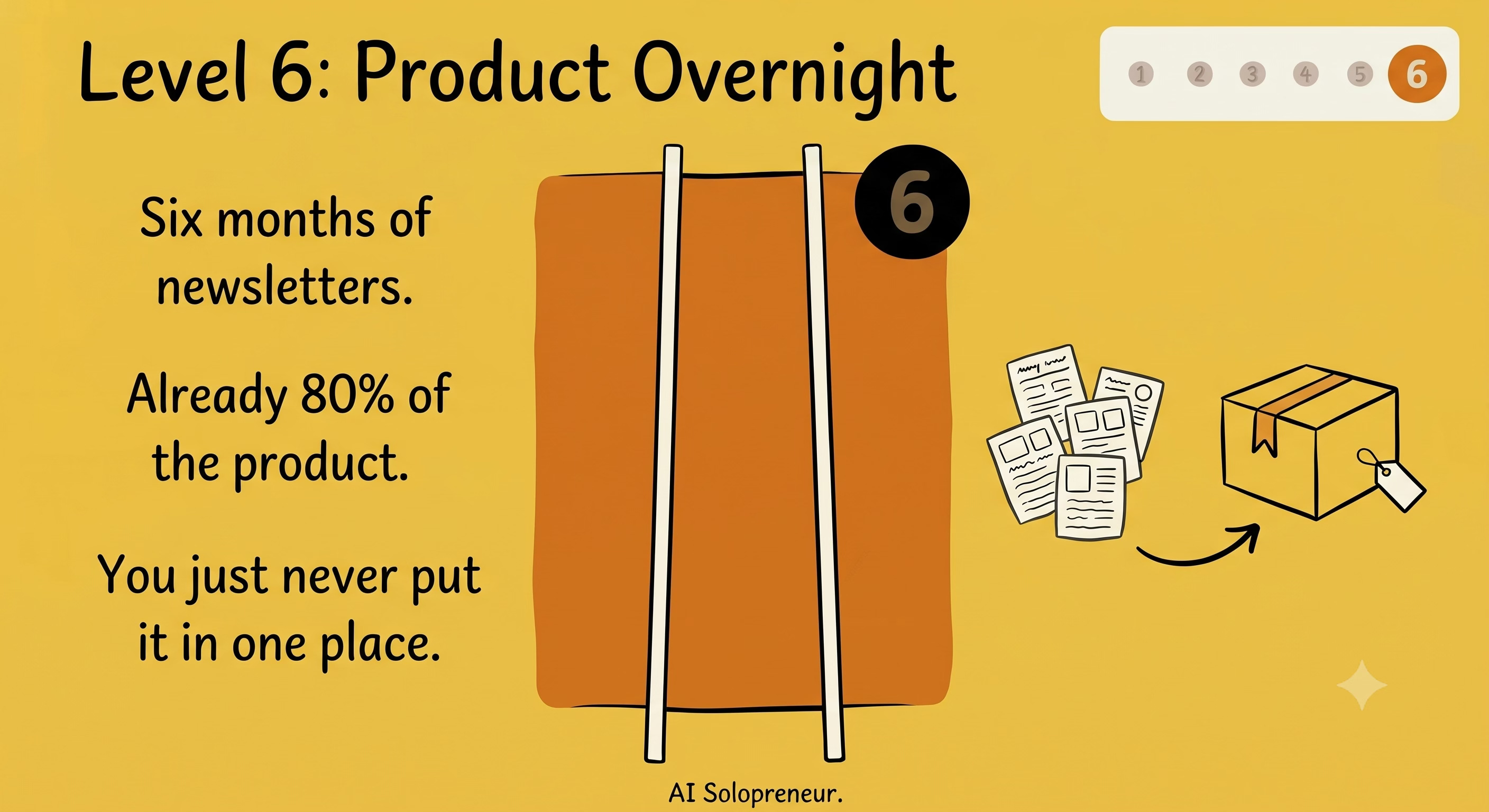
This is the level that changed how I think about my archive.
You’ve already written the thing. It’s just scattered across thirty separate issues instead of sitting in one place someone could pay for.
Give Cowork six months of back issues and ask it to find the throughline. A recurring framework, a step by step system, a set of lessons that build on each other in order.
To brief it: hand over the posts, tell it the outcome you want readers to walk away with, and ask for a structured outline that turns existing material into a mini course or guide.
It won’t write the final product for you. It will show you that eighty percent of the product already exists in words you already published.
3. The One Prompt That Builds You a Personalized Version of This List
I’ll admit I’m not fully sure level six is actually the ceiling. I might be wrong about the order. Someone reading this probably has a level seven I haven’t found yet.
But here’s what I do know works. Before you touch any of the five levels above, ask Cowork this directly:
“Based on everything you know about my newsletter, my subscriber count, and my niche, what are three things I should be having you do that I’m not doing yet?”
It will read your context and hand you a personalized version of this exact list. Sometimes it’s close to what I’ve shared here. Sometimes it isn’t, because your seat isn’t my seat.
Closing
That reader from issue 14, the one who wrote three paragraphs and never heard back?
I found them again through the level two exercise. Sent a real reply last Tuesday. Four months late, but sent.
One file, one answer, closed tab. That will always be level one. Nothing wrong with staying there if that’s genuinely all you need.
But if you’ve been opening Cowork for the same one-off fix every time and wondering why it doesn’t feel like it’s changing anything, it’s probably because you’re standing on the first rung of a six rung ladder.
Which level are you actually on? Hit reply and tell me your number. I read every single one.
See you next week.
Mike
Thanks for reading The AI Solopreneur! Subscribe for free to receive new posts and support my work.