Patricia is the creator of a manga character who changes her outfit so her covers don't have to explain themselves. Here's how she built it, where the style comes from, and how you can build yours.
By AI Meets Girlboss 🦩
Published: 2026-09-29
URL: https://aimeetsgirlboss.substack.com/p/manga-avatar-prompt
This post is part of the Real Rebrands series, exploring visual branding on Substack through real creator journeys. Previous guests: Mia Kiraki, Shannon Bindler, Wilbert Kramer, Elena Calvillo.
TL;DR: Most creators spend months trying to find a visual identity that sticks. landed on her immediately recognizable manga character early, and then built a symbolic language on top of it with jedi robes for leadership, a ship for discovery and a glowing crystal for AI and growth. Her covers say something before anyone reads a word. Today’s post is about where that visual style actually comes from, the system behind it, her actual prompt, and a challenge to build your own manga character with AI.
I met Patricia through , we got introduced as two women writing about AI, which is a very crowded space on Substack. That’s why I noticed her feed before I noticed her. It doesn’t look like AI content, or leadership content. It looks like a manga cover.
Patricia’s storytelling includes a girl in a Jedi robe, then the same girl on a ship. A glowing crystal at her forehead, lit from within. On a platform where everyone’s visual identity is starting to blur into sameness, her manga visual world stopped me.
We got talking about it, and one thing led to another: what if we tested manga as a visual style together, starting with turning our own characters into manga versions of ourselves? Today’s the first one.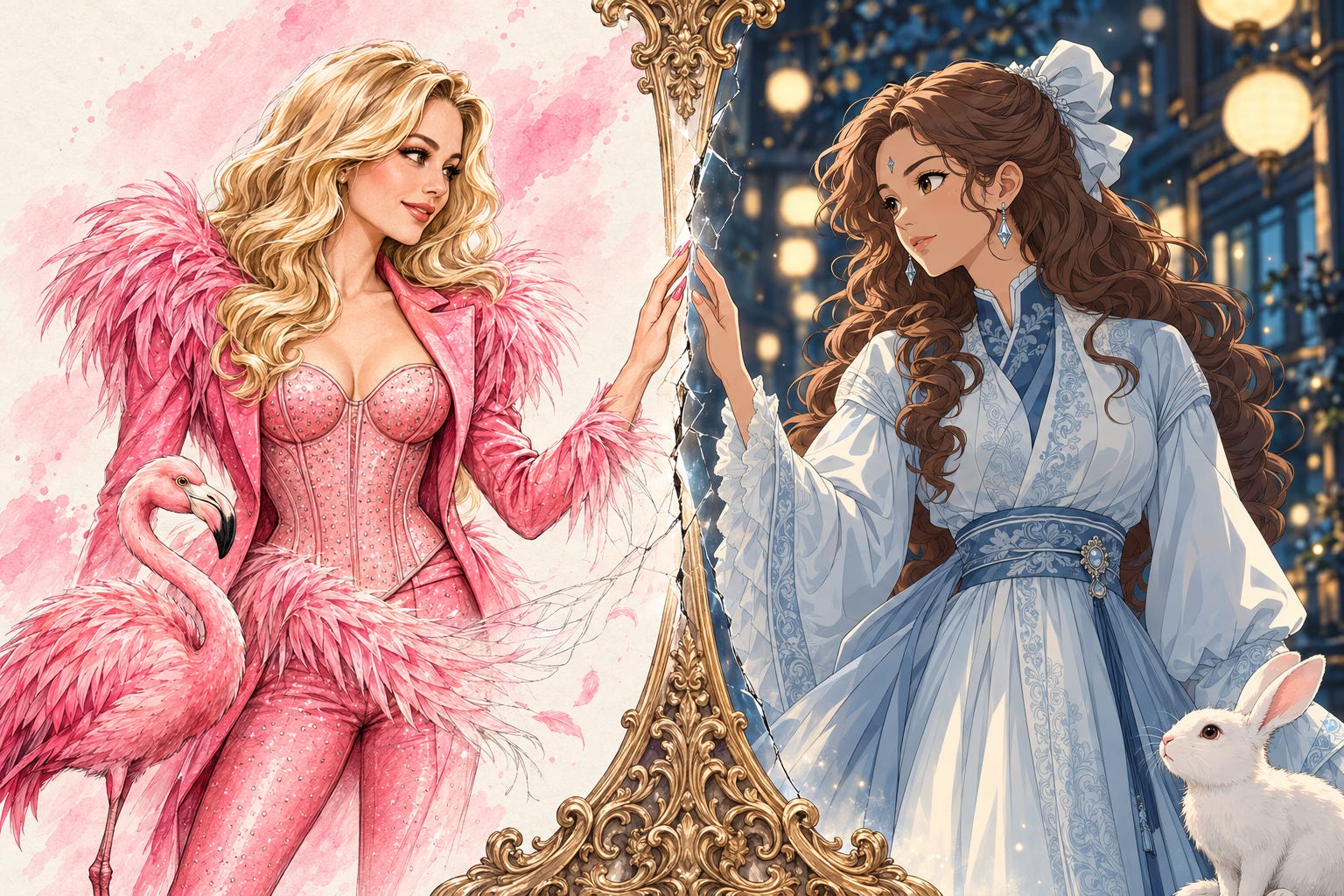 The Mirror Between Two Worlds — Generated by AI Meets Girlboss in ChatGPT.
Hey, I’m Pinkie. I help creators build recognizable Substack brands that drive consistent subscriber growth. If you’re new to AI Meets Girlboss, welcome! This might be the best time to join. Start here! 🩷🦩
What You’ll Learn in This Post.
-
Where the manga art style actually comes from, and it’s not what you’d assume
-
How Patricia found her manga character & the costume system she built on top of it: how Jedi robes, ships, and a glowing forehead each carry a specific message
-
Six real Substack creators reimagined in manga style
-
Two manga prompts, so you can generate your own character today
-
A community challenge at the end: build your manga self and share it in the comments

Let’s Get Into Manga History
I have to be honest, I knew very little about manga before today, so I’m going to do a quick detour before we get to Patricia’s visual system, because where manga style comes from isn’t what most people assume.
Manga’s eyes aren’t originally Japanese. They came from Mickey Mouse and Betty Boop, 1930s American cartoon imports that Japanese illustrators adopted and then simply kept using. American characters’ eyes got smaller after the war, but manga never let go of the original size.
Osamu Tezuka, the artist usually credited with inventing modern manga, grew up obsessed with Disney. He watched Bambi more than 80 times as a kid, and built his entire cinematic, emotion-first storytelling style on what he learned from it.
So the “distinctly Japanese” look sitting at the center of Patricia’s brand is actually a hundred-year remix that’s been traveling back and forth between Japan and the West the whole time. Maybe that’s why it works as a brand tool too, because it was never built to sit still.
Two great examples of using manga for branding. Lofi Girl became one of the internet’s most recognizable brands by building a single anime-style character with intention, the channel eventually renamed itself after her. And in 2025, half of Silicon Valley, Sam Altman included, turned their own headshots into Ghibli-style portraits the second the ChatGPT Images tool existed.
Today’s guest collaborator, Patricia asked some of her subscribers why they subscribed. Several of them said: the pictures.
So her visuals were doing persuasion work before anyone read a headline. And what makes Patricia’s version of it interesting is how rare it actually is. It’s not completely “normal” to pick manga for a Substack brand, let alone one they can grow a symbolic language on top of.
If you’re leaning towards using an unorthodox illustration style for your visual branding, this could be useful for you.
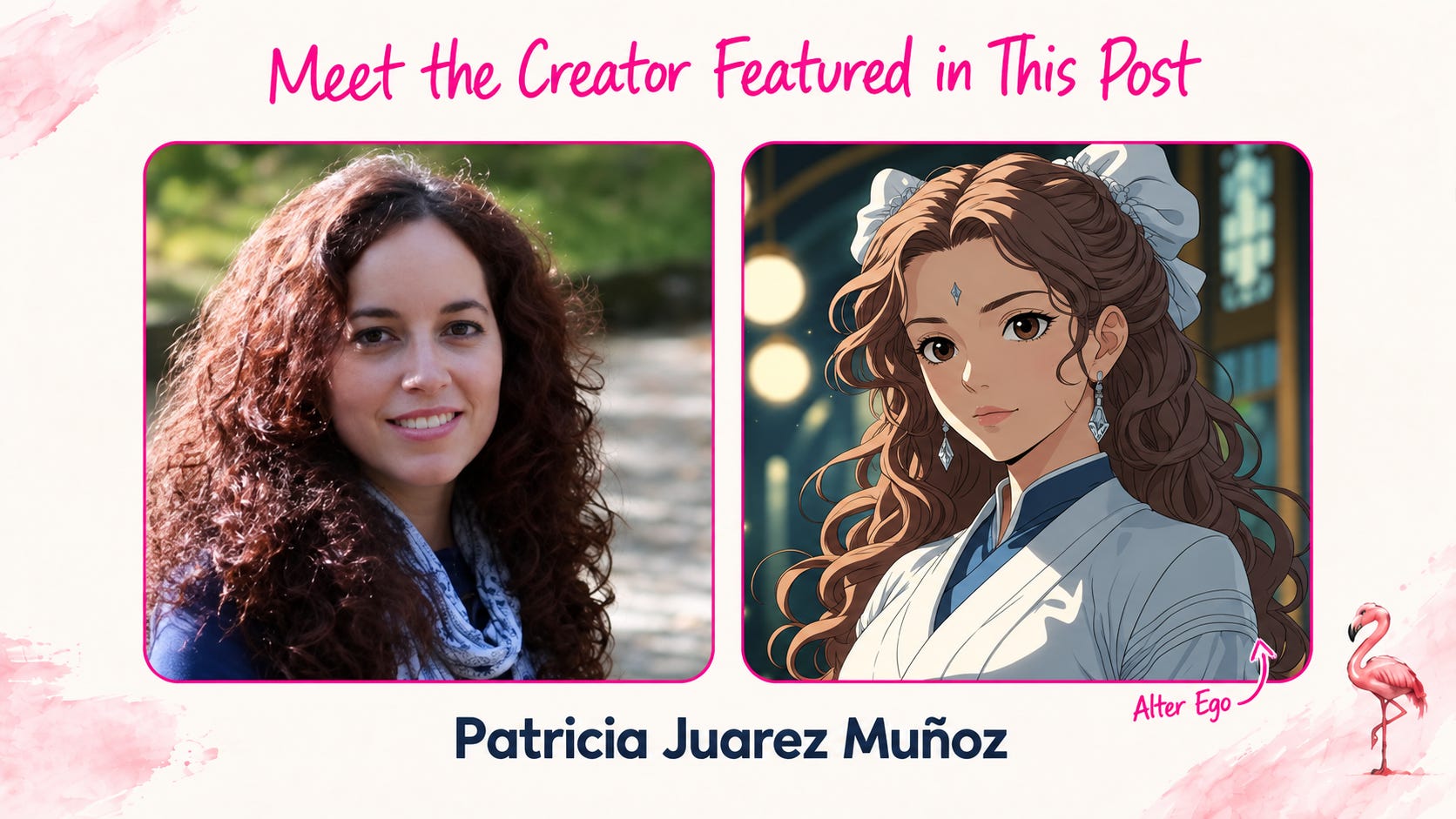 Introducing Patricia — Generated by AI Meets Girlboss in ChatGPT.
Patricia Juarez Muñoz is the founder of WonderLead in Tech and worked at AWS for nearly 9 years, her last role was Staff Agentic AI Product Engineer, and recently she contributed to an O’Reilly leadership book, The Multiplier Mindset.
In WonderLead, she helps tech professionals stay relevant without losing judgement as AI changes the work, with EQ, AI, and leadership skills. Besides her community on Substack, she runs courses for individuals and teams and creates tools, that help people keep adopting AI without FOMO.
How She Landed on Manga And Found Her Character.
: How did you find your manga character? Did you try other styles or approaches before landing on this?
: In 2024 I used LeonardoAI, which generated the images in batches of four. I did around four variations in the prompt until I got to the character that I liked. I always used the theme of my newsletter, and what inspired it, to generate the pictures. Once I chose a picture, I took the seed and made small variations in the prompt to keep consistency.
I didn’t start with the current character. Initially I wanted to use myself, in different places and poses, representing the themes and the story of growth each post. Here you can see the first tests I did for the three tracks in my newsletter: Discovery, Self-Management, and Thrive as a Leader.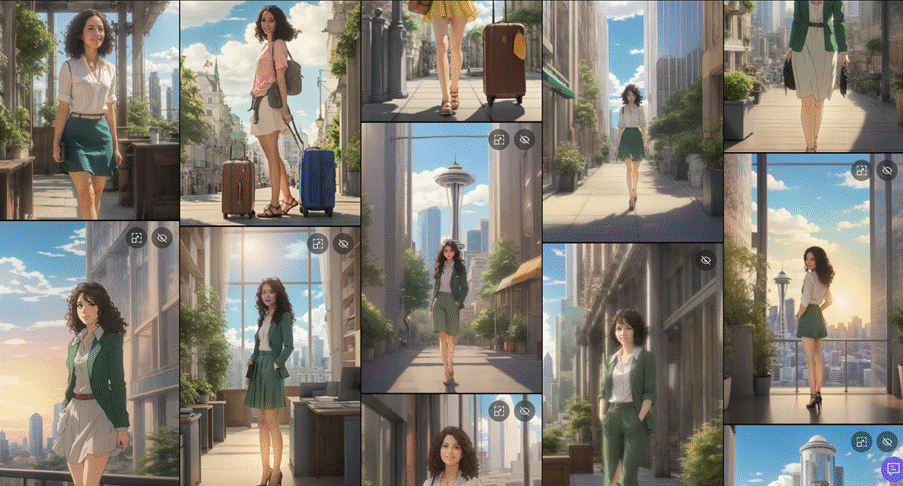 Before the Character: The Realist Years — Generated by Patricia Juarez Muñoz in LeonardoAI.
As you can see, two years ago the models were not as good as they are today and they hallucinated a lot. The visuals only stayed in the newsletter for a few hours. They didn’t pass the validation test. I asked my family and they told me the newsletter looked too AI-generated just because of the visuals. They worried readers would think it was not written by a real person, so I switched to a fictional character.
These were the first generations, and the second from the top right was the one I chose.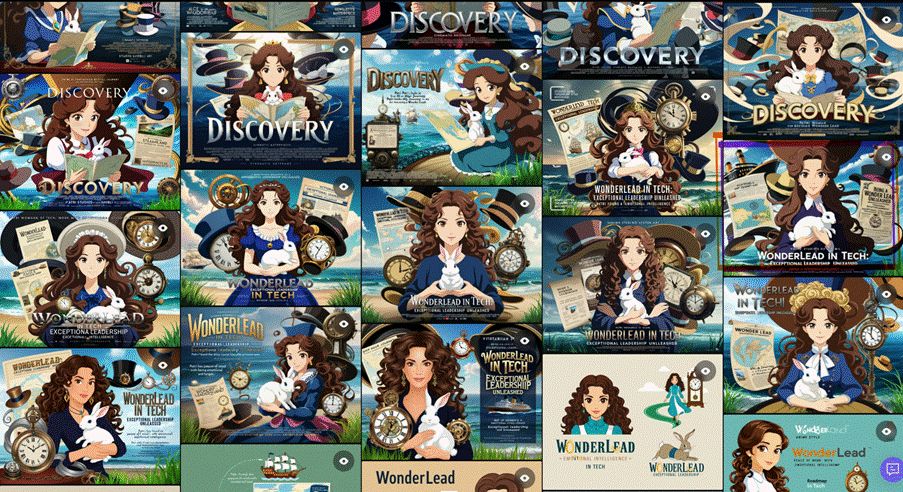 The First Sketches of Someone Else — Generated by Patricia Juarez Muñoz in LeonardoAI.
Once I chose an image, I stuck with it. The evolution from my character was more in her glaze, her accessories, and her clothes. A year after the launch I ran a Thriving challenge and changed her outfit to Jedi robes. Now the Discovery track shows her travelling in Victorian clothes, the Thrive as a leader track shows her as Jedi, and with the main topic is AI, it adds a glowing crystal in her forehead. Each post and its image go together, telling the same story of growth and transformation.
branding note: Keeping your character consistent across AI generations will make your brand recognizable. If you want the technical how-to, I broke it down in How to Get Consistent Character Images in ChatGPT Images 2.0.
From Manga Character To Brand
*: When did you first look back at your covers and realize there was a logic running through them that you hadn’t consciously designed?*
: This happens to me in real life too, and it gets reflected in my newsletter. I take little steps towards a goal, but because I am not a linear thinker I build several things at once that compound into a whole. I take opportunities and inspiration when they arrive and use them as tailwinds. In the middle of the journey, the puzzle starts to uncover the complete picture. That’s what happened with my brand.
I knew the ingredients for growth were leadership, EQ, and productivity (including AI), and I wanted to support people transitioning in their careers. I created a character in the Victorian era preparing for a journey. Then I got inspired about thriving at leadership, ran a challenge, and created her Jedi version, then I started writing about AI, and the models were adding a tiny light on her forehead. In the following posts I tried to keep consistency, and when I looked back I realized I had created visual categories.
I don’t know about branding. But I created a narrative with the covers, one after another. They were quietly signalling the topics the post addressed. The visuals were louder than the post titles. They are the body language of my posts and the story of my newsletter. The Rabbit Who Wears Many Hats — Generated by Patricia Juarez Muñoz.
Another pattern I didn’t see coming is the logo. I wanted it to describe what a wonderlead is: productive, curious leaders who can wear many hats. And in this era, that’s the exact description of AI-native generalist leaders, which is the role frontier development teams need and now I’m teaching in my AI-native practitioner programme.
branding notes: The symbols and illustration style Patricia picked are breaking away from traditional tech visuals. She’s illustrating tone and the feeling she wants her readers to have. The creators who build the most durable visual brands aren’t illustrating their topic, they’re illustrating their tone.
The Costume Is Not a Costume.
: Walk me through the costume system. How did you decide which visual symbols mapped to which themes?
: I decided the costume and the scene based on the story and the emotions I wanted the visuals to convey. The posts and emotions tracked my own life and career journey. My posts and character were the mirror of what I was going through in real life. But with a few years of experience since I already navigated similar challenges in the past.
The first was the Victorian girl for the Discovery track: she wanted to discover new job roles and define her career path around her passion and her strengths. I started my newsletter two years ago, when I decided I would leave AWS within two years and wanted to be intentional with my growth in the time I had left.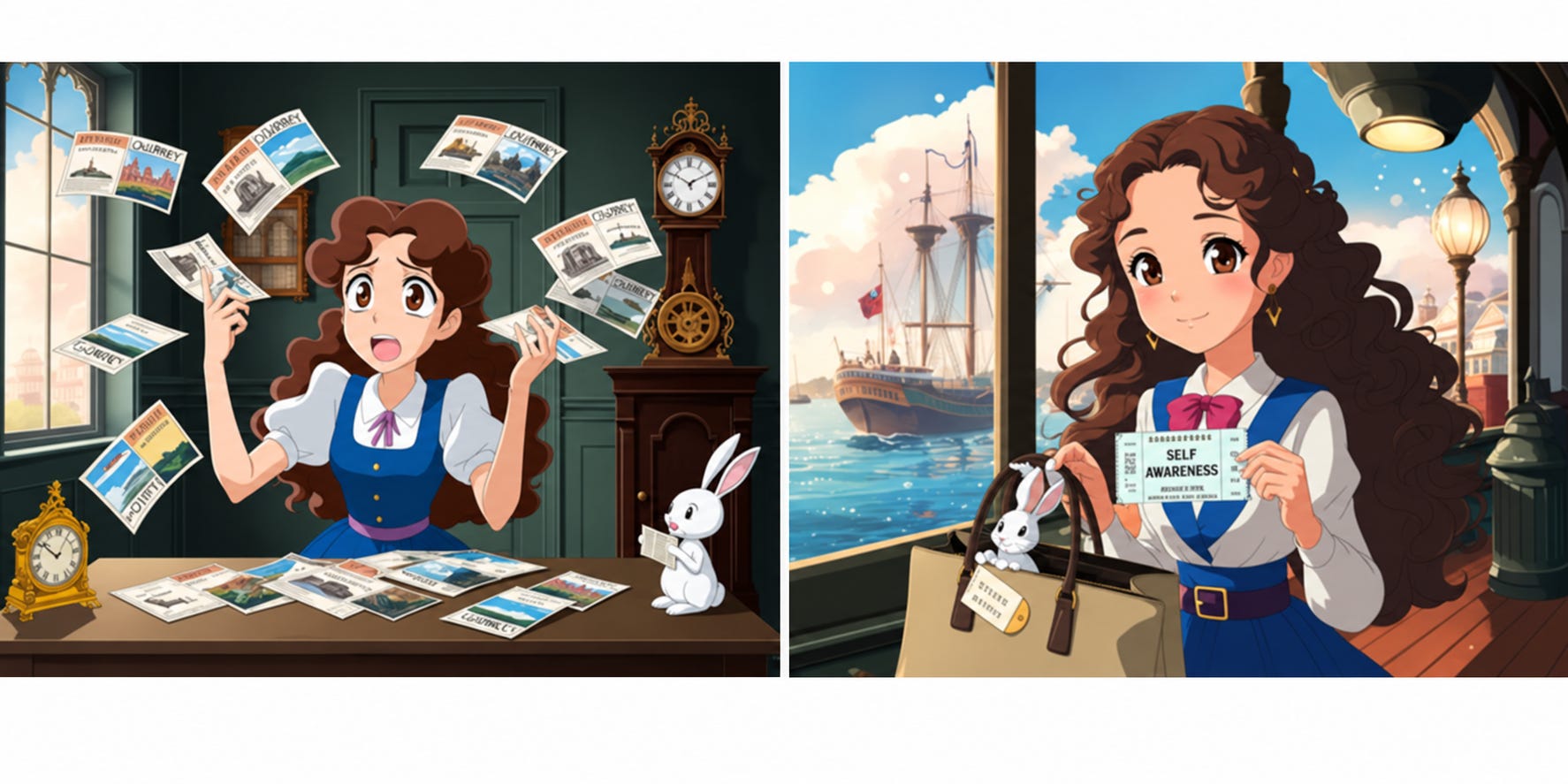 The Discovery Track Begins — Generated by Patricia Juarez Muñoz.
Then I created the clothes for the Thrive as a leader track. For thriving, I wanted a character who was strong, emotionally intelligent and a leader, and Jedi fitted perfectly. The clothes were not the only change. Her face started to show calmness and focus.
After writing the basics my readers needed to define their journey through goals, I moved to the Thrive as a leader track and shared leadership lessons I was practicing daily. My priority then was growing as a leader as much as I could while still at AWS. Writing about it helped me to remember and learn new things.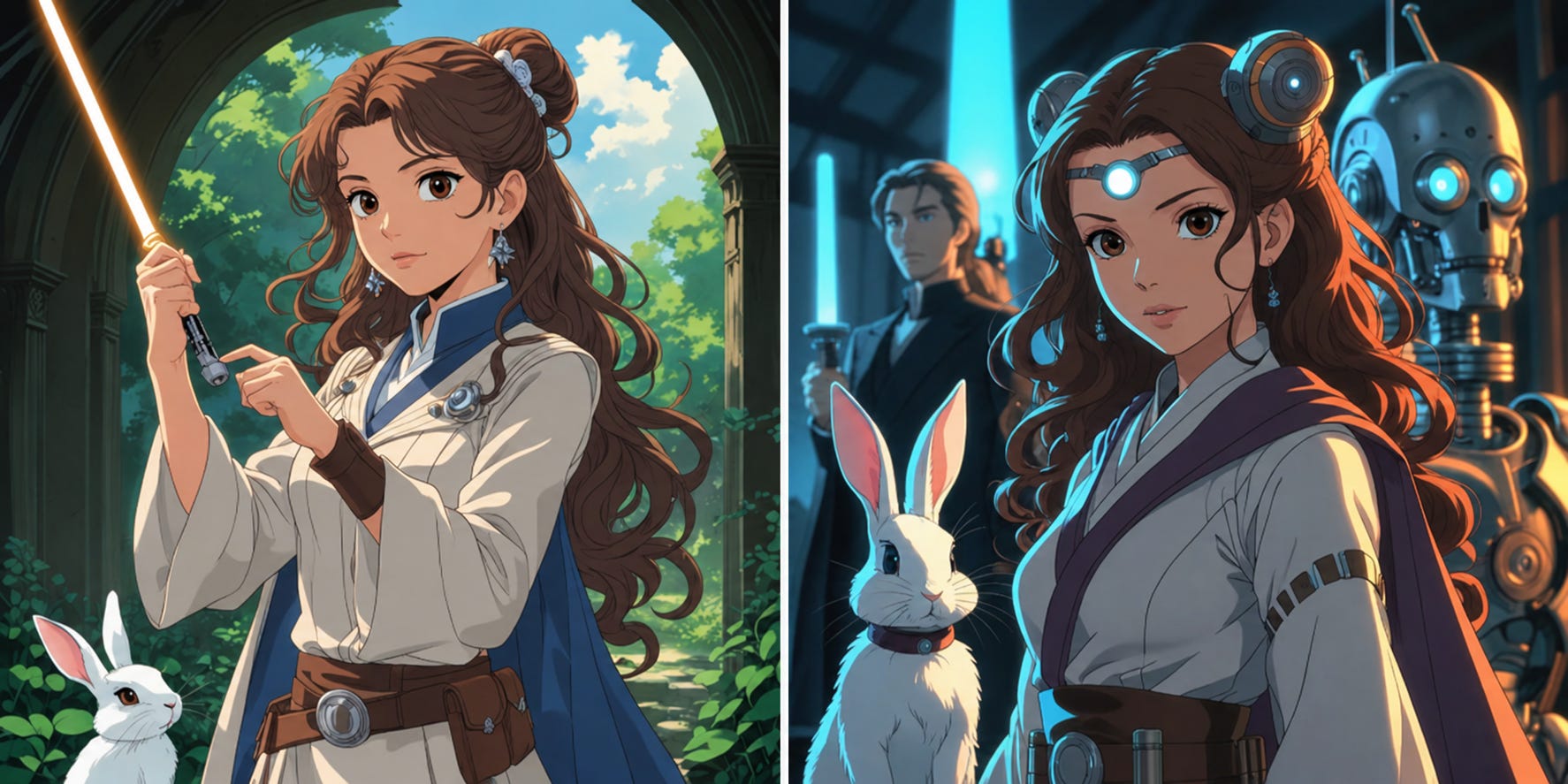 Thriving, From Padawan to Master — Generated by Patricia Juarez Muñoz.
In the productivity posts I also used watches. And when I brought AI into them, LeonardoAI model added the light on the forehead, and I loved it, so I kept it for the following visuals focused on AI. The intention and meaning shaped the prompts I wrote, and the AI model shaped my brand back.
branding note: This is the part of Patricia’s visual system I find most transferable. The character is consistent, but the outfit changes and the outfit is not decorative. Each one is carrying a specific message about the content of that post, delivered visually before a single word is read. When you’re building a brand with a narrative, lock what’s fixed before you touch what’s variable. I shared my 6-step workflow on how to do that.
Storytelling With Visuals
: When you’re starting a new post, how do you decide which visual register fits the piece you’re writing?
: When I start a new post I am often thinking about the topic, but before writing I am already thinking about the visual I want to create. It was really fun. It was like making an illustrated novel. The meaning came first, then the visual and the emotions, and finally the post text. I decide which visual fits based on consistency with the previous images and the character and the emotion I want the post to pass on to the reader.
While writing the newsletter I also started illustrating my children’s book about emotional intelligence, which probably helped me learn to keep consistency with AI.
branding note: A recognizable character requires constraints. Things that never change, hair, facial features, overall aesthetic register are what make the character recognizable. I wrote about getting those non-negotiables down on paper and running them in AI.
Substack Creators in Manga Style
Patricia and I both picked three people from our communities and generated a manga portrait of each one.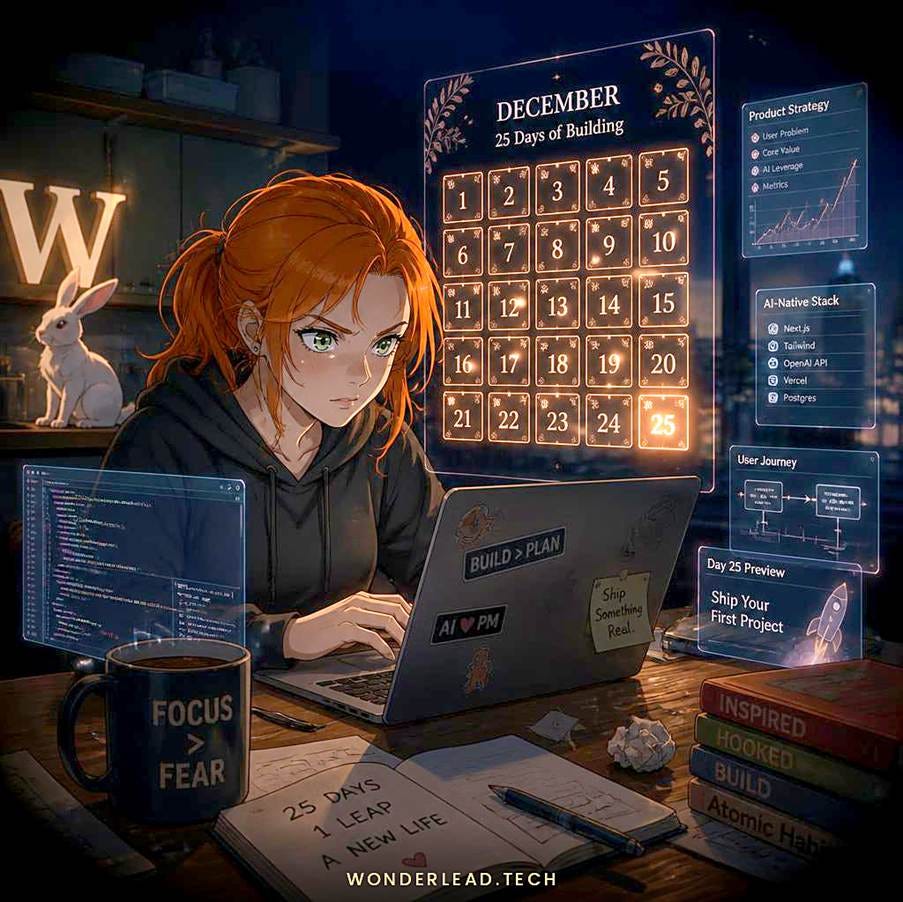 Elena's Twenty-Five Days of Building — Generated by Patricia Juarez Muñoz.
This image does not represent the we are used to seeing, but the details will remind you of her. The sticker in her laptop AI ❤️ PM and the calendar reminds us of her AI Advent Calendar Challenge last year. She is not wearing the office clothes she usually wears in her visuals, because this image describes the nights she worked before leaving corporate and becoming a founder.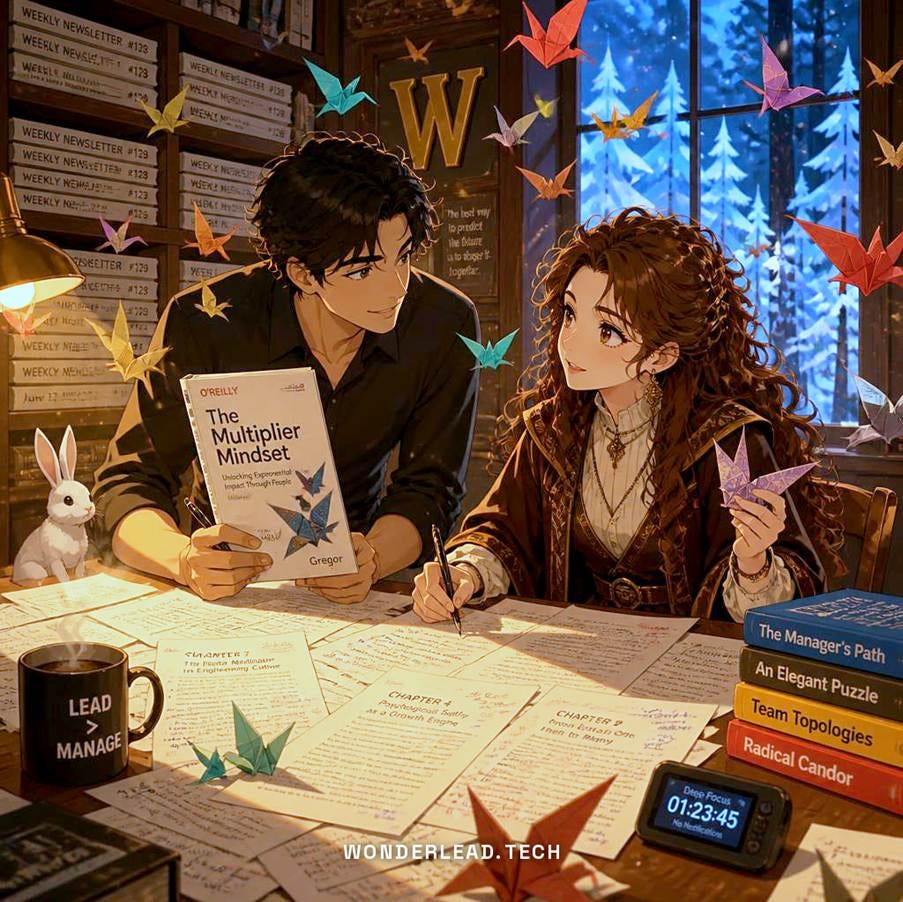 The Multiplier Mindset, Drafted in Origami — Generated by Patricia Juarez Muñoz.
In this picture, and Patricia’s character brainstorm the chapter she contributed to his book, The Multiplier Mindset. The origami birds and trees in the background appear in the cover of his new O’Reilly book.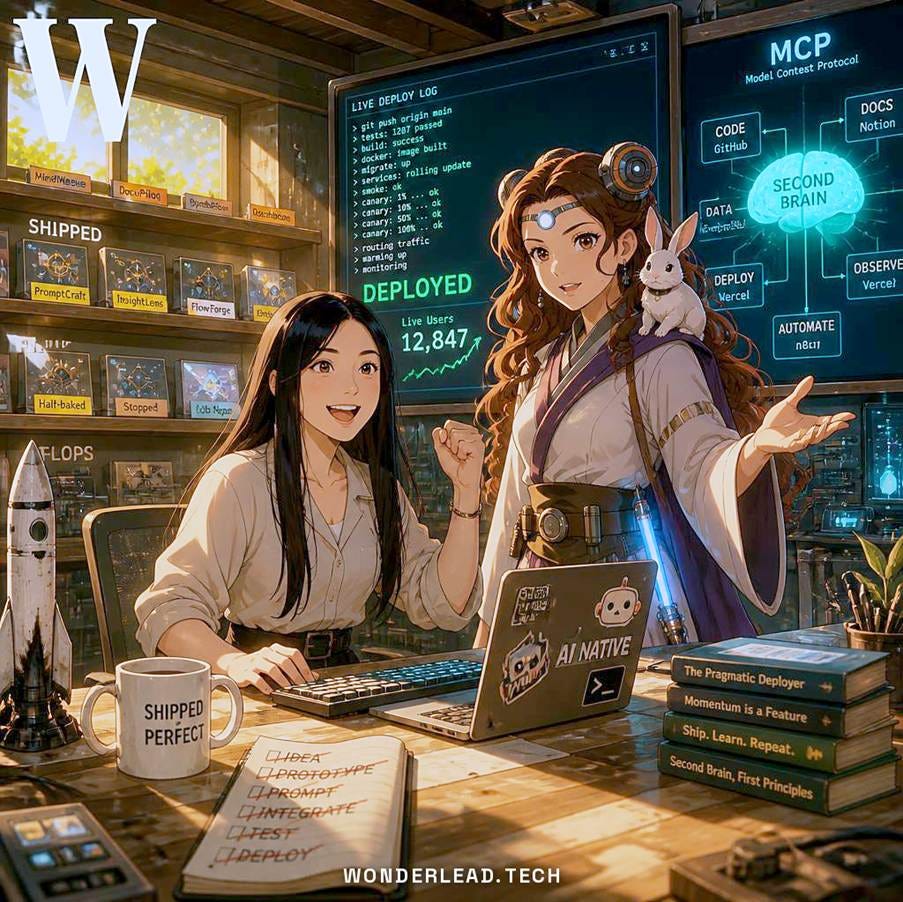 Second Brain, Fully Deployed — Generated by Patricia Juarez Muñoz.
In this picture, and Patricia’s character are deploying a tool together and talking to an audience about shipping with AI. Patricia will soon write a guest post for her newsletter and talk about her experience at AWS. 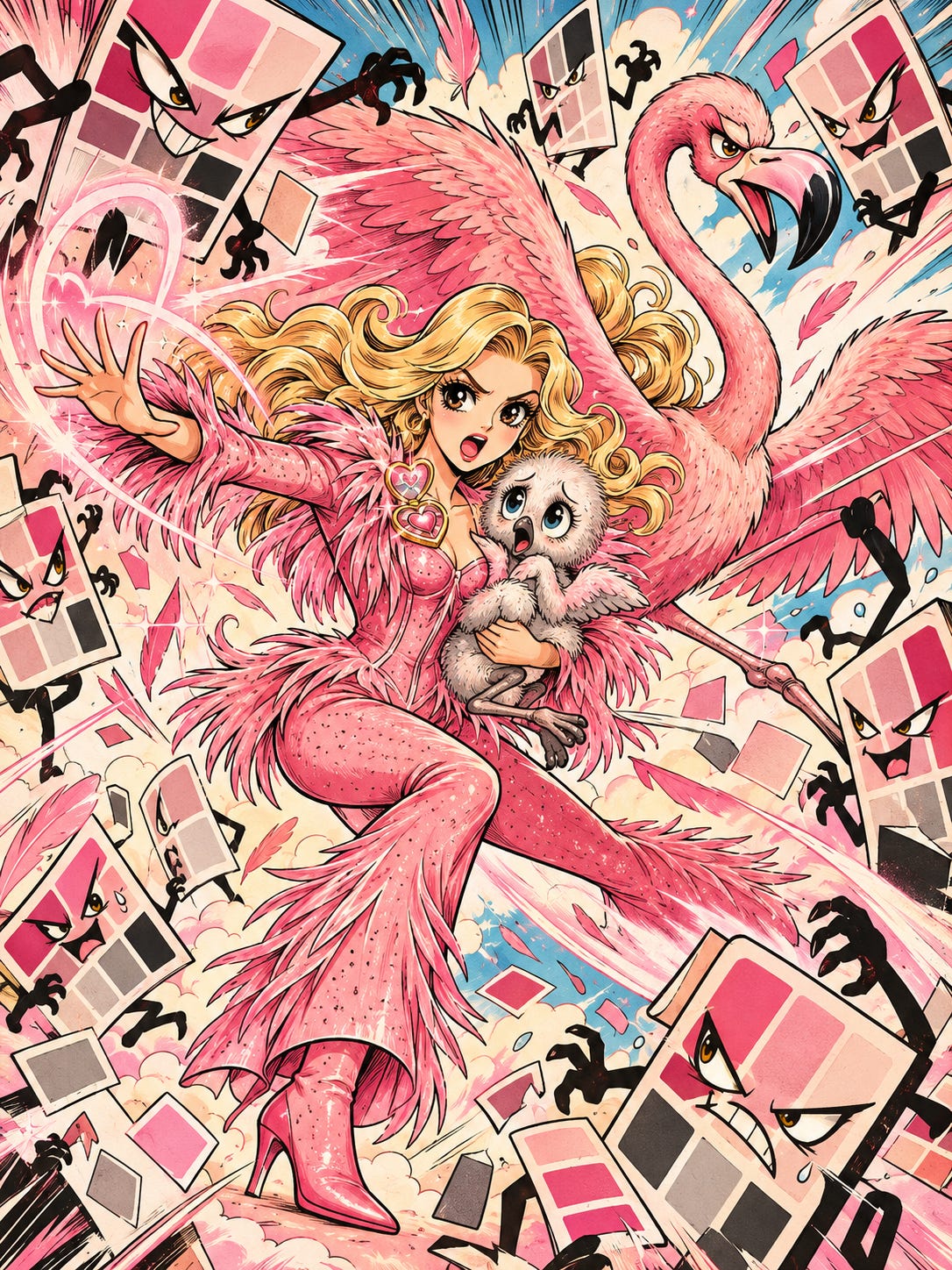 Flavio and the Rescue of the Baby Flamingo — Generated by AI Meets Girlboss in ChatGPT.
and her flamingo, Flavio are saving a baby flamingo from a bunch of evil color palettes. Baby flamingo went a bit overboard while designing their visual identity for their Substack. 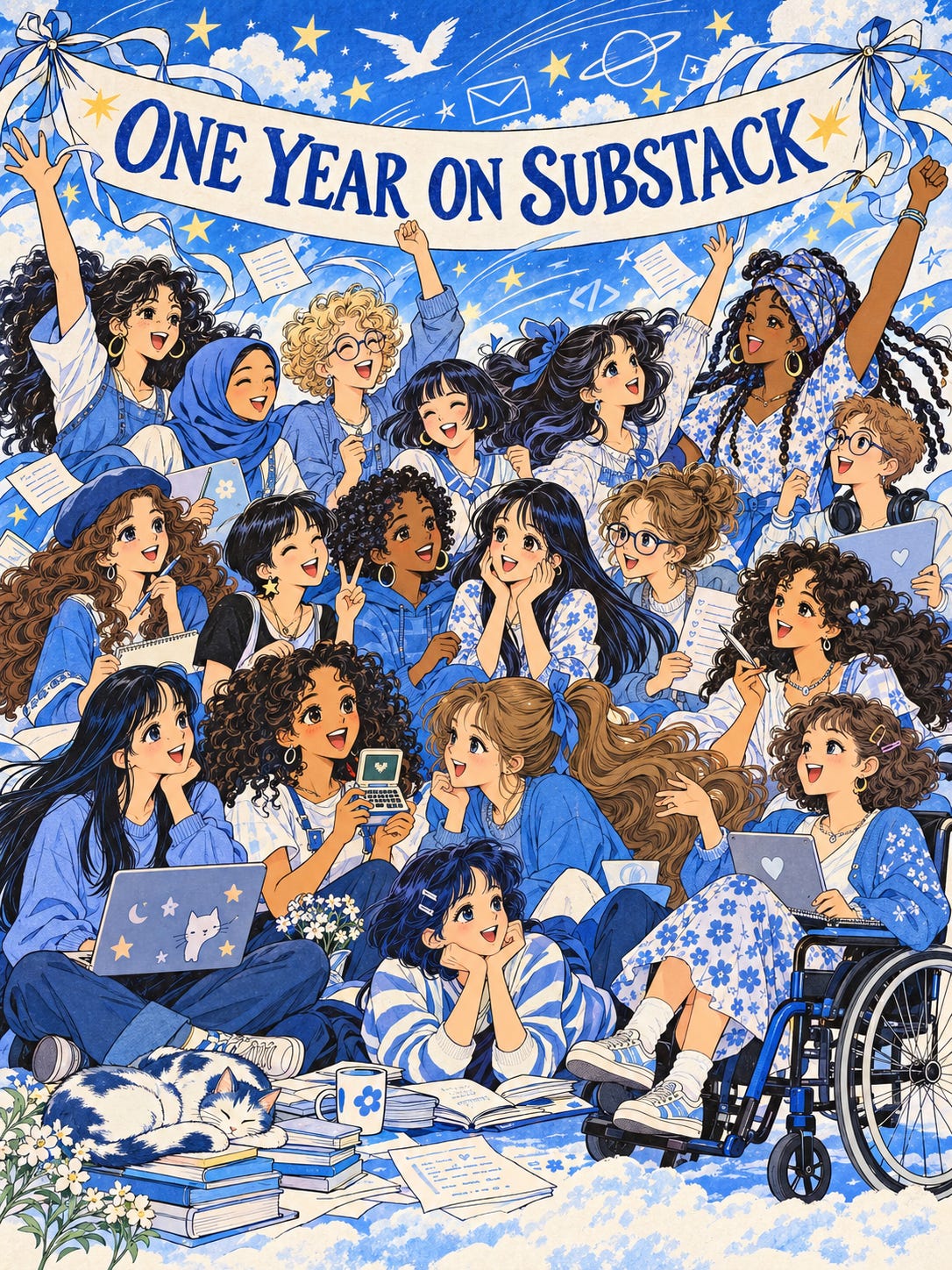 One Year Of Code Like A Girl On Substack — Generated by AI Meets Girlboss in ChatGPT.
recently celebrated their 1-year anniversary on Substack and we wanted to give all these beautiful women a chance to shine in manga style. 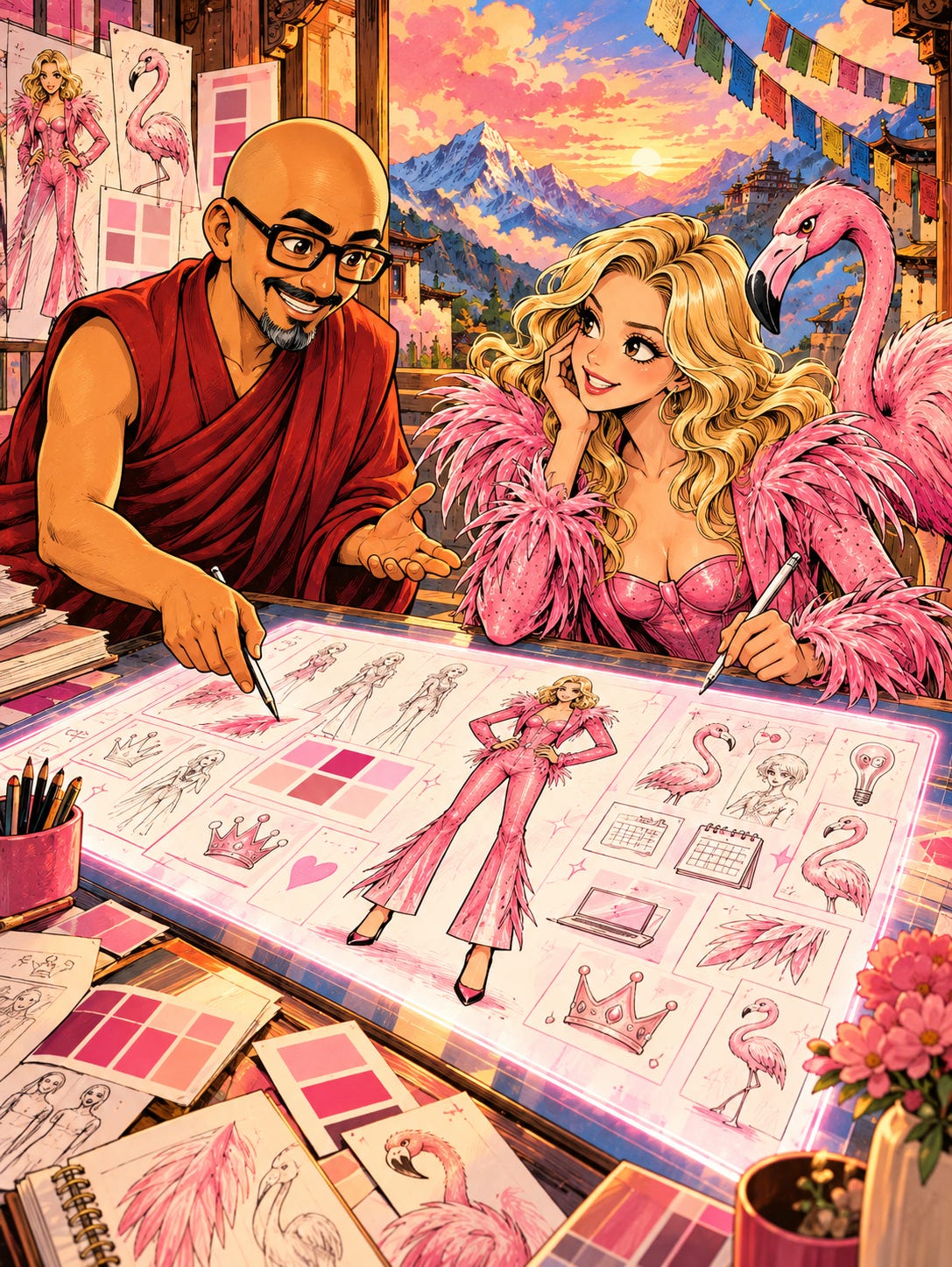 The Monk, the Muse, and the Moodboard — Generated by AI Meets Girlboss in ChatGPT.
And finally, who’s working in tandem with to release the Visual Brand Blueprint, an MCP designed to define the main pillars of your visual identity. To be released soon. 
Try the Manga Avatar Prompt Yourself.
Manga is one of the most expressive image styles available. The linework is clean, the character proportions are iconic, and the emotional range is impressive, which makes it a good starting point for building a visual character.
So here’s the challenge: generate your own manga self-portrait.
The goal isn’t to replicate Patricia’s style. The goal is to create a version of yourself who could anchor a newsletter, a character with enough visual logic that you could put them in different costumes and settings without losing who they are.
Patricia’s Manga Prompt:
How to use it: Ask Claude to generate the prompt by filling the template below.
Create an image of an anime movie scene. [name number] years old [job] is [action described in detail and with who] to [why], [keywords split in commas], anime [style]. [name] is feeling [emotional state and why], [name] has [hair description] and [eyes description]. [name] with her [clothes style] outfit, as a [job] with a [body pose description and tools]. [describe scene and with who, higher priority first and what attracts eye]. Masterpiece. (cinematic keyframe:1.5), a thrilling movie scene , hints of [style and examples] undertones. The composition exudes a [example: warm cinematic feel with shallow depth of field and bokeh]. The bold scene screams [emotion], anime, [specific] style. Add a curious white rabbit in the background and a editorial letter WAI Meets Girlboss Manga Prompt:
How to use it: Simply describe the character and scene and insert it into the brackets, or add a base image (like a profile photo or a cover image) and ask ChatGPT or Gemini to transform the attached image into manga, using the prompt below.
Create a poetic classic manga illustration of [INSERT SCENE, CHARACTER OR OBJECT - OR ATTACH AN IMAGE YOU WANT TRANSFORMED INTO MANGA], rendered with clean expressive linework and iconic proportions.
Use a vibrant painterly background of swirling color and motion lines, rendering the subject with confident ink outlines and large expressive eyes.
Keep the pose dynamic and full of motion, using a bold saturated palette applied in flat cel-shaded blocks with minimal gradient.
Give the face an iconic, instantly readable simplicity, exaggerated just enough to feel warm and characterful.
The mood should feel expressive and full of personality, like a page from a beloved vintage manga; avoid photorealism and muted color.
Render in a high-resolution 3:4 vertical aspect ratio with a crisp, hand-inked print finish.
In the comments:
Share your manga self-portrait, or describe the character you’d build. Tag and , we’ll restack your manga characters!
Whether you pick manga, or a complately different illustration style, building your visual identity doesn’t starts with a big idea. It starts with a fixed rule. Decide on a face, a symbol, a color or a detail that never changes, and then you need the discipline to keep yourself to that rule.
Go explore WonderLead in Tech, and pay attention to what her character is wearing.
Talk later, Girlbosses.
Pinkie 🩷🦩
If today’s post made you think about your own visual brand, I am running The Branding Flock, a visual brand & identity program for Substack creators who want to stand out and stop being invisible.
Get 20% off your subscription if you take the brand maturity test first. Disclaimer: the test was developed by a group of very judgmental flamingos. 🦩
START HERE: Brand Maturity Quiz
Patricia helps mid-level to senior professionals in tech up level, transition, and thrive with EQ, AI and leadership through a community, workshops, and coaching targeted to their roles. She launched a cohort in August where she personally leads a cross functional AI native team of cloud agents and humans to launch a product using AI and Amazon best practices with balance. And she is forming the next pods, you can apply to the waitlist here. She will help you grow, build, and lead in the AI era. Follow her on LinkedIn.