And this is why it works...
By Matteo Arnaboldi
Published: 2026-09-18
URL: https://aiespressotechbrew.substack.com/p/32-95-of-the-ai-brains-you-see-online
Welcome back to the bunker.
Over the last two months I've watched dozens of videos showing colorful AI agents talking to each other, 3D graphs spinning on black screens, animated digital brains pulsing like they're actually thinking.
Every time, the same reaction: gorgeous to watch, almost always useless to use.
Then I go look at what actually works, inside Morfeus and inside the companies we work with.
The scene changes completely: no animation, no spinning graph.
Just folders. On the desktop. With boring names, written the exact same way every time.
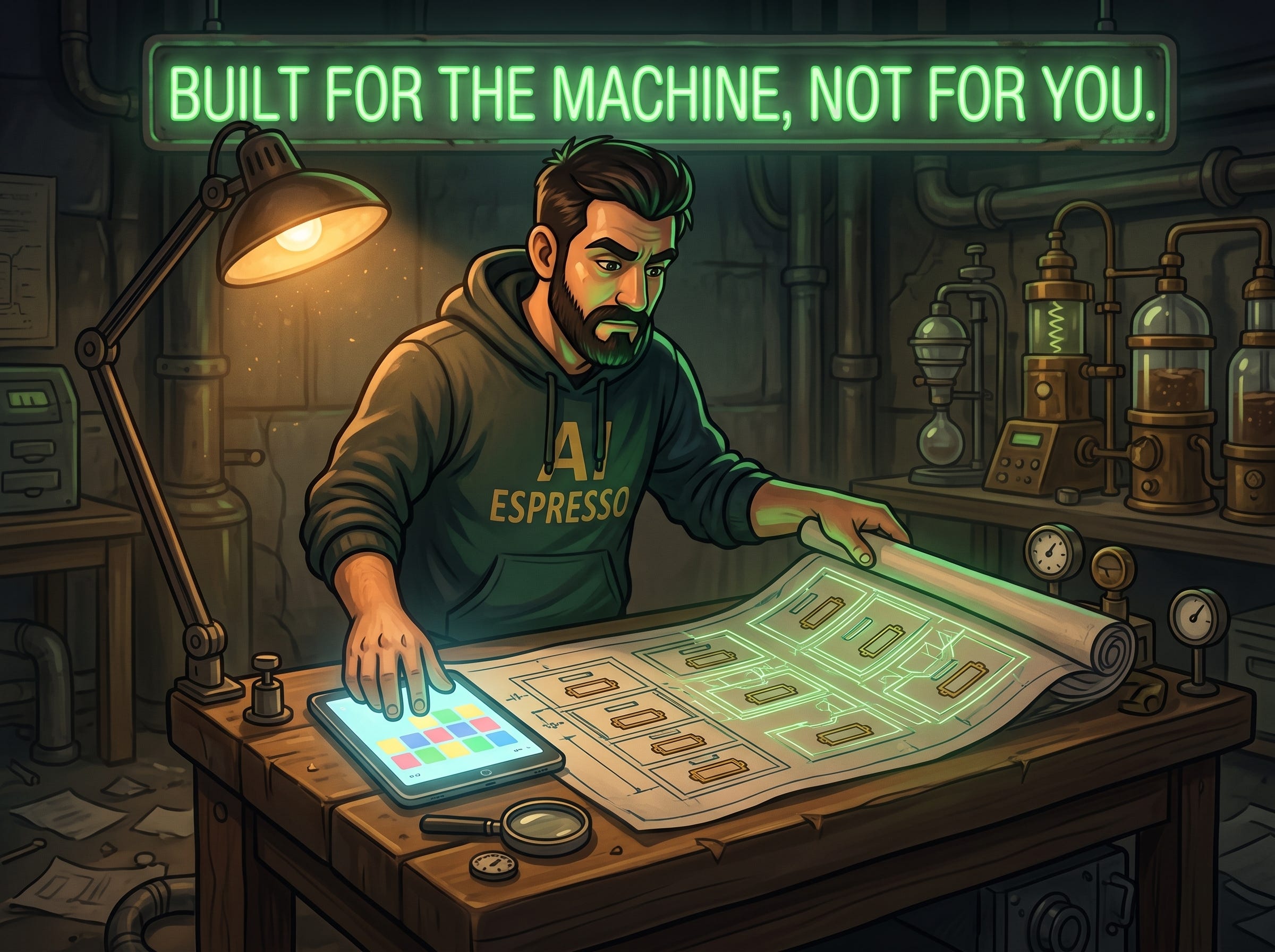
This is where most people get it wrong: they think a powerful AI system has to look powerful.
Instead, the systems that hold up real work today, all day, without you having to re-explain things every morning, are structurally simple. Not easy to build well: simple in form.
Today I'll explain why what you see online almost never holds up, and what you find instead when you open the folder of someone who actually works seriously with Claude.
☕ Cup in hand. Let's go.
💡 Thought of the Day
An AI system you're happy to talk about at the bar at night and one that saves you two hours every day are almost always two different systems.
The first one you watch. The second one you use.
🧪 AI in Action
#1: 95% of AI Systems That Look Advanced Don't Actually Work
Start from a number the market has already digested, even if few people say it out loud.
A 2025 MIT study, among the most cited on enterprise generative AI adoption, measured how many internal company initiatives, not demos, not prototypes, the actual projects launched with real budgets, end up producing a measurable return. The number is 95%: it fails, never takes off, stays a pilot nobody uses anymore a year later.
The reason the study isolates isn't model quality. It's the absence of a system that remembers, that integrates into real work, that learns over time instead of starting from zero every session.
Now look at what's circulating on YouTube and Instagram when you search "AI agents" or "second brain."
Colorful agents talking to each other in real time, sci-fi movie interfaces, swelling music over every click. 3D graphs spinning, every node a concept, every line a connection, all animated, all glittering.
It's the exact same mistake the MIT study measures from another angle: you invest in the surface, not in the structure that should sit underneath it.
I'm not saying they're all fake. Some of those demos genuinely work, for that one single case prepared for the video.
The real problem is different: what makes an AI system useful every day, for months, with real data instead of an example staged for the camera, is almost always off screen, invisible.
It's not built to be watched. It's built to be used.
The practical rule I've carried for years, and it holds even more today: if an AI system looks good before you even know whether it works, the time someone invested went into the wrong part.
Whoever builds seriously starts from the opposite end: first they make it hold up, then, if there's time left, they make it presentable. There's almost never time left for the second part, and in fact most of the tools running every day, the real ones, you've never seen in a video.
Keep that distinction in mind, because from here on I'll show you what's actually underneath the systems that hold up, folder by folder.
#2: It's Not a Smarter Notion. It's an Operating Manual the AI Reads on Its Own
The moment you hear "second brain," your mind almost automatically goes somewhere else: Notion, Obsidian, Tiago Forte's method, years of people organizing notes, tags, and links to better remember the things they read.
It's a real world, a useful one, and completely different from the one I'm talking about today.
That world builds a system for a human brain that has to find a piece of information again inside thousands of notes. Here, the final reader isn't you. It's the AI.
And that changes everything, because what counts as "well made" is no longer "nice to browse." It's "findable in one shot by something that reads thousands of files per second and never gets tired of doing it."
At Morfeus we call it the AI operating manual, and the definition I use when I explain it is this: a structure of folders and subfolders, organized so precisely that Claude always knows, without you having to re-explain it, exactly where to go get the information it needs in that moment.
Think of every folder as a little drawer in your brain. You don't think about it until you need something, and when you need it, you already know which drawer to open.
You don't search for it: you find it. Your brain has already learned where it lives.
Some of these folders, inside a well-built system, aren't even drawers. They're entire rooms.
Inside sits an arsenal of tools the AI can use freely to do the work better, not just information to read. A tool that writes code, one connected to your calendar, one that handles email for you: everything lives inside the same structure, reachable by the same logic as a text file.
The practical difference, the one you feel on the first day you use it for real, is this: with a second brain for humans, you search.
With an AI operating manual, it's the AI that searches for you, inside a structure you built only once.
In practice, each main folder handles one area of your professional life, and only that: the company, the personal side, the clients, the tools.
Inside each one, the same logic repeats identically, subfolder after subfolder, so that learning to move around in one already means knowing how to move around in all the others.
It's not a cosmetic detail: it's the reason why, the first time the AI opens a new area, it already knows what to expect.
#3: The Four Pillars of a Structure That Actually Holds Up
Strip away the set design, and what's left?
Four things, always the same ones, in every system I've seen hold up for more than a few weeks.
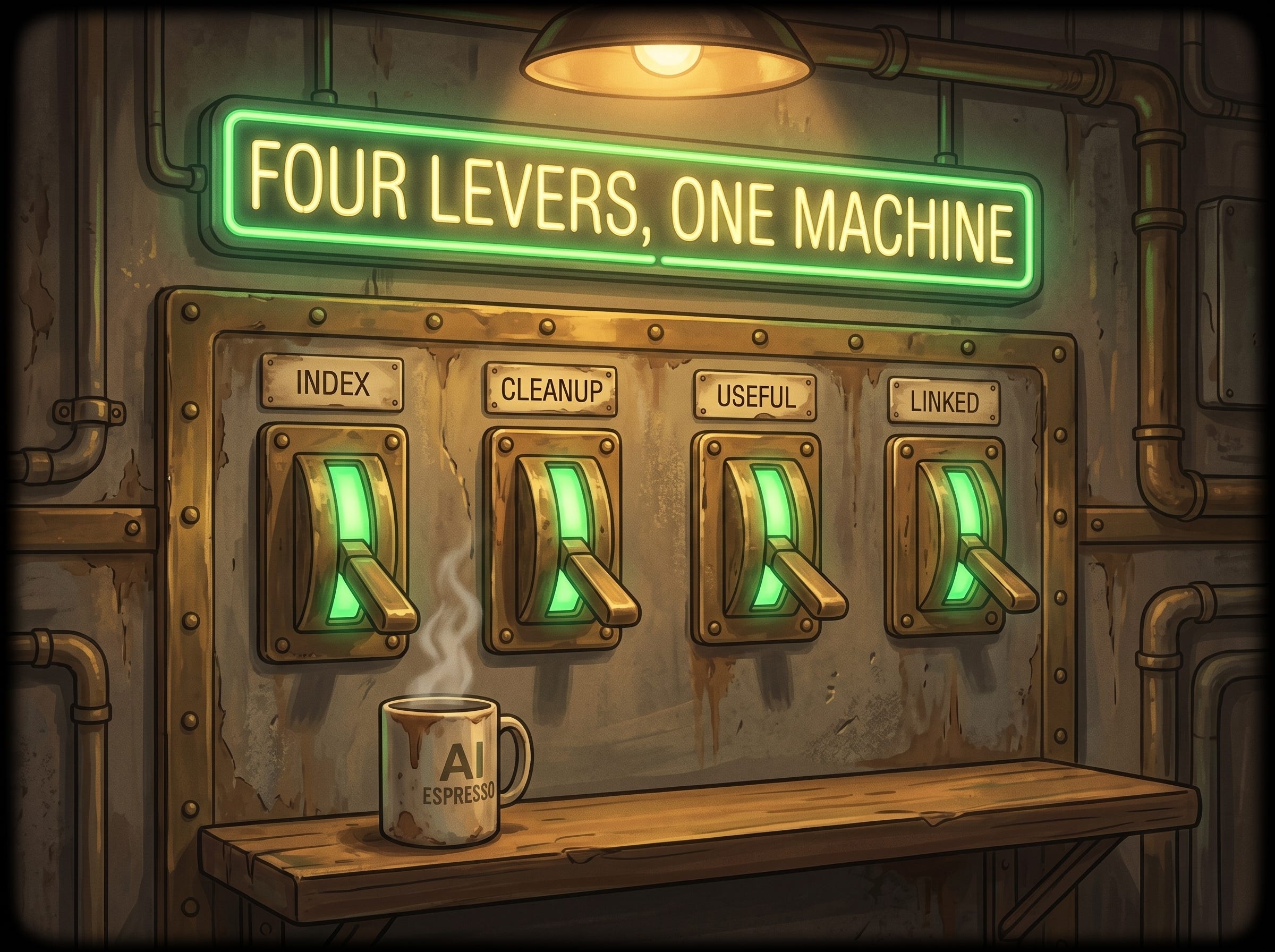
The first is organization through indexes and guide files.
Every serious folder has a file, whether it's a README or a CLAUDE.md, that explains to whoever walks in, human or AI, what's inside and how it's organized. Every subfolder follows the same pattern as the rest, every document gets named the exact same way every time.
It's not bureaucracy: it's what lets the AI navigate straight to the right spot instead of opening 10 random files to figure out where it is.
The second is the automatic cleanup routine.
A brain that accumulates information without ever reorganizing it doesn't improve, it gets worse. It turns into a warehouse where the right file is buried under 200 outdated ones.
The systems that hold up have routines that kick in periodically, once a week, once a month, and do three things: archive what's no longer needed, flag what's duplicated or contradictory, update the indexes so they stay true.
Without this step, the most beautiful system in the world turns into a trash bin within a few months.
At Morfeus, one of these routines kicks in every Monday morning, before opening any other work: it compares what's written in the files against what actually exists, and flags the gaps.
The third, the one that decides everything else, is real usefulness.
A system you're happy to talk about at the bar at night, but never actually use to work, isn't a second brain: it's a side project that stole time from real work.
The test is simple: does it save you time you used to spend searching for information, and does it give you a coherent memory so you don't have to re-explain every day who you are, which clients you're handling, what you need to deliver?
If the answer is no, fix this before you add anything else.
The fourth is connections.
A mature system doesn't live in isolation: it's hooked into your calendar, your inbox, the tools you use every day, so the AI accesses the real data directly instead of a summary you wrote by hand.
The security of these connections is a separate conversation, one we'll cover in another issue: for now it's enough to know it exists, and it's the next level up from folders alone.
To make it concrete, just one example, deliberately small.
Picture a clients folder where every client, no exceptions, has the exact same skeleton of subfolders: contract, call notes, delivered materials, an index file on top summarizing the status. The client changes, the structure stays identical.
That, multiplied across every area of your professional life, is the operating manual we're talking about.
#4: The Most Common Failure, and Why It's Part of the Game
There's a failure I see repeat more than any other, and it's worth naming before you discover it the hard way yourself: over-engineering.
Whoever builds their first operating manual alone, without ever having seen how it's done, almost always overdoes it in the wrong direction. Too many subfolders nested inside each other. Different names for the same thing, decided at different times. Zero discipline in updating it once it's built.
The result, within a month, is a system more confusing than having no system at all: the AI gets as lost inside your structure as you used to get before you built it.
That doesn't mean it's easy. It means the exact opposite: beyond knowing how to structure it, you need to do it, do it, and do it again.
The first two times you build it alone, chances are it'll be pretty rough: inconsistent names, folders in the wrong place, an index that stops reflecting what's actually inside after the first week.
That's normal, and it's why most people who try without a guide quit on the first attempt, convinced the method doesn't work.
The method works. The first version, almost always, doesn't.
The piece almost nobody mentions when explaining these systems is this: you don't have to build it yourself, by hand, piece by piece.
It's Claude that structures the folder for you, if you give it the right questions to ask you before you even start writing. You decide the areas of your professional life, it draws the skeleton, the guide files, the indexes, the naming conventions, and you correct it until it's genuinely yours.
On Friday I'll take you inside exactly this: how to structure it step by step, which questions to ask Claude before you open the first folder, and how to avoid the mistake you just read about from day one.
☢️ Radioactive Humor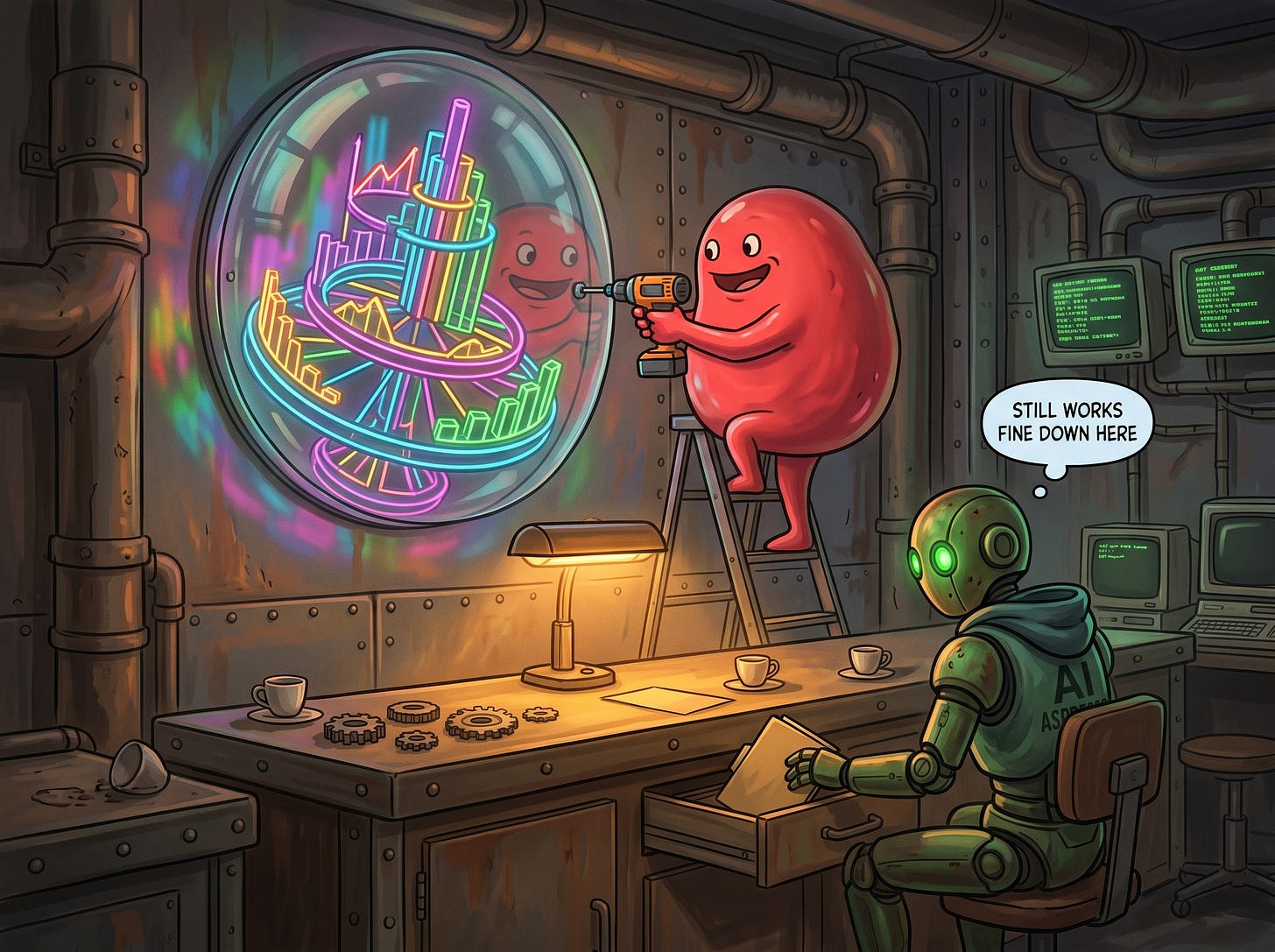
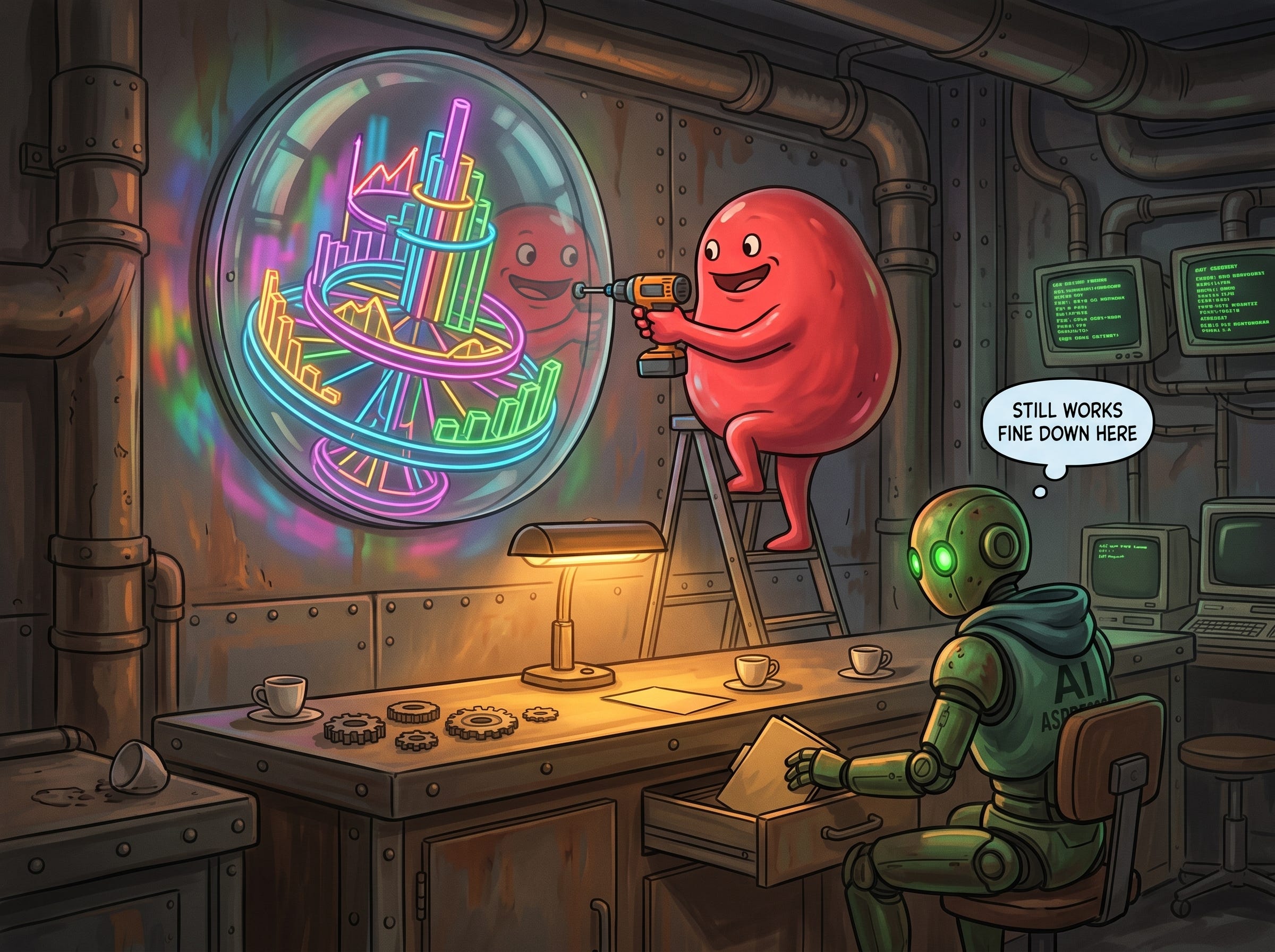
If you take away just one line, take this one: what glitters online is almost never what holds up in your real work. The second brain that saves you time every day is boring to look at, and that's exactly why it works.
On Friday we get into the practical part: how you build, step by step, your own AI operating manual, inside your own house, on your own real case, with Claude drawing the structure for you.
☢️ Matteo
If you know someone who just watched yet another 3D graph and is thinking it over, this issue is for them. Forwarding it costs less than waiting for them to find out on their own.